China: domestic LNG - innovation and ecology?
2026-02-26
When people talk about domestic LNG in China, many immediately imagine huge terminals and gas carriers. But the real revolution, in my opinion, is happening elsewhere - in the small-scale, distributed segment. This is where the real struggle is now going on between the traditional understanding of “gasification?” and new approaches, where ecology is not just a word from a report, but a real engineering and economic parameter. They often mistakenly reduce everything to the price per cubic meter, losing sight of logistics, safety for a residential area and, most importantly, adaptation to people’s real habits. This is what I want to speculate on, based on what I saw on the ground.
From the ?big pipe? to the balloon: a paradigm shift
Previously, the strategy was simple: extend the highway to the village - and the problem is solved. But in mountainous areas or in areas of dispersed development, this is economically lethal. Therefore, the emphasis shifted toliquefied natural gasin a format accessible to the end user. We are not talking about giant tanks, but about compact cryogenic tanks that can be installed almost in the courtyard of a private house or on the outskirts of a small village. This is not just a larger cylinder, it is a whole system with an evaporator, pressure control and a security system.
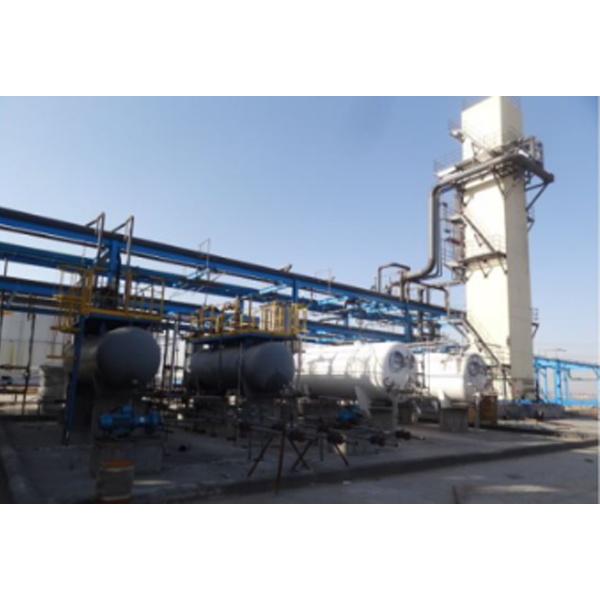
In practice, this gave rise to a new class of equipment. For example, integrated turnkey stations have appeared. - container type. I brought them, connected them to the foundation, filled themLNG- and you can launch it. It would seem ideal. But here is the first stumbling block: evaporation. In hot weather, the pressure in the tank increases, you have to bleed off the gas (boiler gas), and this leads to both losses and safety issues. In winter, on the contrary, evaporation is not enough for peak load, additional evaporators are needed. Solution? Combined systems with electrical heating or heat recovery from the consumer’s equipment itself. But this is already more difficult and expensive.
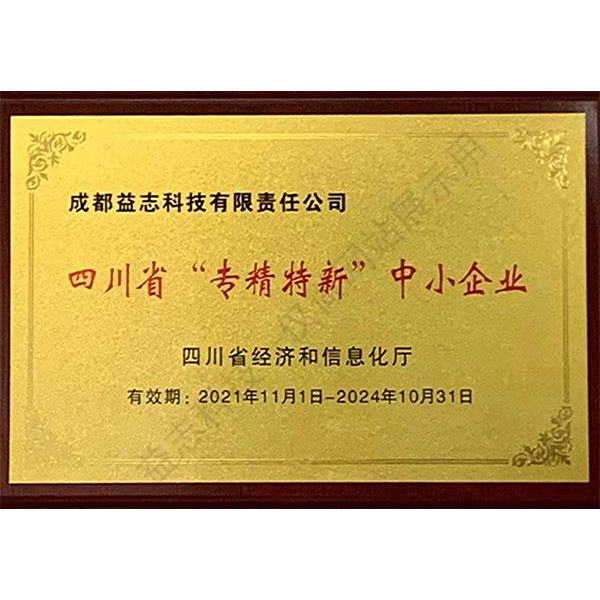
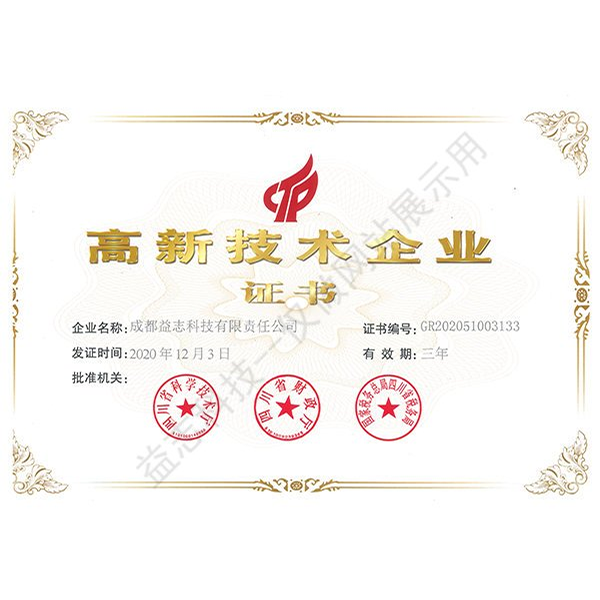
Here the role of design institutes is clearly visible, which do not just draw diagrams, but consider the life cycle of the system. One of the notable players in this niche isChengdu Yizhi Technology Co.(their website isyzkjhx.ru). These are not just equipment sellers, but a design institute created on the basis of a technology company. Their approach is often based on deep modeling of the system’s operation for a specific region, taking into account both daily temperature changes and seasonality of consumption. This is important because failures in design then cause daily problems for the operator.
Ecology as an economy, not as a slogan
Often in presentations they write “green, environmentally friendly gas?” and put a tick. In fact, the environmental effect of householdLNGneeds to be considered comprehensively. Yes, combustion emissions are lower than those of coal or even diesel. This time. But you need to take into account the entire cycle: production (liquefaction), transportation, storage, regasification. Methane leaks at any stage reduce the environmental benefit to nothing. Therefore, now great attention is paid to the tightness of all connections and real-time leak monitoring systems, even at small facilities.
An interesting case I came across: the transition of a small boiler house in a village from coal toliquefied natural gas. According to the papers - a clear victory. In practice, it turned out that old boilers do not operate efficiently on gas, and their efficiency has dropped. We had to modernize the burner device, which was not included in the original budget. The environmental effect was eventually achieved, but the economic payback period doubled. It is a typical mistake to consider only the fuel component, forgetting about the adaptation of consumer equipment.
Another point is the utilization of cold. During regasificationLNGabsorbs a huge amount of heat, simply put, “produces” cold. At large terminals, this cold is used in dairies or logistics centers. What about for household use? It would seem like a waste resource. But solutions are being found: for example, integrating a mini-evaporation station with the air conditioning system of a local store or refrigerators. For now these are piecemeal projects, but they are the future because they increase the overall energy efficiency of the system.
Logistics: the main enemy and the field for innovation
If everything is clear with the main gas - a pipe, then withLNGIt’s a real headache how to deliver it to every village. Standard cryogenic tanks are good for large volumes. For small volumes and difficult roads, ISO containers with cryogenic containers inside began to be used. They can be transported even by a regular truck, and not just by specialized transport. This has lowered the barrier to entry for small operators.
But then the problem of the “last mile” arose. Not every entrance can support multi-ton equipment. It is necessary to either use smaller but more maneuverable tank trucks, or create micro-storages (such as transshipment points) on the outskirts, from where gas is already transported in portable cylinders of increased capacity. This makes the chain more expensive. I have seen attempts to use even electric vehicles with cryogenic tanks for such delivery - quietly, without emissions in a residential area. Technically possible, but still expensive and requires special charging infrastructure.
Route planning and fleet management become key. If you have a dozen small clients scattered around, a simple tank of 20 tons is already too much - the gas will evaporate while you visit everyone. We need a system that will optimally calculate the route and volume of delivery for everyone, taking into account the forecast of consumption and ambient temperature. Without such software, business on a household basisLNGbecomes a casino.
Security: paranoia or necessity?
Working with cryogenic liquid and compressed gas near housing always involves increased risks. The norms and rules are strict, sometimes, at first glance, redundant. For example, requirements for distances from a residential building to a reservoir. In dense buildings it is almost impossible to comply with them, which slows down projects. But, from experience, these norms are written in blood. Deviation from them is a direct risk.
Therefore, innovation is moving towards active safety systems, and not just increasing distances. We are talking about laser methane leak sensors, which are many times more sensitive than conventional catalytic ones. About automatic shut-off valves that are triggered not only by pressure, but also by the rate of its growth (which may indicate a fire nearby). Installing such systems on a small object increases CAPEX, but insurance companies are already beginning to offer significant discounts for this, which changes the economics of the project.
The biggest challenge is training local staff. Bringing the installation to the village is half the battle. It is necessary that the local operator (who yesterday might have been a fireman in a coal boiler) understands what a “cold leak” is, why regular steel cannot be used instead of cryogenic steel, and what to do when an alarm goes off. Training and ongoing remote monitoring by the technology provider become an integral part of the service. Companies likeChengdu Yizhi Technology Co.often include long-term technical supervision and support in their contracts because they understand that an accident at one site affects the reputation of the entire industry.
What's in the bottom line? Look ahead
So where is this going? HouseholdLNGin China, this is no longer an experiment, but an emerging mass market with its own rules. The focus is shifting from simply selling gas to providing a comprehensive energy service. The client doesn’t care how the installation is arranged in his yard; he needs guaranteed heat and hot water at an affordable price. This means that the business model will evolve towards energy services.
Innovation will concern not so much the containers themselves, but the “smart” one. piping: consumption forecasting systems, automatic refueling, integration with other energy sources (solar panels, for example) to reduce peak loads on the evaporator. An important trend will be the standardization of interfaces and protocols so that equipment from different manufacturers can “communicate?” between each other and with the control room.
The environmental aspect will finally cease to be a marketing aspect and will become strictly quantitative. There will be methodologies for the complete carbon footprint for a specific installation.liquefied natural gas, and this will affect tariffs or government subsidies. Those who are already incorporating solutions for recycling cold and minimizing operational emissions into their projects will benefit. This is a long game, but, as practice shows, there is no other way in the energy sector. The main thing is not to chase short-term cheapness, but to consider the future and remember that behind every valve and sensor there is someone’s safety and comfort.