China: LNG liquefaction schemes – a technological breakthrough?
2026-02-21
When they talk about Chinese gas liquefaction technologies, many immediately remember large-scale import terminals and think that everything just depends on the purchase of licenses. It's superficial. The reality is more complicated: over the past ten years, its own, very specific engineering culture has grown here, which does not always fit into Western textbooks. And the key question is not whether they copied the process, but how they adapted it to their own, sometimes unique, conditions - from logistics to the composition of raw materials.
From license to adaptation: where the real complexity lies
Take, for example, the classic cascade circuit. Everything is clear on paper, but try implementing it on a site where seasonal temperature changes reach 50 degrees, and energy efficiency requirements are becoming stricter every year. Chinese engineers were faced with the fact that standard solutions for APCI or Linde heat exchangers in such conditions led to unjustified losses at the pre-cooling stage. We had to deeply rework the control algorithms and the configuration of the cold boxes. This is not a breakthrough in a fundamental sense, but it is a serious engineering optimization that has borne fruit on projects like the Tianjin terminal.
This is where analysts often make mistakes when looking only at the final power figures. The real work is visible in the details: how the mercury removal system was converted to accommodate local gas with a high content of impurities, how materials were selected for pipelines to minimize the risks of hydrate formation in high humidity conditions. This is non-public, routine work, without which any “scheme?” It will remain just a beautiful picture.
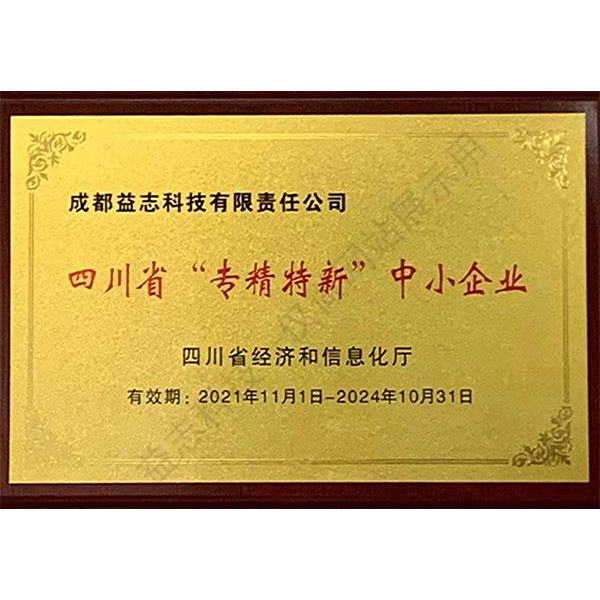
I had the experience of discussing one such project with colleagues from Chengdu Yizhi Technology Co. Their websiteyzkjhx.ru, positions the company as a design institute with a significant authorized capital. It was precisely these practical nuances that slipped through the conversation - not about “world leadership,” but about specific problems with the accuracy of instruments for analyzing raw materials at remote fields in Xinjiang. This is the same “kitchen”.
Small and medium powers: a field for experiments and errors
While time-tested technologies reign in large terminals, the niche of small and medium-sized liquefaction plants (up to 1 million tons/year) has become a real testing ground. Here Chinese companies, including many private players, are trying hybrid and unconventionalliquefaction schemes. They are actively experimenting with single-stream cycles with double nitrogen expansion, trying to find a balance between capital costs and operational flexibility.
But not everything is smooth. A couple of years ago, I saw a project for one such installation in Shaanxi province, where they decided to save on the drying stage by installing less efficient adsorbers. The result is predictable: frequent stops due to freezing, a drop in efficiency. This is a typical growth mistake when they try to mechanically reduce the costtechnological breakthroughwithout understanding the systemic connections. Such cases rarely make it into official reports, but they form invaluable experience.
Interestingly, it is in this segment that hybrid solutions have emerged, where, for example, locally produced turboexpanders are paired with imported compressors. At first, the reliability of such an assembly raised questions, but over time, engineers learned to mitigate risks through a well-thought-out system of redundancy and control. This is no longer just copying, it is assembling a puzzle from available components for a specific task.
The role of design institutes and localization of equipment
Without strong design institutes, all this activity would be reduced to simple installation. Companies like the aforementioned Chengdu Yizhi Technology Co., Ltd., created on the basis of Huaxi Technology, are exactly the nodes where theory meets practice. Their capital of 120 million yuan is not just a number, it is an opportunity to conduct long-term R&D, and not just replicate ready-made solutions.
Localization is a separate big topic. First, the pressure vessels and shut-off valves were located. Then it came to more complex things - cryogenic pumps, plate-fin heat exchangers. The quality was poor at first, to put it mildly. I remember a story with a batch of domestic plate heat exchangers for the nitrogen cycle, where the problem was not even in the base metal, but in the quality of soldering of the ribs - microcracks were detected only during thermal cycling tests, which led to leaks.
The situation is better now, but the challenge has shifted towards digital. Localizing physical equipment is half the battle. It is much more difficult to create and, most importantly, implement adequate APCS (automated process control systems) systems that are not inferior in reliability and flexibility to solutions from Emerson or Yokogawa. Work is underway, but it is too early to talk about complete independence here.
Environmental imperatives and new challenges
Today, any discussion of liquefaction technologies comes down to energy efficiency and emissions. Chinese standards are becoming stricter, and this directly affects the choiceLNG liquefaction schemes. For example, more and more attention is being paid to the utilization of cold from regasified LNG. Previously, this cold was often simply dissipated, but now they are trying to integrate it into neighboring industries, for example, into cooling systems in chemical plants or food storage facilities.
This creates new engineering challenges. How to design a flexible heat exchange system between objects with different load schedules? How to manage such a combined energy complex? There are no standard answers. I have seen attempts to use modular solutions for this, where the liquefaction unit and the cold recovery unit are joined together like a construction set. Theoretically - beautiful, in practice - a lot of problems arise with the synchronization and reliability of such “assemblies”.
Another trend is working with associated petroleum gas (APG) at remote fields. They need not just effective, but ultra-reliable and highly automated solutions. Experience shows that for such conditions, sometimes it is not the most progressive in terms of efficiency, but the most simple and maintainable scheme, often based on the nitrogen cycle with a minimum of rotating equipment, that is better suited.
Looking forward: integration and "green" hydrogen
There is a lot of talk about hydrogen now. Question: How can existing liquefied natural gas infrastructure and competencies be used for the hydrogen economy? Chinese companies are actively studying this topic. So far we are not talking about the liquefaction of pure hydrogen (this is a separate and very energy-intensive story), but about mixtures, for example, the introductiontechnological breakthroughin the transportation of natural gas with the addition of hydrogen.
This creates new headaches for designers. Hydrogen is not only a matter of materials (hydrogen embrittlement), but also of safety and changes in the thermodynamic properties of the flow. Standard algorithms tailored for methane stop working. We need new models, new testing and measuring equipment. This is the next technological frontier, and Chinese engineering teams that have accumulated experience in adaptation have a good chance here.
The result? To call the current state of affairs a clear “breakthrough?” would be an exaggeration. Rather, this is a stage of very rapid and pragmatic evolution. From total import of technologies to their deep adaptation and creation of hybrid solutions for specific conditions. The main strength is not in one brilliant scheme, but in the scale of engineering practice, in the ability to quickly test, make mistakes, refine and implement. It is this massive, often invisible from the outside, experience that forms the basis for future truly breakthrough solutions, when all the conditions are ripe for them.