Chinese LNG cascade for the Arctic: technology for exporters?
2026-02-22
- Where did this “cascade” even come from? and what is its arctic focus
- Practical cases and pitfalls: not everything is so smooth
- Modularity as a response to the challenges of the North
- Economics of the issue: why exporters might be interested in this
- What's in the bottom line? A look from inside the industry
When people talk about Chinese technologies for the Arctic, many people immediately think about icebreakers or shipbuilding. But there is a piece that is often overlooked, although it is much closer to real commercial returns - these are cascade gas liquefaction technologies, especially for medium and small capacities. For some reason, there is an opinion that China is just catching up here and purchasing licenses. In practice, especially in the last five years, the picture has become much more interesting and ambiguous.
Where did this “cascade” even come from? and what is its arctic focus
If we take it purely technically, then the classic cascade is not some kind of cosmic novelty. But the trick is in adaptation. The Arctic is not just cold. These are wild temperature changes, remoteness, difficulties with the logistics of spare parts and limited personnel on site. Western installations are, of course, reliable, but their operating philosophy is often tailored to different conditions - more accessible sites, a different approach to service. Chinese engineering companies, like those that grew out of large chemical holdings, have taken the path of hybridization. They took proven cycles as a basis, but began to actively repackage them into modular design and maximum simplification of operation.
I myself saw design studies for one project in the Far East - not Arctic, but with similar challenges in terms of remoteness. There, the Chinese side proposed a solution where the key refrigeration compressors were, say, from a German manufacturer, but the entire piping, control system and, critically, the cold recovery circuit were their own developments. This reduced capital costs by 15-20%, which is already a serious figure for a medium-power project. But this was not the main trump card. They built into the control system remote monitoring and diagnostics from a center in Chengdu, with the ability to deeply customize parameters. For the customer, who may not have a super-experienced cryogenics engineer on site, this was a deciding factor.
This is where the question arises for Arctic exporters, especially those considering small fields or floating gas (FLNG) solutions. Do they need a super complex, “sophisticated” one? technology with maximum efficiency, requiring the constant presence of highly qualified specialists? Or a technology that is slightly less effective on paper, but much more “survivable”, repairable with limited personnel and designed for remote control? The Chinese approach, in my opinion, is increasingly hitting the second niche.
Practical cases and pitfalls: not everything is so smooth
Of course, beautiful presentations hide a lot of nuances. One of the key ones is materials. Arctic cold is not only the ambient air temperature, but also the freon temperatures inside the installation. Steels, welds, seals - all of this must work within an extreme range. Chinese equipment manufacturers have made a huge leap in quality over the past decade, but their credibility in the Arctic heavy engineering market is still developing. I know of a case where a Chinese contractor supplied liquefaction modules for a pilot project on Sakhalin, but at the customer’s request, all critical valves and sensors were replaced with European analogues already on site. This made the project more expensive and created a logistical headache.
Another stumbling block -standardization and certification. Entering a market historically dominated by Norwegian, American and Korean players requires compliance with stringent international standards (ASME, API, DNV GL for marine applications). Chinese companies are actively pursuing these certifications, but the process is long and expensive. For the final gas exporter, this creates risks: will insurance be recognized for a facility built according to Chinese designs, but with partially Chinese equipment? These issues are still resolved individually in each project.
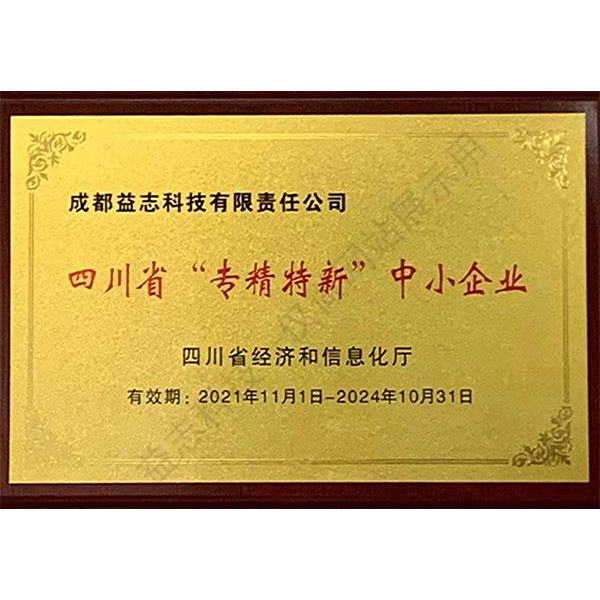
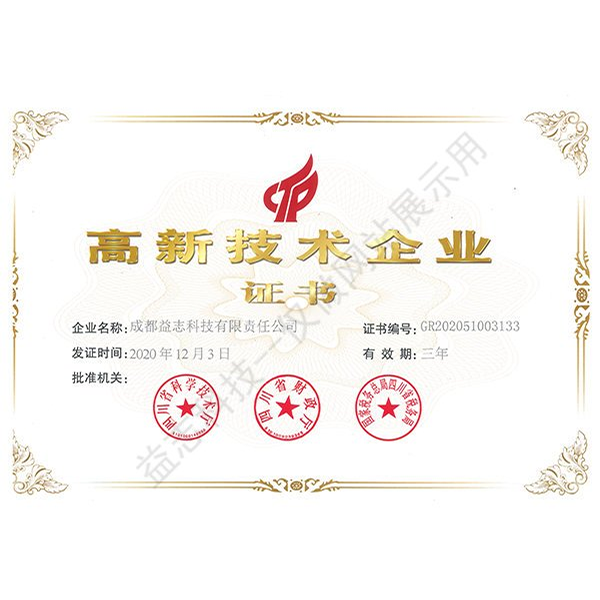
And yet there is movement. Let's take, for example,Chengdu Yizhi Technology Co.is a design institute created on the basis of a chemical technology holding. They are not starting from scratch; they have the parent company's experience in gas separation technologies and low-temperature processes. By going to their websiteyzkjhx.ru, it is clear that they position themselves as a full-cycle engineering company, with an emphasis on energy-saving liquefaction technologies. It is important that they do not just sell the installation, but offer design for specific raw material conditions. For Arctic gas, which often has a non-standard composition, this is a key point.
Modularity as a response to the challenges of the North
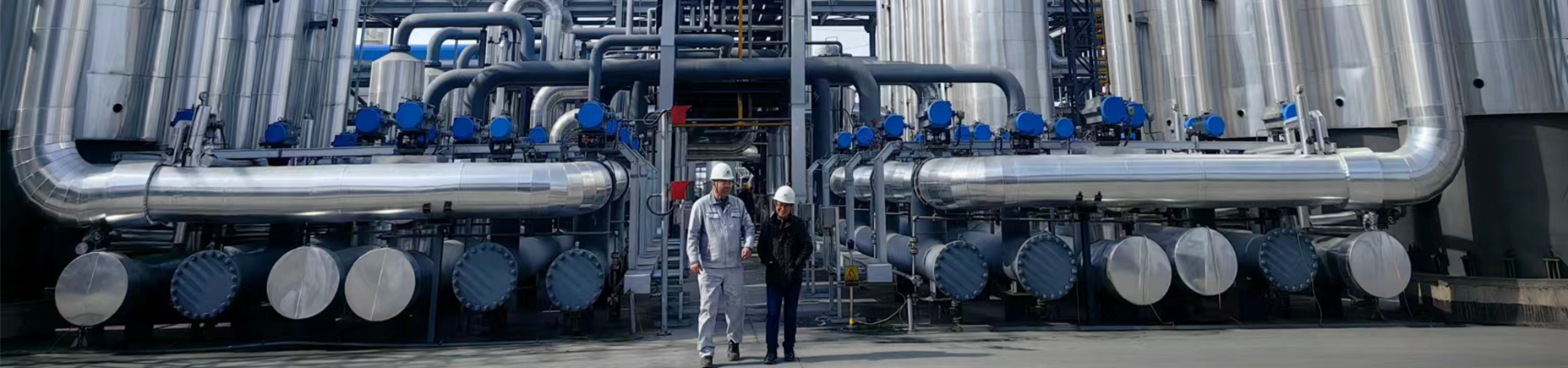
This is perhaps the strongest point in the current Chinese offerings. The idea is simple: assemble the installation as much as possible at the manufacturing plant in the form of large-sized modules, deliver them by sea, and perform a minimum amount of welding and installation work on site. This dramatically reduces construction time and costs in harsh environments where a day's work costs enormous amounts of money.
But there are some “buts” here too. Transporting such modules to Arctic ports is in itself a non-trivial task. Special vessels, coordination of routes, and consideration of ice conditions are required. Chinese companies often work in conjunction with logistics operators, but the final risks and costs fall on the customer. In one of the projects discussedLNG cascadeFor the Kara Sea coast, it was precisely the issues of logistics and insurance for the transportation of modules that became one of the reasons for freezing the preliminary agreement. Freight figures turned out to be unpredictably high.
However, the modular assembly technology itself has been tested in China at many facilities within the country and in Southeast Asia. I have the skill. The question is its transfer to the Arctic context. Some companies, including Chengdu Yizhi Technology, claim to conduct cold tests of modules in climate chambers simulating arctic conditions. How representative these tests are for long-term operation is a big question. So far, I don’t remember a real Chinese cascade plant that worked for 5-7 years in the high Arctic. Still at the stage of proposals and pre-design studies.
Economics of the issue: why exporters might be interested in this
It all comes down to money. The construction of a large LNG plant using classical technology is a project worth billions of dollars and many years. It is justified for giant deposits. But the Arctic shelf often contains medium and even small reserves scattered over a vast territory. It is unprofitable to extend coastal infrastructure to each of them and build a giant plant.
This is where the window of opportunity for medium-power and small-scale solutions appears.Chinese LNG cascade, especially in modular design, offers a lower barrier to entry. There is no need to build a huge site; you can get by with minimal preparation. The speed of deployment is also an argument. If political or market conditions require a quick start to export, then the option with ready-made modules that can be installed in 12-18 months looks attractive.
But there is also the other side of the coin - operating expenses (OPEX). A simpler and more durable system may have a slightly higher specific energy consumption for liquefaction. In the Arctic, where energy is often expensive (derived from diesel generators), this cost overrun can eat up some of the capital expenditure savings (CAPEX). A very careful calculation is required for each specific deposit. The Chinese engineers with whom I have spoken understand this and usually offer comprehensive modeling of the economics of the project, and not just selling a “box”.
What's in the bottom line? A look from inside the industry
So, is Chinese cascade technology a ready-made solution for Arctic exporters today? My answer is not yet, but it is very quickly becoming a serious option that cannot be discounted. This is no longer copying, but adaptation and offering an alternative philosophy: “not ideal, but good enough and much more accessible?”.
The main advantages are flexibility, modularity, focus on remote control and, importantly, the willingness of Chinese companies to enter into projects on conditions that Western contractors often consider unfavorable (for example, participation in financing or more stringent warranty obligations). WebsiteChengdu Yizhi Technology Co.is just one example of such an approach, where a design institute with a registered capital of 120 million yuan offers comprehensive solutions based on in-depth knowledge of chemical processes.
The main risks are still issues of long-term reliability in extreme conditions, difficulties with the logistics of heavy modules and, frankly, a certain bias in the market. But the trend is clear. If five years ago Chinese technologies for Arctic LNG were talked about skeptically, now they are already being seriously considered in technical and commercial proposals. Exporters, especially those dealing with isolated and medium-sized deposits, should definitely explore this option. Not as a panacea, but as a pragmatic and often faster tool for monetizing resources. Are they catching up? Yes. But they are catching up with a very specific jerk, in a narrow but promising area.