China: leader in LNG technology?
2026-02-22
- From importing technologies to adapting them: how it all began
- Breakthrough in "hardware": cryogenic pumps and heat exchangers
- Construction power and its pitfalls
- Focus on floating solutions (FSRU and FLNG)
- Looking Outward: Technology Export as an Indicator of Maturity
- So is he a leader or not? Instead of a conclusion
When they talk about leadership in LNG, everyone immediately looks at Qatar, Australia, and the USA. China often appears somewhere on the side of this list, supposedly a large market, but nothing more. This is the first gap in perception. Because if you dig deep into the technological kitchen itself - and I dealt with projects from Shanghai to Xinjiang - the picture begins to change. I won’t say that we have already overtaken everyone, but the trajectory and scale of the technological breakthrough in the liquefied natural gas segment over the past eight years makes us think seriously. And we’re not just talking about the scale of production, but about the full chain: from the design and construction of plants to cryogenic equipment and logistics solutions.
From importing technologies to adapting them: how it all began
I remember ten years ago the standard way was to attract Western or Korean contractors for EPC contracts. All key technologies - liquefaction processes, heat exchangers, turboexpanders - were imported. Chinese companies then acted more as co-investors or customers. But even in this role, its own characteristics began to appear. For example, strict requirements for the localization of equipment already at the contract stage. This is not just politics, it was a way to “look under the hood”.
It was through such requirements that reverse engineering and, more importantly, adaptation began. Climatic conditions in northern China and energy efficiency requirements that differ from Western standards - all this forced us to reconsider ready-made solutions. I have seen projects where the initially developed liquefaction technology (say, AP-C3MR) was then seriously modified by local engineers to meet the specific parameters of gas from fields in Sichuan. The result was a hybrid product.
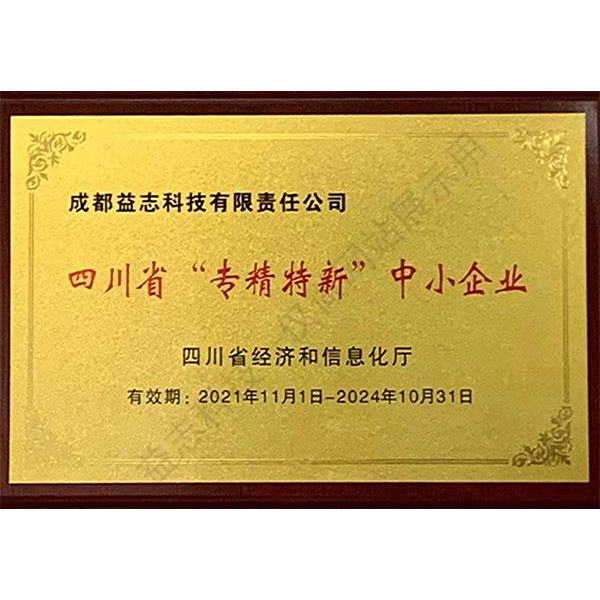
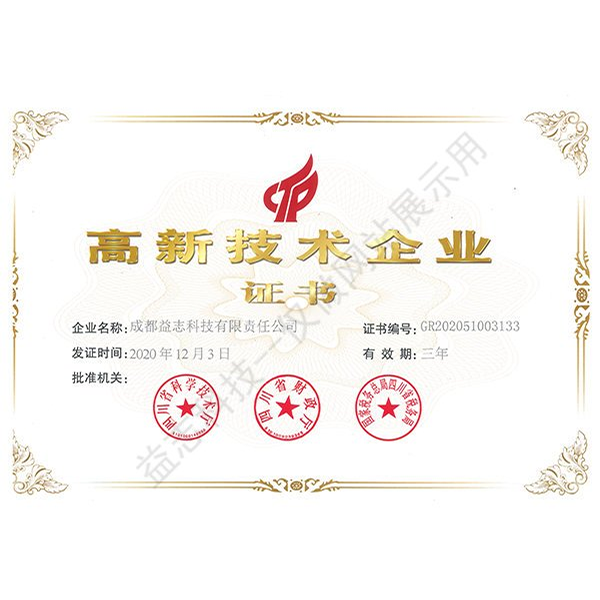
Here it is worth mentioning the role of such design institutes asChengdu Yizhi Technology Co. (https://www.yzkjhx.ru). This is not a random name. This institute, created by Huaxi Technology, is one of those that grew out of the need for deep adaptation of chemical and cryogenic technologies to local realities. When you look at their portfolio, you see not copies, but solutions that take into account the characteristics of Chinese raw materials and production base. Their work is a good example of the transitional stage when a country ceases to be a passive buyer of technology.
Breakthrough in "hardware": cryogenic pumps and heat exchangers
If the liquefaction process is the “brain,” then cryogenic equipment is the “heart?” any LNG plant. And here the progress, in my opinion, is the most significant. Until recently, the main pain point was dependence on imports of basic heat exchangers. Now, several Chinese manufacturers have reached a level that allows them to compete for contracts within the country.
I personally visited the test bench of one of these manufacturers in Dalian. We were talking about multi-jet cryogenic pumps for loading LNG. The engineers weren't complaining about precision or materials (that was already the case), but about the long-term reliability of the seals under constant thermal cycling. This is already a high level of problems. Their decision, by the way, partly came from the experience of shipbuilding - an industry where China is strong.
But there are also difficulties. For example, with large-scale turboexpanders for base load plants. There are analogues, they work, but when it comes to efficiency and turnaround time, the conversation with customers is still difficult. Often preference is given to proven German or American brands. This is normal, technological authority is earned over decades.
Construction power and its pitfalls
The scale of construction of LNG terminals and plants in China is colossal. It seems like every major port city has construction going on or planned. The speed of construction is truly impressive. But here lies a specific problem that is little discussed in analytical reports.
I was once involved in a project where, due to aggressive turnkey deadlines, problems began with the quality of insulation on cryogenic pipelines. The contractor, in order to be on time, made simplifications in the process of vacuumization of multilayer insulation. The result is increased evaporation losses (BOG), which affects the economy of the entire terminal. We had to urgently attract supervision specialists, who were in short supply on the market at that time.
This experience showed that the industry was growing so quickly that personnel and control standards did not always keep pace with the physical volume of construction. Now, it seems, the situation is leveling out, more specialized inspection and acceptance companies are appearing, but a residue remains. Leadership is not only about building quickly, but also about building so that the facility will operate without problems for 30 years.
Focus on floating solutions (FSRU and FLNG)
This is an area where China may have a strategic advantage. Huge shipbuilding capacity, particularly in Shanghai and Guangzhou, has been refocused on building not only gas carriers, but also floating regasification units (FSRUs).
The first completely Chinese FSRU was, if I’m not mistaken, launched in 2020. But something else is more interesting - work is now actively underway on our own projects of floating liquefaction plants (FLNG). Technologically, this is an order of magnitude more complicated. Conversations with colleagues from CSSC (China State Shipbuilding Corporation) indicate that the key challenge is not the ship design itself, but the miniaturization and adaptation of liquefaction technologies for pitching and limited space. The problem of the stability of heat exchangers in marine conditions is a separate headache.
If this barrier is taken, China will have a powerful tool for developing remote offshore fields and exporting technology to countries that cannot afford large onshore projects. This is a level of play that is different from simply increasing volumes.
Looking Outward: Technology Export as an Indicator of Maturity
The true measure of leadership is when people start buying your decisions. So far, Chinese LNG companies are mainly investors and construction contractors abroad (in Africa, Pakistan, Southeast Asia). But increasingly, the package also includes technological equipment. It may not be the most critical elements yet, but the trend is noticeable.
For example, supplies of cryogenic LNG storage tanks or modular small liquefaction plants for distributed energy. Companies like the sameChengdu Yizhi Technology Co., with its registered capital of 120 million yuan and a design focus, is precisely targeting such niche but high-tech exports. Their website (yzkjhx.ru) is aimed at the Russian-speaking market, which in itself is significant - you can see where they are looking.
However, the trust barrier to ?non-established? technology supplier is still high. To overcome it, you need more than one successful reference project abroad, working without failures for five to seven years. So far there are few of them. But they are already appearing, say, in the SCO countries.
So is he a leader or not? Instead of a conclusion
It’s difficult to answer unequivocally. If we take absolute technological peaks, the most effective and proven processes are still the leaders. But if you look at the concept of leadership as the ability to close the full cycle - from the design and production of key equipment to the construction and financing of giant projects in a short time - then China is already there.
The main strength is integration. The ability to bring together powerful metalworking, experience in large-scale construction, growing design competencies and government support. This creates a unique ecosystem that can offer comprehensive solutions, often more flexible in price and timing than Western consortia.
The weak point, as I see it, is still in the “software”: in the depth of know-how in fundamental processes, in quality standards that are born from long-term operation, and not from technical specifications. And in personnel of the highest class, which is still not enough for all projects. Technology leadership is a marathon. China entered the track later, but runs at a very fast and confident pace. In five years, I think the conversation will be completely different.