Chinese LNG liquefaction technologies: Arctic cascade?
2026-02-22
When do you hear about the “Arctic Cascade?” in conjunction with Chinese technologies, many immediately think about simply copying or purchasing licenses. But the reality, in my opinion, is much more interesting and ambiguous. This is not about “catching up and overtaking”, but about forced adaptation, where theoretical developments collide with harsh practice, especially in the conditions of the Far North. I myself worked on several projects where standard solutions simply failed, and I had to look for workarounds, not always successfully.
From laboratory to industrial site: where theory fails
The main difficulty we faced five years ago was scaling. The pilot installation at the stand in Chengdu showed excellent results in terms of energy efficiency, but when transferred to a real site, say, for a pre-cooling module, problems began. Not with the process itself, but with “little things”: the behavior of materials during long “cold-heat” cycles, moisture condensation in unexpected components, vibrations. This is a typical story for many who have tried to implement newliquefaction technologieswithout a gigantic backlog of Soviet/Norwegian projects.
One specific case: the use of domestic compressors in conjunction with an imported control system. On paper everything is perfect, but in practice the sensors “didn’t understand” operating modes of our machines during a sharp drop in ambient temperature below -40°C. The system went into emergency shutdown. A month of downtime while engineers from ?Huaxi Technology? and our guys did not rewrite the logic by introducing correction factors that were not in the original algorithms. It was not a breakthrough, but routine, but critical work.
This is where the legs of the myth of “unreliability” grow. Often the problem is not in the basic technology, but in its integration and fine-tuning for specific, sometimes extreme, conditions. We learned not from textbooks, but from such rush jobs.
The Arctic as a testing ground for non-standard solutions
This is where the concept of ?cascade? - not just a nice word. In Arctic projects, where every kilowatt of energy counts and where you cannot simply increase the heating power, you have to squeeze the maximum out of each cooling stage. The classic cascade using refrigerant mixtures required improvement. I remember that in one project for Yamal they considered the option of using a propane-ethane cycle, but were faced with the logistics of ethane in that region. We had to revise the proportions, which affected the efficiency in peak modes.
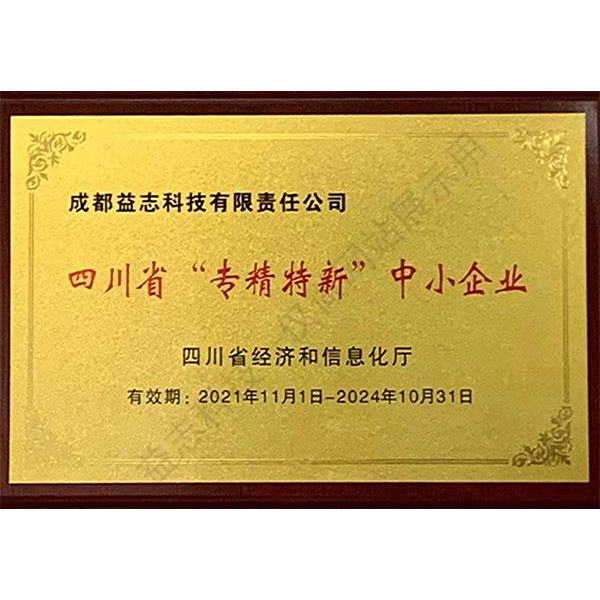
It is important to note the role of such institutions asChengdu Yizhi Technology Co.(their website isyzkjhx.ru). This is not an abstract research center, but a design institute created on the basis of Chengdu Huaxi Chemical Technology. Their strength lies in applied calculations and design. When we had a problem with a heat exchanger for pre-cooling natural gas with a high nitrogen content, it was their specialists who helped recalculate the geometry of the tubes to minimize freezing. Without this practical experience, the whole theory would have failed.
But they are not omnipotent either. There was an attempt to use their low-power modular installation at one of the remote fields. The idea was to quickly deploy. However, the influence of constant low temperatures on the operation of inlet gas drying systems was underestimated. The adsorbents lost efficiency faster than expected, and the liquefaction process was disrupted. We had to increase the preheating of raw materials on the go, which ate up part of the economic effect. A valuable, if expensive, lesson.
Equipment: between import and localization
The heart of any cascade is heat exchange equipment. For a long time there was absolute dependence on foreign suppliers. Now the situation is changing, but in leaps and bounds. Chinese manufacturers have learned to make excellent plate-fin heat exchangers for standard temperature ranges. But for the deep cold, for the samearctic cascade, where special alloys and soldering are needed, there is still work to be done.
At one of the meetings with partners from ?Izhi Technology? (Yizhi Technology) discussed exactly this issue. They showed their developments on multi-jet devices for mixing refrigerants, which should reduce energy costs. The numbers on the slides looked convincing. But when I asked about real tests under conditions of long-term vibration (as in a floating LNG production facility), the answer was: “We are negotiating about tests?” This is the point between laboratory success and industrial reliability.
Localization of turboexpanders is a separate pain. We bought French ones, then tried to assemble the unit under a joint license. It worked, but the noise and vibration levels were higher. It was necessary to modify the foundations and fastening systems, which negated the savings from localization. Now, it seems, a compromise has been found with one of the factories in Shanghai, but this required five years and dozens of minor improvements.
Economics versus physics: the dilemma of real projects
All these technological tricks come down to a simple question: is it worth it? Construction of a full-fledged cascade plant in the Arctic from scratch is a colossal capital expenditure. Often the customer looks at simpler, albeit less effective, but proven technologies. Our role as engineers is to show long-term benefit, but life makes adjustments.
There was a project where we promoted a solution with a cascade cycle for the utilization of associated gas. The estimated payback is 7 years. But the client, a private company, wanted to return the investment for 5. We had to “simplify” it. project, replacing one of the cooling stages with a less efficient but cheaper one. As a result, we got a hybrid scheme. It works, but there is no talk of maximum efficiency. This is a trade-off that is rarely discussed in scientific papers.
This is where the importance of companies that can count not only thermodynamics, but also money, emerges again. Same instituteChengdu Yizhi Technology Co., Ltd., with its registered capital of 120 million yuan and the experience of its parent company Huaxi Technology, is often just such an integrator that can offer several options for feasibility studies - from ideal to "budget". Their website is not just a business card, but often the starting point for a serious conversation with a customer who has a limited budget.
Looking to the future: evolution, not revolution
So what, Chinesearctic cascade- a myth? No, it's more of a process. We do not reinvent the wheel, but actively modify it to suit our needs and conditions. The main progress is seen not in the creation of any one super technology, but in the development of hundreds of small solutions: new coatings for pipes, control algorithms, installation methods in permafrost conditions.
The next big challenge is floating liquefaction units (FLNG). Here, cascade technologies can provide a serious advantage in terms of compactness and energy efficiency. I heard that Yizhi Technology already has developments in modular cascade blocks for such platforms. But, again, the question is testing in real sea conditions. Will this be competitive with the same Norwegian solutions? Not sure yet.
My personal forecast: Chinese technologies will occupy their stable niche not in the form of complete replacement, but as a reliable, more flexible and often more economical option for specific projects - for example, remote Arctic fields or for the utilization of associated gas, where giants like Air Products or Linde do not always see interest. This is a path of gradual accumulation of competencies, where each failure overcome, like the one with the compressor in Yamal, is more valuable than a dozen patents. And in this process, companies that combine research and design experience, like the Chengdu institute mentioned above, will be at the forefront.