China: technologies for the production of battery precursors?
2026-03-11
When talking about Chinese precursors for lithium-ion batteries, many immediately imagine gigantic scale and low price. But this often misses the point - the real technological race is not so much about tonnage, but about the stability of particles, the purity of processes and the ability to adapt a line to a specific cathode material. The most common mistake new players make is to think that having bought equipment, they also bought technology. But in fact, the subtleties of synthesis, control of impurities at the ppm level, the nuances of drying - this is where the difference between a premium product and a defective product lies.
From powder to precursor: where the spears break
Let's take a seemingly basic one - the synthesis of a nickel-cobalt-manganese (NCM) precursor by the coprecipitation method. In the textbook, everything is simple: mix salts and alkali, control the pH and temperature - you get the desired spherical agglomerates. In reality, every stage is a field for mistakes. For example, the speed of supply of solutions. It seems possible to automate to complete consistency. But if you do not take into account local fluctuations in concentration in the reactor, especially at large volumes, instead of homogeneous spheres you get “assorted” spheres. from small and large particles. Then this will come back to haunt you during the formation of the cathode layer.
One of our early attempts on the experimental line failed precisely at this point. We chased the high density of the precursor and increased the concentration of metals in the solution. The mass yield has increased, but the characteristics of the finished battery have not. After opening it, it turned out that cavities had formed inside the large particles due to too rapid growth. During subsequent lithiation, lithium simply could not penetrate evenly into the depths. We had to return to the balance between concentration, mixing speed and residence time in the reactor. This was a classic case where optimizing one parameter blindly kills all the others.
Or take a wash. Residual sulfates or sodium are death to a long battery life cycle. Many people think: “let’s pour more deionized water and everything will work out?”. But excessive washing leads to oxidation of the particle surface, especially for compositions with a high nickel content. You then find this oxide layer in the analysis, and it works as a barrier for lithium ions. We have to build a whole procedure: monitoring the electrical conductivity of the wash water, using an inert atmosphere in the final stages. This is the “kitchen” that is not written in plain text in patents.
Equipment and its nature
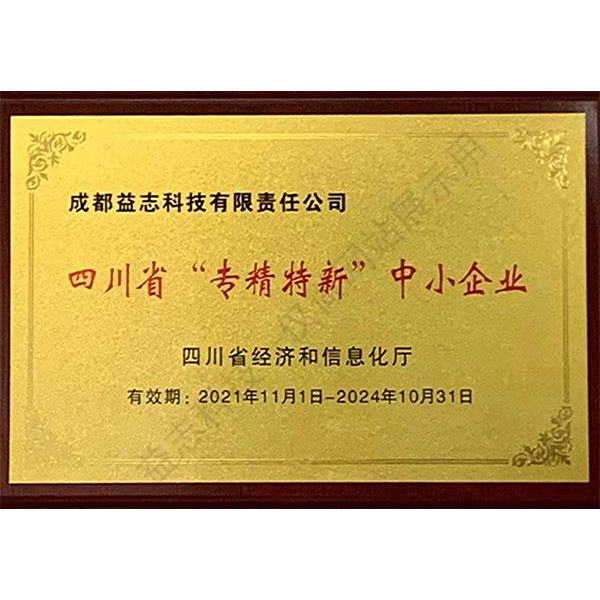
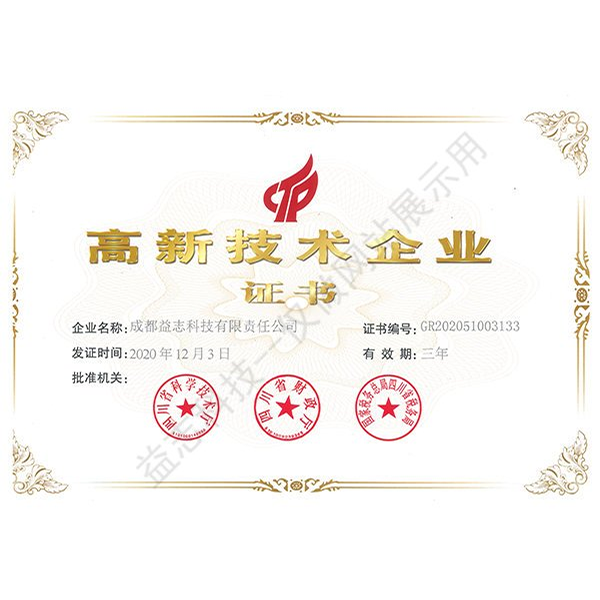
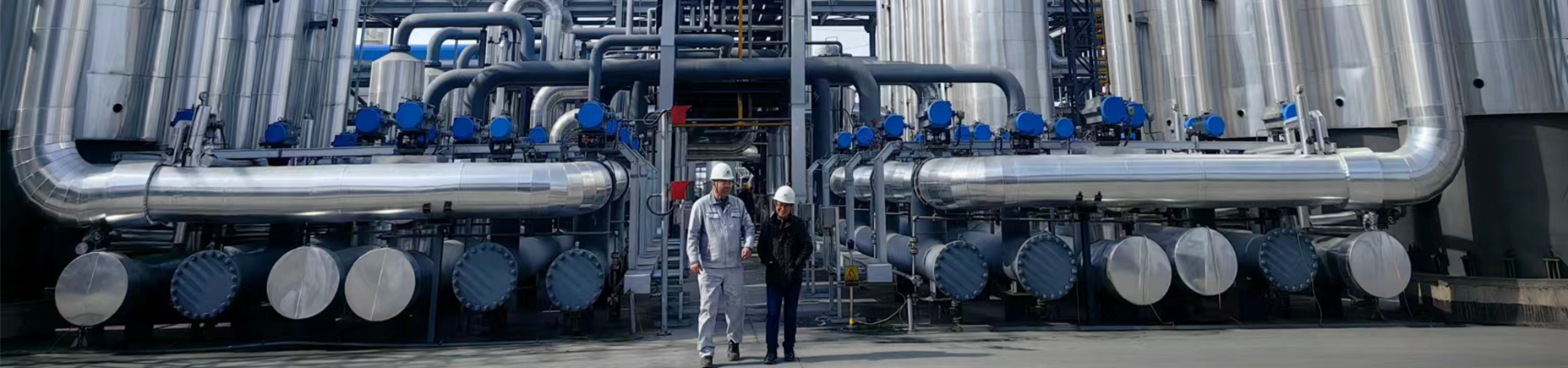
Speaking about equipment, one cannot fail to mention such players asChengdu Yizhi Technology Co.. Established in 2013 as a design institute under Huaxi Technology, with a registered capital of 120 million yuan, this company is a frequent presence in the supply chain for many Chinese manufacturers. Their websiteyzkjhx.rureflects the approach well: they do not just sell reactors or dryers, but offer full cycle engineering. What does this mean in practice? For example, they can help redesign the reagent supply system to minimize those local concentration fluctuations that I discussed.
But even with good “hardware” technological regulations remain key. I remember a story with one line where reactors made of a special alloy were used to reduce iron impurities. Everything was perfect until they changed the sodium hydroxide supplier. The new product showed slightly elevated levels of chlorides. Not critical for most processes, but in our case it began to slowly, almost undetectable by standard methods, corrode that very protective layer of the alloy. Iron went into the product. The defect appeared only at the testing stage of finished cells - a drop in capacity after 200 cycles. We searched for the cause for a week until we did an in-depth ICP-MS analysis of the precursor for the entire batch.
Hence the conclusion: equipment is a system. You can buy the most expensive reactor fromChengdu Yizhi Technology Co., but if your source salts, water, shop atmosphere, and even the logistics of the intermediate product are not built into a single, controlled loop, consistent quality will not be achieved. Often it is at the junctions of these processes - between synthesis and washing, between drying and calcination - that the main losses in quality occur.
Evolution of requirements: from NCM 523 to high-nickel compounds
Previously, during the dominance of NCM 523 or 622, the requirements for the precursor were more lenient. Now, with the transition to NCM 811, NCA, and even more so to materials with 90% nickel, everything has become an order of magnitude tougher. High-nickel compounds are extremely sensitive to residual moisture. Even traces of water can trigger a reaction on the surface leading to the release of gases in the finished battery. Therefore, drying and subsequent storage have become critical steps.
We spent a lot of time selecting vacuum drying modes. The temperature is too high - surface oxidation begins and loss of lithium occurs at the lithiation stage. Too low and you will not be able to remove adsorbed water from the micropores between the nanocrystals inside the secondary particle. It was necessary to introduce a multi-stage mode with control of the dew point of the exhaust gas. This is a case where technology has moved far beyond simple cabinet dryers.
Another point is morphology. High energies require not just dense spheres, but often porous or even hollow structures that better compensate for volumetric changes during cycling. Getting such a structure in a controlled manner is an art in itself. Here, additives to the solution and special mixing modes play a role, creating certain hydrodynamic conditions in the reactor. Some Chinese laboratories demonstrate fantastic samples, but repeating this in an industrial reactor of 10 cubic meters is a task of a completely different level of complexity.
Quality control: don't trust, check
In this industry, paranoid control is the norm. Each batch of precursor undergoes not only standard XRD for phase and SEM for morphology. BET for specific surface area, analysis of particle size with a laser diffraction analyzer (and they look not only at D50, but also the entire distribution, especially “tails”), ICP for stoichiometry and impurities are required. Key impurities - iron, sodium, calcium, zinc - should be at the level of units or even tenths of ppm.
But this is not enough. The most revealing test is the production of test cells of the “coin cell” type. and their complete cycling. Only electrochemical tests will show the real impact of all technological nuances: discharge rate, loss of capacity over time, and impedance. It happened that the precursor was ideal in all physical and chemical parameters, but the cell showed an abnormally high voltage drop at high discharges. The reason may lie in the thinnest amorphous layer on the surface of the particles, which is not visible to SEM. It can only be detected by methods like high-resolution TEM or XPS, but this is for in-depth debriefing.
Therefore, the workshop always has a small pilot line for the production of electrodes and cells. This is a ?window? into the actual behavior of the product. Without such feedback, you work blindly. You can improve the friability of the powder over the years, but this will not have any effect on the battery characteristics, because the “bottleneck” was in a different place.
Looking to the future: what's next?
Now everyone is passionate about high-nickel compounds, but new challenges are already visible on the horizon. For example, cobalt-free materials like LMFP (lithium manganese iron phosphate) or high manganese. They have a completely different chemistry for the synthesis of precursors. If for NCM this was the coprecipitation of hydroxides or carbonates, then for phosphates it was different processes. Or the increasingly popular solid-state batteries - they may require precursors with special surface modifications for better contact with the solid electrolyte.
Another direction is deep processing. Recycling technologies that make it possible to obtain a ready-made precursor from scrap batteries directly, bypassing the stage of separation into individual salts. This is still expensive and difficult, but the pressure of ESG requirements will only grow. Chinese companies, including engineering centers such asChengdu Yizhi Technology Co., are already actively conducting R&D in this direction. On their resourceyzkjhx.ruYou can find information about pilot plants for regeneration.
So, to sum up informally, I will say: the technology for the production of precursors in China is not a frozen dogma. This is a living, rapidly evolving process, where behind the external impression of giant factories hides titanic work on details. From pump dosing accuracy to electrochemical test data interpretation. Success here is determined not by the largest reactor, but by the depth of understanding of the relationships between hundreds of parameters at all stages. And it is precisely this “dirty”, unpretentious work in laboratories and on experimental lines that allows China to maintain leadership in this segment, constantly raising the bar.