China: innovations in oxygen purification?
2026-03-11
When you hear about “innovations in oxygen purification from China?”, the first thought is again marketing, again they promise mountains of gold. Many times I came across projects where, under beautiful words, there was hidden either an outright repackaging of old technologies, or something so crude that it was not even close to industrial application. But over the past five to seven years, the picture, frankly speaking, has begun to change. And it’s not about loud statements, but about specific projects that I saw or heard about from colleagues working on site. This is not about fundamental discoveries, but rather about systems, applied engineering - how to bring known principles to the level of reliable, efficient and, critically, economically feasible equipment. This is especially noticeable in the sectoroxygen purificationfor metallurgy, chemical industry and medicine.
Where does this interest come from?
It all comes down to scale. Chinese industry is a gigantic consumer of industrial gases. Any, even small, increase in the efficiency of the air separation process or product purification provides enormous savings on a national scale. Therefore, investments in R&D are quite pragmatic here. But another driver is often overlooked: environmental regulations. They are tightening up by leaps and bounds, and simply ?produce oxygen? not enough. It is necessary to minimize energy consumption (and therefore emissions from power plants) and guarantee the purity of the output product so that, for example, in the electronics industry there is no risk of contamination of silicon wafers.
I once worked on an audit of a short-cycle heatless adsorption (PSA) installation for the production of medical oxygen. The customer complained about the high consumption of zeolite and a drop in productivity. The standard answer is to change the adsorbent. But Chinese engineers from the development company seem toChengdu Yizhi Technology Co., dug deeper. They didn’t just offer a different type of zeolite, but revised the entire hydrodynamics in the columns and changed the configuration of the distribution trays to reduce flow resistance and spot waterlogging. The result is that they not only extended the life of the adsorbent by 30%, but also reduced the energy consumption of the compressor. This is a typical example of their approach: not to reinvent the wheel, but to optimize every gear in it to the limit.
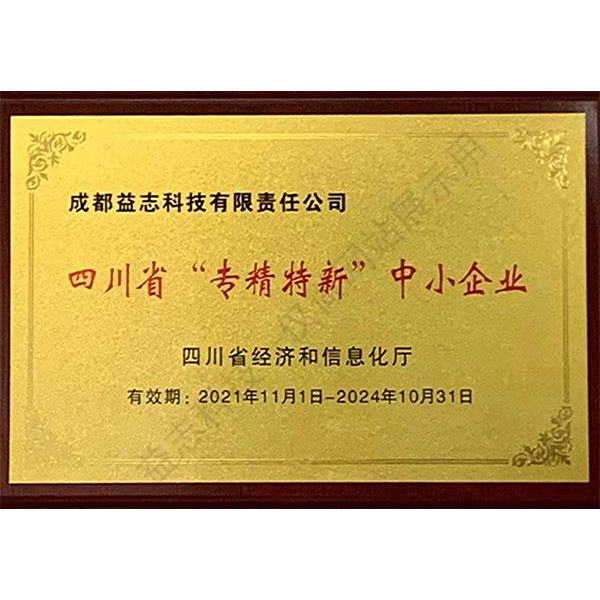
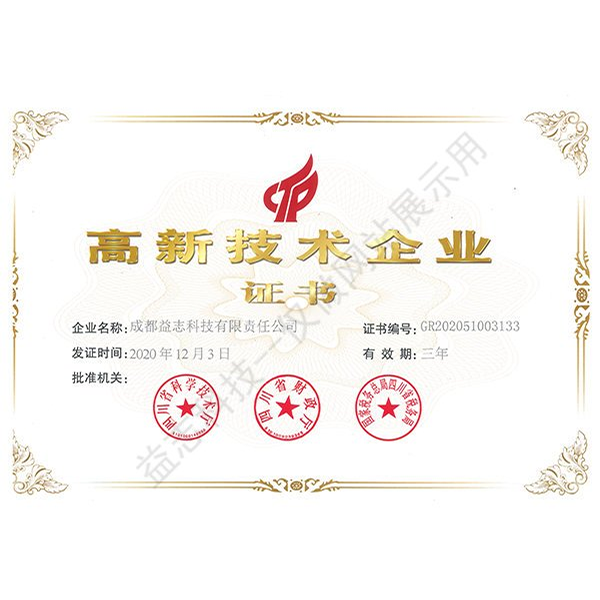
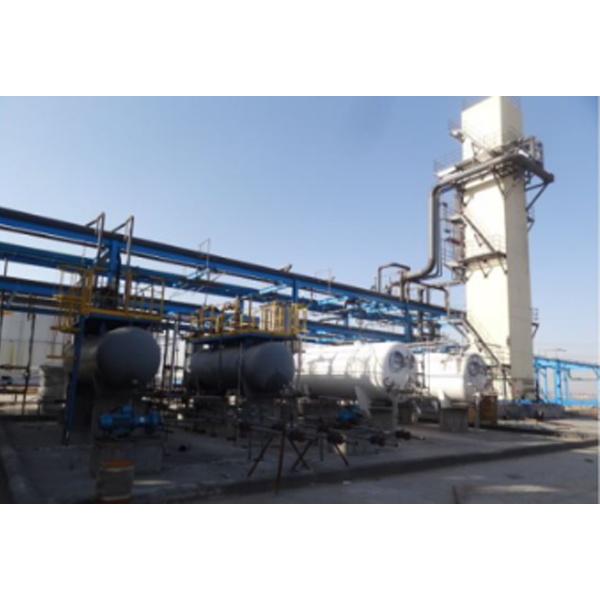
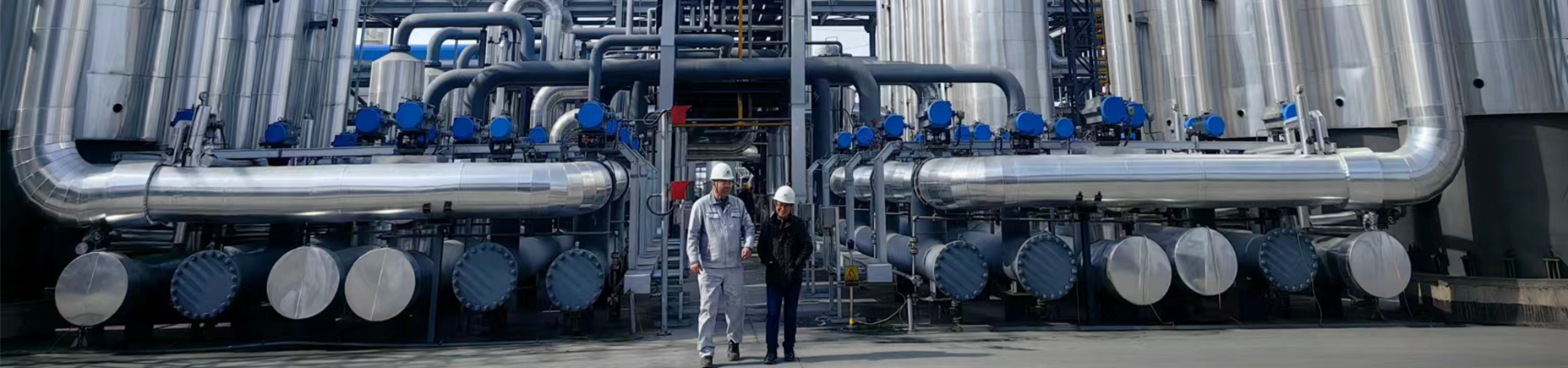
By the way, aboutChengdu Yizhi Technology Co. (https://www.yzkjhx.ru). This is not just a manufacturer, but how they position themselves - a design institute created on the basis of a chemical technology company. A registered capital of 120 million yuan is a serious bid. Their strength, in my opinion, is that they work as a link between fundamental research (of which there is now a lot in China) and the actual factory floor. They take a laboratory development, test it on pilot plants, and then offer the client a ready-made turnkey technological solution. I saw their projects on deep purification of oxygen from hydrocarbons for oxidation processes - there the combination of catalytic and adsorption methods was built very competently.
Where exactly are they looking for breakthroughs?
If we talk about technological areas, attention is focused on several growth points. The first is membranes. Not those generic polymer membranes for rough separation, but highly selective composite materials. Chinese laboratories are actively experimenting with nanoporous structures based on metal-organic frameworks (MOFs) or graphene oxides. So far these are mainly articles in scientific journals, but there are already pilot lines where such membranes are being tested to remove microimpurities of nitrogen and argon from the oxygen flow. The problem, as always, is durability and scaling. One technologist I know complained that a MOF-based membrane showed fantastic selectivity for the first two hundred hours, and then its pores began to become clogged with something that even analysis could not immediately identify.
The second area is adsorbents. Here the work is going in two directions: the creation of zeolites with a given pore size (for a specific pollutant molecule) and the development of hybrid materials. For example, zeolite impregnated with nanoparticles of silver or manganese oxide, which not only adsorbs, but catalytically decomposes impurities such as ethylene or acetylene. It is critical for the production of oxygen for respiration and for some chemical syntheses. I saw an experimental batch of such material - it looked like ordinary granules, but its regeneration required not standard heating, but washing with a certain gas mixture. Engineers had to redo the valve control unit.
Third, is it “smart?” control. It would seem, what's new here? But Chinese companies, including Yizhi Technology, are actively implementing systems based on the Industrial Internet of Things (IIoT) and machine learning. Sensors monitor not only pressure and temperature in real time, but also the spectral composition of the outlet flow. The algorithm learns to predict the moment of breakthrough of impurities or depletion of the adsorbent not by a fixed time, but by the dynamics of changes in parameters. This allows you to optimize cycles, save energy and resources. True, at the start, such systems are a headache for maintenance personnel accustomed to buttons and pressure gauges.
Dips and pitfalls
You can't talk about innovation without talking about failure. There are enough of them. A common story is when laboratory success is tried too quickly and crudely to be transferred to industry. There was a case at one steel mill: they introduced a new schemeoxygen purificationusing low temperature catalysis to remove hydrogen. In the laboratory, using pure synthesis gas, everything worked perfectly. At the plant, the flow contained traces of siloxanes from compressor lubricants, which were not taken into account. The catalyst has been poisoned? within a week, the project was frozen and they returned to the old, less effective, but proven scheme. This is a classic mistake - underestimating the real, “dirty”? composition of raw materials.
Another problem is the economy. The most advanced adsorbent or membrane may simply be too expensive. Chinese companies are getting out of this by localizing the production of raw materials and scale. But even this does not always save. I remember one vendor offered superzeolite with a record moisture capacity. But its regeneration required a temperature 50 degrees higher than the standard one. We would have to redo the furnace and increase fuel consumption. As a result, the project life cycle became negative. Nobody needs innovation for the sake of innovation.
And, of course, the human factor. New technologies require new skills. It is not enough to install the installation, you need to train people to operate it, to understand its “behavior”. I came across a situation where, after upgrading the cleaning unit, operators out of habit turned on the regeneration mode according to the old timer, negating all the advantages of the adaptive system. I had to conduct a whole series of practical trainings right on the spot.
What does this mean for the market?
So, what do we have in the bottom line? China is not so much inventing completely new principlesoxygen purification, how many become the world leader in their development, integration and commercialization. Their approach is systematic: from basic science (which is generously funded by the state) through applied institutes (like the aforementioned Chengdu Yizhi Technology Co., Ltd.) to mass production of equipment. This creates a powerful synergistic effect.
For global players, this is both a challenge and an opportunity. The challenge is because Chinese equipment is becoming more and more competitive not only in price, but also in technical characteristics, especially in the medium-power segment. Opportunity - because a new source of technology solutions and components is emerging. It is no longer uncommon for European engineering to purchase key elements of installations from China, for example, control units or specialized adsorbers, and integrate them into their complexes.
Personally, I think the most interesting trend is hybridization. The future does not belong to just one “victorious” one. technology, but behind their smart combination. For example, a membrane unit for primary enrichment, followed by short-cycle adsorption on “smart” ones. zeolites for fine cleaning, and all this under the control of a self-learning system. It is in the creation of such flexible, efficient and reliable complexes, and not in loud slogans, that real Chinese innovations in this area are manifested today. And judging by the pace and depth of development, this trend will only gain strength.
Instead of a conclusion: a look ahead
If you try to look beyond the horizon, then the main efforts, in my opinion, will shift towards resource saving and customization. Industry demands are becoming more and more specific. One plant needs oxygen of 99.8% purity, but with a guaranteed absence of even traces of CO2, another - 99.5%, but with the lowest possible cost under unstable load. There will be fewer universal solutions.
Digital twins will begin to play a major role - virtual models of installations on which new operating modes can be tested, wear predicted and personnel trained without risk to real production. Chinese companies are already actively investing in this area.
And one last thing. Success will depend not only on technology, but also on the ecosystem. It depends on how quickly and smoothly the data from the installation’s sensors can be integrated into the overall energy management system of the plant or technical gas logistics. This is where innovation in oxygen purification ceases to be an isolated task and becomes part of the big picture of “smart”. production. And in this big picture, Chinese players appear to have every chance of occupying a very prominent place. Not because they shout loudly, but because they have learned to do complex things reliably and with an eye on the final economics of the project. And this, ultimately, is the most powerful argument on the market.