China: argon purified from oxygen?
2026-03-11
Here is a question that often comes up in conversations with technologists and buyers: is it possible to get really high-quality, deeply purified argon from China? Many immediately grunt skeptically, saying that there is only a commercial product, with residual oxygen under 10 ppm, and for high-purity processes there are only proven European or American suppliers. But reality, as usual, is more complex and interesting than these cliches.
Where does skepticism come from?
The doubts are not out of nowhere. About 10-15 years ago the situation was exactly like this. Chinese gas producers for the most part focused on the domestic market and standard industrial tasks - welding, metallurgy, where the requirements for argon purity are modest. Equipment for deep cleaning, especially from tracesoxygenand moisture, was expensive, and know-how was in short supply. Therefore, the batches that were exported were often “like everyone else”, and unpleasant surprises occurred. I remember a story with one of our clients from Poland who bought a “high-purity” one. argon for the production of optical fiber. After starting the process, problems with uniformity began. Analysis showed that it was oxygen that was to blame, the content of which floated and in peaks reached 15 ppm instead of the stated 3 ppm. The supplier remained silent, and the reputation of Chinese gas was damaged for a long time.
But it’s important not to generalize here. Because in parallel with these mass stories, completely different projects were developing in China. We are talking about companies that were initially designed for complex chemical and technological processes, where the purity of raw materials is a critical parameter. They didn’t just buy purification columns, but conducted their own R&D, adapting technologies to specific needs, for example, for the semiconductor industry or pharmaceutical synthesis.
A key point that many people miss is the difference between the manufacturer of liquefied argon from the air and the company that is engaged in its subsequent deep purification. The first are the giants with air separation units (ASU). Their product is the foundation. And the latter are precisely those same technological institutes or engineering companies that take this commercial argon and “bring it to mind?” in specialized installations, often using getter technologies, metal membranes or catalytic oxygen binding.
Paradigm change: project engineering instead of simple trading
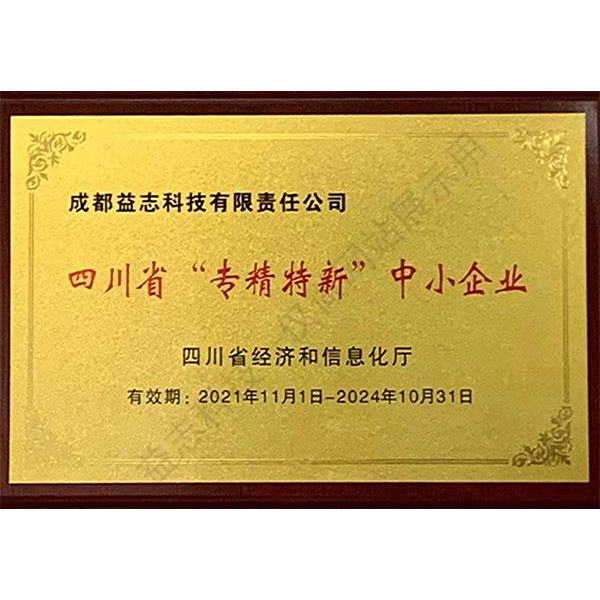
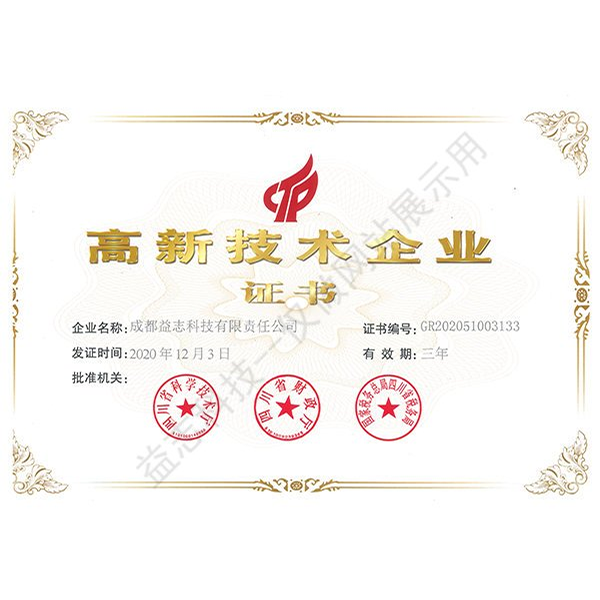
This is where we get to the point. The market is no longer homogeneous. There are players for whom ?argon purified from oxygen? - not a line in a catalog, but a specialized engineering task. This is exactly what it applies toChengdu Yizhi Technology Co.is a design institute created by Huaxi Technology. If you go to their websiteyzkjhx.ru, their orientation becomes clear: this is not a reseller, but an engineering company with a registered capital of 120 million yuan, operating since 2013. Such structures are usually deeply immersed in the process.
What is their advantage? They often work ?from a task?. A client comes with a requirement: “I need argon with a residual O2 of less than 0.5 ppm for a chemical vapor deposition (CVD) process?” There is no standard solution - for each dew point, each pressure and each flow volume, the cleaning system may require customization. Yizhi Technology, as a design institute, can deal with calculations, selection of catalysts, design of drying and final cleaning schemes. This is already a level of partnership, and not just the purchase and sale of cylinders.
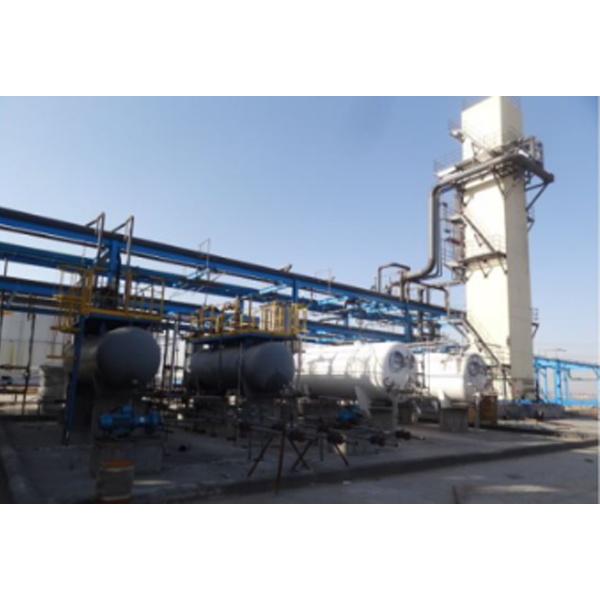
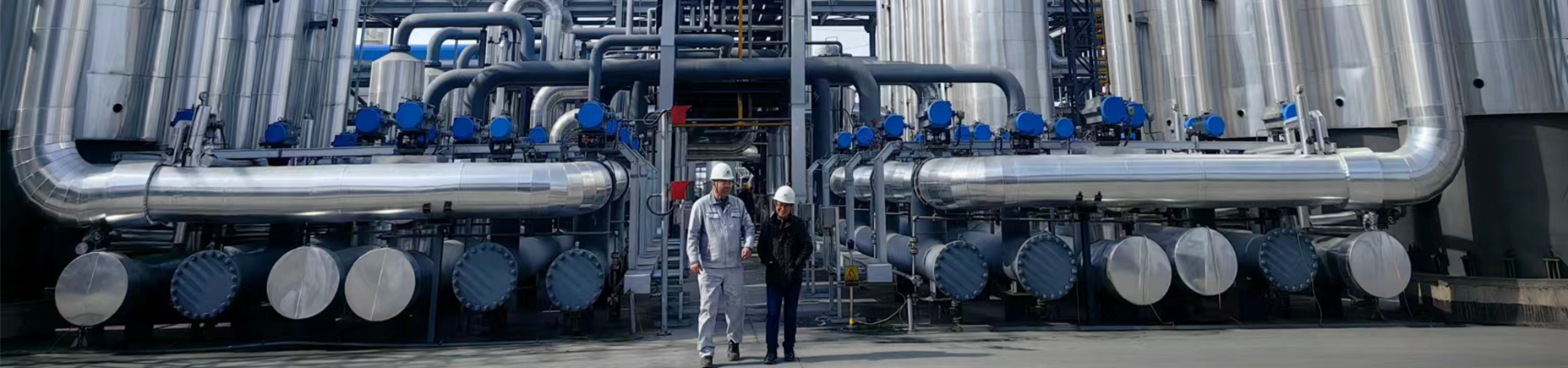
In practice, it looks like this: they can supply not just gas, but an entire cleaning station, which is installed on the client’s side and “holds out” the quality of incoming commercial argon to the required standards. This changes the economy. Importing expensive ultra-pure argon in cylinders from Europe is one thing, but having a plant that makes it on site from available raw materials is another. For the CIS countries, the Middle East, and Southeast Asia, this is sometimes the only cost-effective scheme.
Technological nuances that are rarely written about in brochures
If we talk about specific cleaning methodsoxygen, then there is room to turn around. Palladium catalysts or special getter alloys based on titanium, zirconium, and vanadium are often used. But the catch is that these materials are very sensitive to impurities - the same nitrogen compounds or hydrocarbons that may be in the original argon. They "poison" catalyst, and its capacity drops significantly.
Therefore, a good system is always multi-stage preparation. First, moisture is removed (to a dew point of -70°C and below), then oxygen is removed at the catalytic purification stage, and only then final adsorption traps can be installed to remove possible traces of other gases. The mistake we made ourselves in one of our first projects was saving money on a monitoring system between stages. We thought that since the analyzer showed <1 ppm O2 at the output, then everything was fine. But when the load increased, it turned out that the first drying stage could not cope; moisture broke through and quickly damaged the expensive getter module. I had to redo it. Now we always reserve performance reserves at the first stages and set control points not only at the output, but also between key modules.
Logistics and last mile problems
Let's say the technology is proven, the installation is designed perfectly. But how do you deliver this technology or finished product to the customer? This is where the main stumbling block still lies for Chinese suppliers. High-purity gases require special containers - cylinders with a special coating of the inner surface (electropolishing, passivation) to minimize the desorption of impurities from the walls.
And even if the cylinder is perfect, its transportation is a story about temperature, vibration and time. Long sea transportation from China to the ports of the Black Sea or Baltic, then customs clearance, transshipment onto vehicles - every stage is a risk. The valve may “suck”, and due to temperature changes, internal flows may arise that mix the gas. Therefore, the most demanding customers often ask not for ready-made gas in cylinders, but for on-site purification technology. Or delivery in cryogenic containers, which immediately reduces the risk of contamination by an order of magnitude.
For a company likeChengdu Yizhi Technologythis essentially defines the business model. Their strength is not the logistics of cylinders around the world, but the sale of solutions, licenses, turnkey installations. and, possibly, the supply of critical components (the same getter cartridges or catalysts). Their website shows that the emphasis is on technology and design, which is logical for the institute.
So what's the bottom line? Can you trust?
I return to the original question. ?Chinese argon purified from oxygen? - this is not a myth, but also not a universal reality. This is a specific market segment where serious technology companies operate. Their product can be more than competitive in quality, and often in price, especially if we are talking about a comprehensive solution.
But you need to trust not the country of origin, but the specific supplier. The criteria are simple: does it have its own R&D base? Does it work on the principle of a design institute, likeChengdu Yizhi Technology Co., or just resells? Can he provide a detailed batch-specific cleaning protocol, online monitoring data from the plant? Are you ready to discuss not only specifications, but also details of the technology, nuances of adaptation to your raw materials?
If the answers to these questions are positive, then yes, such argon can not only be taken, but often it will be the optimal choice. The main thing is to understand what you are buying: not just gas, but embodied engineering competence. And in this sense, some Chinese players have long surpassed many traditional suppliers who have been selling the same thing for decades without delving into the details. The market for purified gases is becoming more and more technologically advanced, and the boundaries here are determined not by geography, but by the depth of elaboration of the problem.