China: new technologies for cleaning coke oven gas?
2026-03-11
When do you hear about “new technologies?” in this area, I immediately want to ask – what exactly is considered “new”? Many people, especially at the start, imagine something revolutionary, like nanomembranes or plasma treatment. But in practice, in coke chemistry, especially in China with its scale, “new?” often does not mean invention from scratch, but deep modernization and smart integration of already known processes. The main driver here is not just gas purity, but a complex: energy efficiency, recycling of all components (especially hydrogen sulfide and hydrogen cyanide), and, of course, strict environmental standards, which are becoming stricter every year. It is a mistake to pursue only a “high degree of purification”, without taking into account capital and operating costs. I have seen projects where super-efficient scrubbers were introduced, but due to the enormous consumption of reagents or difficulty in maintaining the installations, the installations were idle. The bottom line is that technologies must be not just advanced, but cost-effective and reliable in a continuous cycle.
From ammonia water to complex catalytic systems: evolution of the approach
If you look back, the classics of the genre in China for a long time are methods based on ammonia water, the same AS cycle. It works, it’s been tested, but it has its own pain points. Corrosion of equipment, formation of deposits, and with the disposal of by-products, such as ammonium thiocyanate, a headache. The trend now is to move away from simply “neutralization?” to the selective extraction of valuable components.Coke gas purificationceases to be a costly item and becomes a link in the value chain. For example, the extraction of hydrogen sulfide to produce elemental sulfur or, more promising, sulfuric acid directly on site for the needs of the same chemical cycle.
One of the most interesting shifts that I have observed over the past 5-7 years is the active introduction of catalytic oxidation methods, especially for the removal of HCN and residual organic compounds. I won’t go into complex formulas, but the point is that on special catalysts at certain temperatures these harmful impurities are burned down to CO2, N2 and water. The key problem here is not the activity of the catalyst (this can be achieved), but its stability and resistance to poisoning by other gas components. I saw a pilot plant in Shanxi, where, due to fluctuations in the content of resins and dust at the inlet, the catalyst layer sintered and lost activity in six months instead of the stated three years. We had to radically modify the pre-cleaning system.
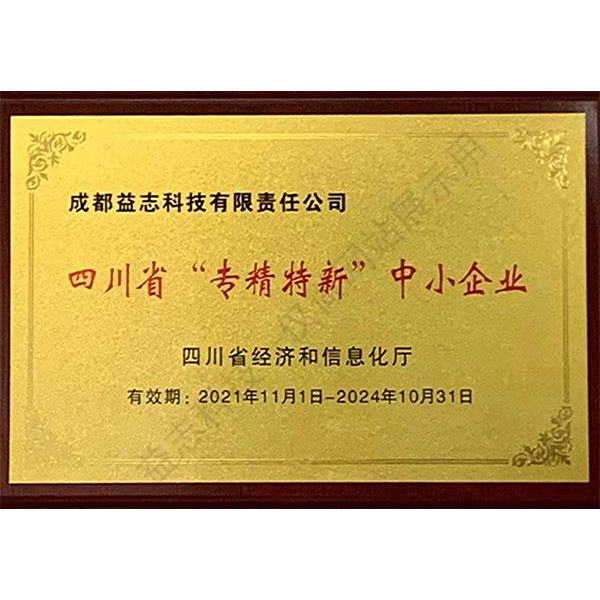
It is in this combination - preliminary mechanical and chemical washing plus final catalytic afterburning - that now, in my opinion, lies the most practical path. This is not some kind of “magical” one. technology, namely the technological chain. By the way, many Chinese engineering companies now offer just such complex “turnkey” solutions. They take care of the design, supply of equipment, and commissioning. Like for exampleChengdu Yizhi Technology Co.(their website ishttps://www.yzkjhx.ru). This is their profile - design and implementation specifically in the coke and chemical industries. They, by the way, are not just sellers of equipment, but an institute created on the basis of Huaxi technology, which implies serious research and adaptation work for a specific production.
Dust, resins, benzene hydrocarbons: where does cleaning begin?
Any conversation about deep cleaning is meaningless if the issue of primary gas treatment has not been resolved. Coke gas at the outlet of coke oven batteries is an explosive mixture of dust, tar droplets, and naphthalene. If you put it all directly onto a catalyst or into an absorber with an expensive reagent, it’s the end. Therefore, the first and mandatory stage is electric precipitators and all kinds of scrubber-catchers. Here, it would seem, everything is standard. But the nuances are in the details.
Например, эффективность улавливания смол. Old cyclones and centrifugal scrubbers do not cope well, especially with the fine fraction. Nowadays, electrostatic resin traps (TEC) are often installed. They are good, but require perfect control of the gas temperature - if it falls below the dew point of the resins, problems with the electrodes begin. There was a story at one of the factories in Hebei when, due to a failure in the heat exchanger in front of the TES, the temperature dropped and the resin began to condense directly on the precipitation electrodes, causing a short circuit and a week-long downtime. We had to urgently install an additional heater with redundancy.
Another point is the removal of benzene hydrocarbons. They are, of course, extracted as a valuable product, but it is important to do this as completely as possible before the deep purification stages. Because benzene vapor is also poison for many catalysts. Here technologies range from oil absorption to activated carbon adsorption. The choice depends on the volumes and the required degree of extraction. I saw how adsorption technology with vacuum regeneration was successfully used in a small installation - compactly and quite efficiently for their scale.
The war on hydrogen sulfide: from monoethanolamine to wet catalysis
Hydrogen sulfide is the main enemy. The arsenal here is huge. Classic amine purification (MEA, DEA) is still widely used, especially when it is necessary to achieve a high degree of purification (up to 20-50 mg/m3). But its disadvantages are high energy consumption for amine regeneration and sensitivity to the presence of HCN and COS, which cause amine degradation. Therefore, now they often take the path of combination.
The so-calledwet catalytic oxidation method. Essentially, it is the oxidation of HCN and H2S in the liquid phase in the presence of a catalyst based on iron or other metals. The technology, by the way, is not new, but Chinese engineers have greatly improved it, increasing the stability of the catalytic solution and simplifying the regeneration system. The main advantage is that both hydrogen sulfide and hydrogen cyanide can be removed simultaneously, obtaining, for example, ammonium thiocyanate or ammonium sulfate as a by-product. The economy immediately becomes more attractive.
In practice, I was faced with the fact that the success of this method strongly depends on the quality of gas preparation at the previous stages. If there are a lot of resinous substances or dust left in the gas, they “clog”? catalytic solution forms foam and efficiency decreases. Therefore, the implementation of such a system always requires a thorough audit of the entire gas purification chain, and not just replacing one unit. This relates to the issue of an integrated approach, which I spoke about at the beginning.
Hydrogen cyanide: invisible but insidious
HCN is often remembered secondarily, but in vain. This is not only a powerful poison, but also the cause of many technological problems. It causes corrosion of equipment (especially in condensation areas), poisons catalysts, and complicates wastewater disposal. Traditional methods are absorption in alkaline scrubbers to produce sodium cyanide or ferrocyanides. But the market for these products is limited, and their further processing or disposal is a separate headache.
Nowadays, more and more attention is paid to methods for the destruction of HCN directly in the gas phase. For example, the same catalytic hydrolysis on zeolite or aluminum oxide catalysts. HCN in the presence of water vapor decomposes into NH3 and CO. The technology is effective, but, again, it requires very careful preliminary purification of the gas from catalytic poisons. Plus, the resulting ammonia must then be disposed of somewhere, which brings us back to the system as a whole.
An interesting case was during the modernization of a plant in Liaoning. There they solved the problem in a comprehensive manner: they installed a wet catalytic oxidation unit for the joint removal of H2S and HCN, and the ammonium thiocyanate formed in the solution was then concentrated and sold as a commercial product for the chemical industry. I won’t say that this paid for the entire cleaning system, but it significantly reduced operating costs. Such decisions are precisely in the spirit of the work of design institutes likeChengdu Yizhi Technology Co.Their strength, in my opinion, is that they look at the process not in isolation, but as part of the production circuit of the plant. Their registered capital of 120 million yuan also indicates serious opportunities for the implementation of such complex projects.
Finish polishing and control: where the trend is heading
After the main stages of cleaning from sulfur and cyanide, the question of final “polishing” often arises. gas – removal of residual trace amounts of impurities, organic vapors, odors. Here, adsorption technologies on activated carbon (sometimes impregnated with special reagents) or, increasingly, thermal or catalytic afterburning in compact reactors are used.
This is especially true for gas that is used as fuel in sensitive installations or supplied to city networks. Control becomes key. Modern systems are equipped with continuous gas analyzers not only for H2S and O2, but also for HCN, NH3, and general organic compounds. The data flows into the automated process control system, which can adjust the operating modes of scrubbers and the dosage of reagents in real time.
The main trend that I see is digitalization and “intellectualization?” cleaning units. We are not talking about “artificial intelligence”, but about advanced control systems that, based on modeling and data from sensors, optimize the process and predict the need for maintenance (for example, replacing the catalyst or washing the scrubber). This is the next logical step after testing the hardware solutions themselves. Saving on reagents and energy, increasing the mileage between repairs - this is what this optimization provides. And Chinese technology suppliers, including the mentioned engineering companies, are actively developing this area, offering not just equipment, but technology along with its management system.
Instead of a conclusion: what is really ?new??
Так что же в итоге можно назвать новыми технологиями в Китае сегодня? This is not just one sensationalist setup. This is, firstly, a deep modernization and hybridization of classical methods (catalysis + absorption + oxidation). Secondly, there is a strict link between purification and recycling and the production of by-products, which changes the economics of the entire process. Thirdly, this is an integrated, systematic approach to design, where preliminary, main and final cleaning are designed as a single whole, taking into account all mutual influences.
And, perhaps, the most important thing is adaptability. There are no universal solutions. What works brilliantly at a giant coking plant in Shanxi may be prohibitively expensive and complex for a smaller plant. Therefore, successful implementations are always based on an in-depth analysis of the source gas, plant capabilities, requirements for final products and environmental regulations. This is precisely what specialists at companies like Chengdu Yizhi Technology appear to be doing, acting not as salespeople, but as technology partners. This is probably the main difference between the modern approach: it is not equipment that is sold, but a guaranteed result in gas purity within a given budget. And behind this result lies a whole range of solutions - from mechanics to catalysis and automation.