China: leader in exporting CO removal technology?
2026-03-10
When they talk about Chinese technologies in the field of gas purification, many immediately think about cheap equipment and copying Western solutions. It's superficial. If you dig deeper, especially in a nicheCO removaland accompanying processes, the picture is different. This is no longer about price, but about adaptation to the harsh and specific conditions that we encounter in practice.
From laboratory to industrial site: where the gap lies
The theory of catalytic oxidation of CO has been known for decades. But in China we had to quickly learn from our mistakes. I remember the first industrial installations in the early 2010s to purify waste gases from ammonia production plants. Catalysts claimed to be universal were in practice poisoned by sulfur or phosphorus impurities in a matter of months. We had to urgently develop flushing systems and step-by-step cleaning. It was a painful but key lesson: CO removal technology is always a system for a specific gas composition.
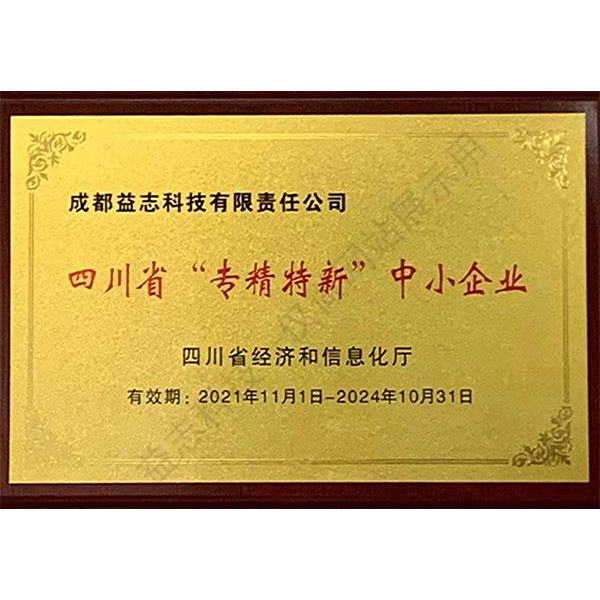
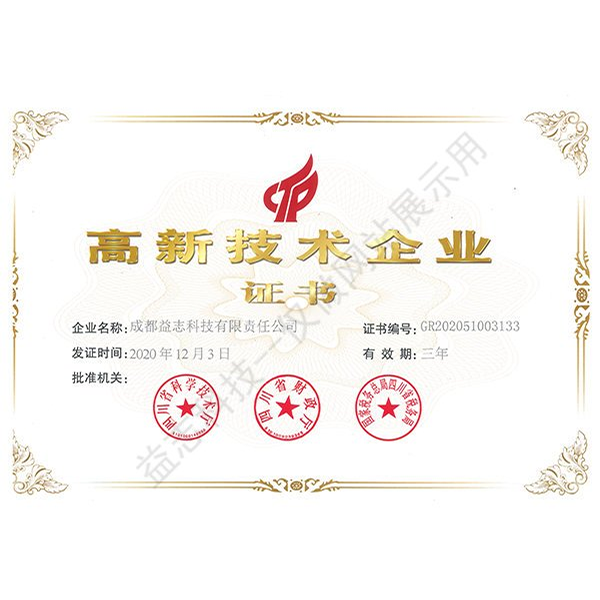
It was this experience that led to a boom in the design of modular solutions. Instead of selling a box, companies began to offer turnkey engineering, starting with an in-depth analysis of the customer’s gas. This is where the strength of Chinese engineering institutes, which worked closely with industry, came into play. One of the striking examples isChengdu Yizhi Technology Co.(their website isyzkjhx.ru). They were originally created as a design institute at a chemical technology enterprise, so they have a connection with real production in their DNA. Not just drawings, but an understanding of how the installation will behave during pressure or temperature fluctuations in an operating plant.
A common problem that is not widely discussed in articles is dust. Especially in metallurgy or solid waste processing. The catalytic layer quickly becomes clogged and efficiency decreases. It was necessary to integrate electrostatic or fabric filtration systems, and in such a way that this did not catastrophically increase the system resistance. Lots of iterations, lots of trials. Sometimes the solution turned out to be simpler than thought: for example, adding a certain stage of gas humidification before entering the reactor sharply reduced dust content and extended the life of the catalyst.
Catalysts: not only the active component, but also the carrier
There is a lot of noise about the composition of the active components (copper, manganese, platinum), but in industry the carrier often decides everything. Chinese manufacturers, especially in Sichuan and Shandong, have learned to make highly durable ceramic and metal media with precise channel distribution. This is critical for large volumes of gas. Western analogues are often too expensive for large-scale projects in Asia or Africa.
We had a project in Southeast Asia - it was necessary to modernize the converter gas purification system. Local conditions: high humidity and periodic emissions of chlorides. The standard alumina catalyst was not suitable. Together with engineers from Chengdu Yizhi Technology Co. Ltd. (let me remind you, this design institute with a registered capital of 120 million yuan was created precisely for such complex tasks) selected a carrier with high alkalinity and special promoters. It took almost six months of testing at a pilot plant. The result is that the service life of the layer has increased from the predicted 1.5 years to more than 4 years. But the main thing is that we accumulated data, which we later used in other projects with similar aggressive gases.
The current trend is combined catalytic systems, where CO removal is combined with the decomposition of VOCs or nitrogen oxides. This is difficult because the temperature windows for reactions are different. I saw several unsuccessful attempts where they tried to cram everything into one reactor. This led to overheating of local zones and sintering of the catalyst. Successful cases typically use a cascade design with intercooling or injection. It is more expensive to build, but cheaper in the long run.
Export: not just selling hardware, but transferring know-how
When China began actively exporting gas purification technologies, many perceived this as dumping. But now, especially in the markets of the CIS, the Middle East and Latin America, it is an integrated approach that is valued. They are buying not just a reactor, but a solution that includes training local personnel, adapting emergency protection (emergency protection) to local standards and supplying spare parts according to an understandable scheme.
The key point is turnkey, taking into account local logistics. For example, when delivering an installation to Kazakhstan, a problem arose: some large-sized elements simply did not pass along local roads to the industrial site. The reactor had to be quickly redesigned on a modular basis so that it could be assembled on site from smaller parts. This increased the installation time by two weeks, but saved the project. Such nuances are not spelled out in textbooks; they only come with experience in implementing projects in different parts of the world.
Websiteyzkjhx.ruis a good example of how a company presents this very experience. It is clear that the information is structured not for beauty, but for a potential customer who has a specific task: here is my gas composition, here are my area limitations. And it works. Contracts are often concluded after lengthy correspondence on technical details, where our engineers literally become fused with the customer’s problem.
Economics of the process: where are the real savings?
When talking about leadership in exports, we must not forget about the economy. Yes, initial capital costs are often lower than European competitors. But the real trick is to reduce operating costs. The main item here is the energy consumption for heating the gas to the reaction temperature.
Recent projects are actively introducing recuperative heat exchangers with an efficiency above 90%. This allows the heat of the exothermic CO oxidation reaction to be used to preheat the incoming stream, drastically reducing the consumption of external fuel (natural gas or electricity). Sometimes it is possible to make the system practically non-volatile after reaching the operating mode. But there is a pitfall here: if the gas composition is unstable or if the installation is frequently stopped, these savings are reduced to nothing. That’s why accurate calculations and a reliable automatic control system are so important.
Another point is the utilization of the generated CO2. So far this is more of a headache than a profitable item. But in some projects, such as food-grade CO2 plants or for use in greenhouses, purified carbon dioxide becomes a byproduct with a low but positive cost. This area is just developing, but is already included in payback calculations.
Looking ahead: challenges and niches
Leadership is a fickle thing. The main challenge now is the tightening of environmental standards around the world. It's not just about removing CO to some level, but about ultra-low emissions (ppm units) while simultaneously controlling many other trace impurities. This requires even more sophisticated online monitoring analytics and smarter catalysts.
A promising niche is small-scale distributed energy, for example, purification of exhaust gases from cogeneration plants running on biogas. The composition of the gas is extremely unstable, the volumes are small, but there are many requirements for the purity of the emission. What we need here are compact, smart and very reliable solutions. Chinese companies are actively experimenting in this segment because it fits perfectly with their experience of working with unstable flows.
And one last thing. Successful technology export is always about trust. You can't buy it with advertising. It is based on when, after three years of operation of the installation, the same plant turns to you and says: We have a new production facility, let’s design something similar. Or when engineers from the siteyzkjhx.ruThey arrive for a scheduled service not according to schedule, but because they saw a slight shift in parameters in the remote monitoring data and decided to check. This responsibility for results in the long term, in my opinion, is the main non-resource export product. And in technologyCO removalthis manifests itself like nowhere else.