China: LNG liquefaction technologies and products?
2026-02-21
When they talk about Chinese technologies in gas liquefaction, many immediately think about large-scale turnkey plants. or about borrowing Western solutions. But the real picture, especially in the segment of modular plants and cryogenic equipment, is much more detailed and in some places not obvious. It has its own specifics, its own strengths and, of course, its pitfalls, which are rarely written about in glossy brochures.
Where the roots grow from: not only scale, but also flexibility
Yes, China is building giant base terminals, that's a fact. But in parallel, since the 2010s, there has been a powerful wave of development of small- and medium-scale solutions. This was a response to domestic demand: gasification of remote areas, refueling of vehicles, use of associated gas in fields. And here Chinese engineers showed a lot of pragmatism. Often they took proven cycles, such as nitrogen expansion or mixed refrigerants, as a basis, but brought them to mind in terms of adaptation to local conditions - available materials, climate, operating requirements.
One of the key points is working onrefrigeration cyclesand their optimization for specific performance. It didn't always work out perfectly the first time. I remember that on one of the early projects of a modular plant with a capacity of 50 thousand tons per year, we encountered instability in the operation of the turboexpander due to sudden changes in the composition of the raw gas. The project was, in fact, standard, but local raw materials turned out to have large fluctuations. We had to modify the control system on the fly and make adjustments to the heat exchanger settings. This was a valuable lesson: even proven technology cannot simply be “copied”; deep adaptation is required.
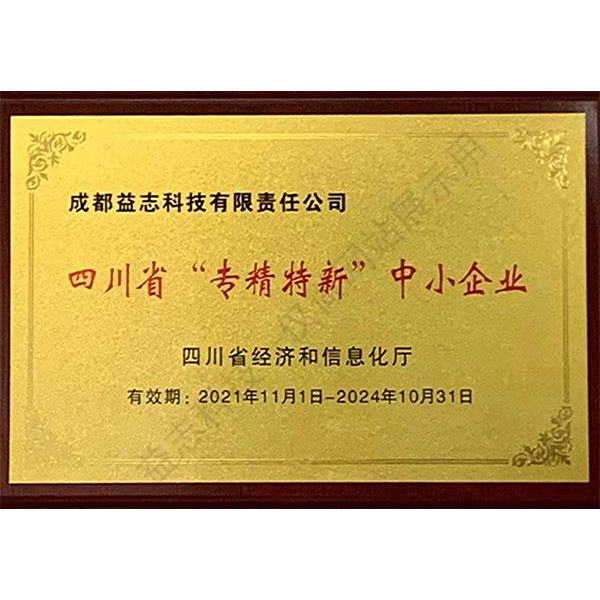
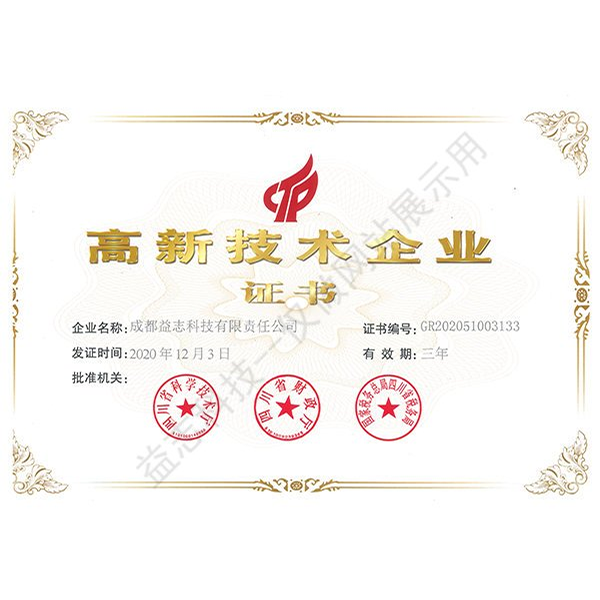
It is in this niche - design and adaptation of technologies - that many engineering companies operate. Here, for example,Chengdu Yizhi Technology Co.(their website ishttps://www.yzkjhx.ru). This is a design institute established on the basis of Chengdu Huaxi Chemical Technology Co., Ltd., with a serious registered capital. They are precisely those who are not on the front pages of the news, but deep inside the process. Their work often involves taking a well-known liquefaction process and “sharpening it up.” it to the specific requirements of the customer for Capex and Opex, which requires practical experience, and not just theoretical knowledge.
Equipment: where Chinese products are really competitive
If we talk about “hardware,” then progress here is noticeable to the naked eye. The main heat exchangers are of the “pipe-in-pipe” type. or coil-wound ones for large projects are still often imported. But for small-scale LNG, Chinese manufacturers have learned to make very decent plate-fin heat exchangers (PRHE). Their efficiency and reliability have grown radically over the past five years. Price, of course, remains a key advantage.
The same goes for cryogenic pumps, fittings and storage tanks. Early models, let’s say, raised questions regarding service life with constant cooling-heating cycles. But now, after many iterations and accumulation of data from real objects, the situation has improved. Especially in the segment of stationary and container storage of liquid nitrogen orLNG— Chinese products have become a frequent choice for projects in Asia and Africa. Not because they are the best in the world, but because they offer the best balance of price, sufficient quality and, most importantly, speed of delivery.
But with compressors and expanders for medium and large installations, everything is more complicated. High-speed turbomachinery is still the territory of several global giants. Chinese companies are actively working on localization, there are successful examples, but the road is still long. More often you can find hybrid solutions: the licensed core of the process is assembled with a large amount of localized peripheral equipment.
Practical difficulties and pitfalls
Anyone who has worked on such projects knows that technology is only a third of the success. The rest is integration, logistics and, most importantly, operation. Chinese contractors have become good at turnkey construction, but sometimes there is a gap between what is shown on the P&ID and what is convenient to maintain in the field, say, in Siberia or the desert.
For example, tying modules. The desire for compactness and minimization of pipe runs sometimes leads to the fact that access to critical valves or instrumentation devices is extremely difficult. This then results in hours of unnecessary work for the service team. Once, at the stage of supervising the installation of such a module from a Chinese assembly, we spent a week redoing part of the piping - just to provide basic access for repairs. Designers in the office cannot always foresee this without field experience.
Another point is insulation materials for cryogenic lines. Standard solutions for China's temperate climate may not be suitable for long-term use in high humidity or marine climates. There were cases when it was necessary to quickly change the type of insulation or vapor barrier scheme already in place, because rapid destruction began. This is a question not so much of liquefaction technology as of complex engineering, which comes with experience, often bitter.
Case: adaptation for raw materials and energy
A good example of a practical approach is working with associated petroleum gas (APG) in small fields. The task is standard: utilize gas, obtainLNGfor local energy or transport. But the composition of the gas is unstable, the pressure fluctuates, and the electrical power on site is often not enough for the energy-intensive classical cycle.
Here Chinese engineers have proposed many variations. One of the memorable projects is the use of a hybrid cycle with preliminary separation of heavy hydrocarbons and the use of the purified gas itself as a refrigerant. The installation turned out to be more energy autonomous. The key was to select and configure the separation equipment and adsorption drying columns to cope with the fluctuations. The project seems to have been supervised by specialists from Chengdu Yizhi Technology Co., Ltd. is a design institute that focuses on such technological solutions for specific conditions, and not on selling standard boxes.
The success of such projects often depends on the depth of pre-project analysis. You can install a standard module and it will work. But for it to work economically for 10-15 years, it is necessary to simulate dozens of scenarios for gas composition and load. This is an area where Chinese companies are now actively expanding their competencies by developing their own software for technological modeling.
Looking ahead: where the industry is heading
Now the trend is digitalization and “intellectualization?” installations. We are not talking about general words about “Industry 4.0?”, but about very specific things: predictive analytics for monitoring the condition of turbomachines, algorithms for optimizing the operating mode in real time depending on the price of electricity and the need for the product. In China, both large state corporations and niche engineering firms do this.
The second direction is to further reduce energy consumption. Work is underway on new cycles and configurations of heat exchangers. For example, experiments using refrigerants based on mixtures that make it possible to reduce the temperature difference in key components and thereby “squeeze out” a few more percent efficiency. This is painstaking work, the results of which are not always immediately visible on the market.
And, of course, hydrogen. Now there is a lot of noise around hydrogen energy, and it is logical that competences in cryogenics and liquefaction are beginning to be applied there too. Experience working with temperatures below -160°C and the materials that work with them is a huge foundation. So perhaps in a few years we will see integrated ?LNG + liquid hydrogen? solutions on the market. from the same players who today hone their skills in liquefied natural gas. But this is a completely different story, with its own challenges.