China: innovation in LNG schemes?
2026-02-21
- From paper drawings to digital twins: where does the breakthrough lie?
- ?Smart? logistics: not only about ship routes
- Energy efficiency: the race for every kilowatt-hour
- Security as a built-in feature, not an add-on
- The role of specialized design institutes: the case of Chengdu Yizhi Technology
- Conclusion: innovation as a subtle evolution
When people talk about innovations in Chinese LNG, many people immediately think about giant terminals or new tankers. But the real work, where real designs are born, is often hidden in design institutes, where every valve is counted and every “what if” scenario is simulated. It is there, and not in loud headlines, that the main evolution of approaches occurs.
From paper drawings to digital twins: where does the breakthrough lie?
Previously, the entire scheme - from acceptance to regasification - was born on the drawing board. Now the key word is -digital modeling. This is not just about 3D visualization, but about a full-scale digital twin that allows you to predict the behavior of the system at different pressures, temperatures, even with partial icing of the equipment. Many people still consider it an “expensive toy” until they are faced with the need to quickly adapt the project to a new type of vessel or changing safety standards.
For example, in one of the projects to upgrade an old terminal, it was necessary to fit a new hose unloading line into the existing dense infrastructure. On paper, everything matched, but the digital model immediately showed risk areas - potential vibrations and points of increased stress at certain connection angles. I had to change the mounting pattern on the fly. Without such modeling, the problem would have been revealed only at the commissioning stage, and this would have meant downtime and millions of losses.
It is important not to overestimate the software here. The most advanced package is just a tool. Innovation is the methodology of its application. This is where Chinese engineering companies, especially those that grew out of the chemical industry, where working with cryogenic and hazardous environments is the norm, show an interesting approach. They take their experience in modeling chemical processes and transfer them to LNG, adding specific parameters like “cold”? expansion of metals.
?Smart? logistics: not only about ship routes
LNG logistics is more than just a map of shipping routes. It is a complex web connecting the terminal, buffer storage facilities, transport corridors and end users. Innovation here is the move from static planning to dynamic, adaptive supply chain management based on real-time data.
Take, for example, the last mile problem. for small consumers in remote areas. The classic scheme with tank trucks is often ineffective. Modular solutions are currently being tested - small mobile regasification units and buffer tanks that can be quickly deployed. Their work must be integrated into the overall logistics network of the terminal. If the system sees that a tanker with a small volume of LNG for such a module is heading to the port, it should automatically adjust the unloading schedule, prepare the necessary ramp, and coordinate the time of delivery of vehicles. It seems like a small thing, but in practice this requires deep integration of terminal dispatch software with external logistics platforms.
Our experience has shown that the biggest difficulty is not technical, but organizational. Different participants in the chain (terminal, ship owner, transport company) often use incompatible accounting and planning systems. We have to create original “translation” ones. digital gateways, which adds another layer to the design of the process flow itself.
Energy efficiency: the race for every kilowatt-hour
In any LNG scheme, huge attention is paid to energy consumption, especially during the regasification stage. Innovation here often looks unheroic - it is not the invention of a new process, but the optimization of an existing one down to the millimeter and degree.
A typical example is the use of cold evaporating LNG (BOG - boil-off gas). The old scheme often involved simply flaring the excess or returning it to the system under pressure. Now they are designing integration with neighboring industries that need refrigeration. For example, at one of the complex facilities the scheme was linked to the work of nearby cryogenic warehouses. The cold from the evaporation of LNG was partially utilized to maintain the temperature in these warehouses, which reduced the overall energy consumption of the complex by 8-10%. The figure seems small, but on a yearly scale this is a colossal saving.
But there are pitfalls here too. This integration requires perfect synchronization of the two different process cycles. If a warehouse is temporarily shut down, where does the cold go? It is necessary to design flexible, redundant circuits with redundant lines and bypasses, which complicates and increases the cost of the original design. The solution is always a trade-off between capital expenditure and future operating savings.
Security as a built-in feature, not an add-on
Previously, security systems were often designed as a separate unit, “on top of?” main technological scheme. The trend now is to build security principles into the very architecture of the process from the very beginning. This is called the “inherent safety principle”.
In practice, this means, for example, designing storage systems and pipelines with the minimum possible supply of liquefied gas in the process lines between shut-off valves. Or the use of materials and structures that physically cannot create a dangerous gas concentration in the event of a micro-leakage. This is not just about installing more sensors (although those are important), but about changing the very philosophy of how the circuit is designed.
The introduction of such an approach faces conservatism. Many customers and even engineers are accustomed to proven classical schemes. It is necessary to carry out a huge amount of explanatory work, proving through detailed calculations and risk analysis (HAZOP, QRA) that a new, at first glance, more complex piping or tank arrangement actually reduces the total risk by an order of magnitude. This is painstaking work that rarely makes the news, but it is what determines whether the facility will be truly safe after 10-15 years of operation.
The role of specialized design institutes: the case of Chengdu Yizhi Technology
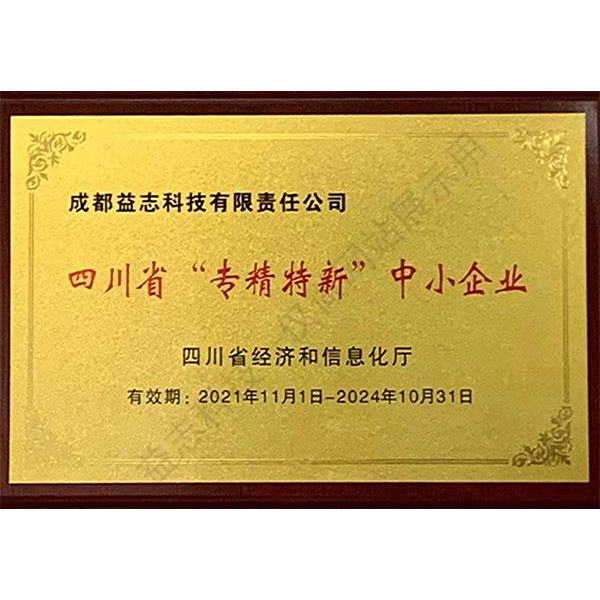
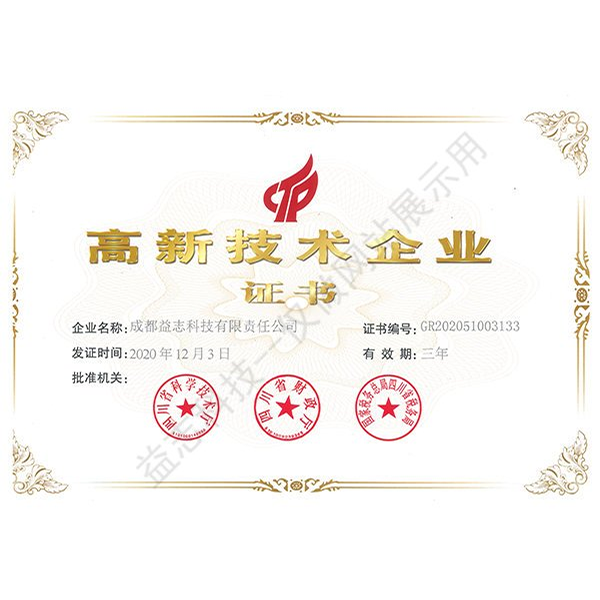
Speaking about specific players who embody these innovations in drawings and calculations, one cannot fail to mention highly specialized institutes. They often become the link between academic research and the rigors of construction practice. For example,Chengdu Yizhi Technology Co.is just such a design institute, created on the basis of experience in chemical technologies.
Their websitehttps://www.yzkjhx.rureflects this practical bias: a lot of technical details, descriptions of methodologies. What's valuable is that they don't just sell services, but demonstrate a deep understanding of the grassroots. problems. Their experience, inherited from parent company Huaxi Technology in working with complex and dangerous technological processes, directly translates into the design of LNG facilities. This can be seen in the way their modeling approaches pay attention specifically to abnormal situations - the “what ifs” that determine the reliability of the entire scheme.
Working with such partners shows one important thing: innovation in LNG schemes in China often comes not from the top, from state-owned giants, but from the side - from companies that come from related industries with ready-made solutions for complex engineering problems. They bring a fresh perspective, free from the stereotypes that have developed exclusively in the gas industry. Their capital of 120 million yuan is not just financial strength, but an investment in competencies that allow them to take on non-standard projects where flexibility of thinking is precisely what is required.
Conclusion: innovation as a subtle evolution
So where is the innovation? They are not in the same breakthrough technology. They are a combination of hundreds of small improvements: in the digital twin algorithm, in logistics software, in the cold recycling scheme, in the new security architecture. This is evolution, not revolution.
The Chinese approach here is interesting because of its pragmatism. They often take world-famous best practices, but adapt them with incredible detail to local conditions - specific soil types, climatic features of the region, the structure of the power grid. Innovation comes from this fine tuning.
Therefore, answering the question from the title, we can say: yes, there is innovation. But to see them, you need to look not at the facade in the form of a new terminal, but at the project folders, at the lines of simulator code, at the HAZOP analysis protocols. This is where the real work is in progress to create more efficient, secure and flexibleLNG schemestomorrow. And this work, contrary to popular belief, is often much less glamorous, but much more important.