China: utilization of ethylene tail gas?
2026-02-01
To be honest, when you see this question, the first thing that comes to mind is a typical misconception: that “ethylene tail gas?” – this is some kind of homogeneous substance that can be worked with according to a single recipe. In practice, everything depends on the specific composition, pressure and, most importantly, the economics of the process at a particular plant. Many recycling projects fail not because of technology, but because these “tails” were initially misjudged.
What is hidden behind the term “tail gas”?
Let's start with the basics, which for some reason are often overlooked in general reviews.Ethylene tail gas– this is not just an outflow from the C2 splitter column. Its composition is a cocktail of ethylene, ethane, methane, hydrogen, and sometimes propylene and acetylene. Percentage is the key factor. At one production site this may be a stream with 60% ethylene, at another - with 20%, diluted with nitrogen. And it immediately becomes clear why there is no universal solution.
A common mistake at the start is to try to use membrane separation or pressure-cycle adsorption (PCA) for flows with low partial pressures of the target components. Efficiency drops catastrophically, capital costs do not pay off. I saw a project where they tried to separate ethylene from a stream with a total pressure of 3 bar and an ethylene content of 15%. The membranes simply did not reach the design enrichment factor, and the installation is idle.
It's important to look at the source here. Gas from a pyrolysis unit, from an ethane dehydrogenation unit, or perhaps waste gases from storage tanks? Not only the composition, but also the presence of poisonous impurities for catalysts in subsequent processes depends on this. For example, acetylene or CO can be destructive for hydrogenation or polymerization systems if the gas is recycled.
Main ways of recycling: not only theory
Beautiful presentations aside, in fact, several areas are widely used in China. The first - and most obvious - return to the pyrolysis furnace as fuel gas. It seems simple and cheap. But there is a nuance here: the calorific value of such tail gas fluctuates greatly. If you do not stabilize the composition of the fuel mixture, you can get problems with the temperature regime in the burners, local overheating, and increased NOx. At a number of old refineries they do this - they simply burn them, but at modern complexes with strict environmental standards this will no longer work.
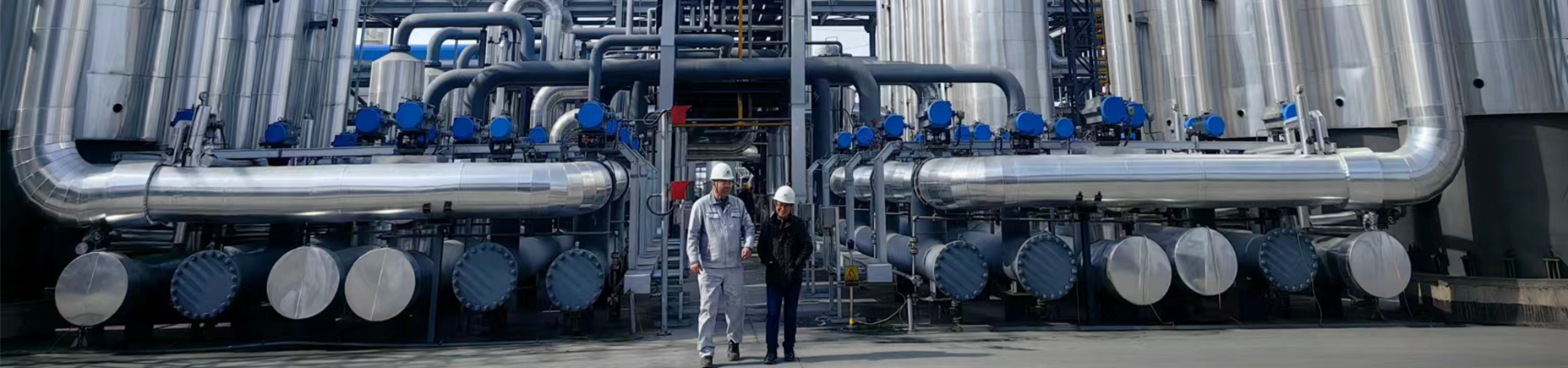
The second way is separation and recycling. The technologies of deep cooling and low-temperature distillation are leading here. But they are energy-consuming. Justified only for large volumes and high content of target C2+. A classic example is installationethylene tail gas recoveryat the Ningbo Heyuan complex, where high ethane and ethylene content streams are separated and returned to the process head. The economics converged because of scale.
The third way, which is gaining momentum, is use as a raw material for synthesis. For example, hydroformylation or direct oxidation. But this is a chemical conversion that requires a separate, often capricious, catalytic process. Implementing this is risky without detailed pilot testing. I know a case at one of the factories in Jiangsu province, where they tried to organize the production of propionaldehyde from ethylene tail gas. The project stalled at the stage of catalyst development - it quickly deactivated due to trace amounts of sulfur.
Practical difficulties and pitfalls
This is what is rarely written about in textbooks, but what you encounter on every site. The first is composition fluctuations. A pyrolysis furnace is not a clockwork mechanism; the composition of the raw materials changes, the modes are adjusted. And the tail gas?floats? along with this. The recycling system should not be designed for average values, but for a possible range. Otherwise in one ?perfect? day, the compressor may receive an unreasonable load, or the separator may no longer cope.
The second is issues of materials science. If the gas contains moisture and traces of acids, corrosion begins when it cools below the dew point. Standard carbon steel may not be suitable in low temperature sections. You have to install stainless steel, which makes the project more expensive. And if in the process it is usedadsorptionor membrane separation, impurities (even in ppm) can irreversibly poison the adsorbent or clog the membranes.
The third headache is the integration of the new recycling system into the existing plant infrastructure. Often there is no free space, you need to cut into running pipelines under pressure, and coordinate long stops. Sometimes the economic effect of disposal is eaten up by the cost of these installation and organizational works.
Experience of Chengdu Yizhi Technology: not a panacea, but a systematic approach
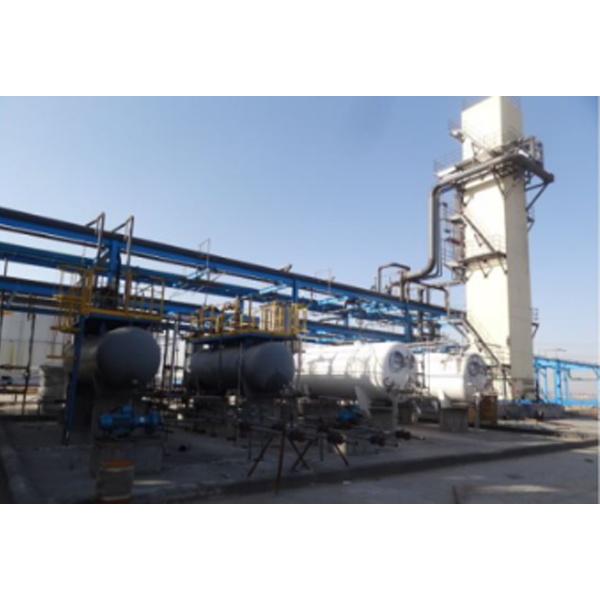
In the context of a conversation about integration and practical implementation, it is worth mentioning the experience of design institutes. One of them isChengdu Yizhi Technology Co.(a subsidiary of Chengdu Huaxi Chemical Technology). They do not sell “magic boxes”, but operate as a full-cycle design institute. Their websiteyzkjhx.ru– this is, in fact, a portfolio of completed petrochemical projects.
What is valuable about their approach? They start not with a technology selection, but with a detailed audit of a specific tail gas stream at a specific plant. Samples are taken at different times of the day, under different operating modes of the installation. They build a real picture, and do not work with passport data. Then they model the options: somewhere it is more profitable to install a preliminary modulegas separation, to increase the ethylene concentration before recycle, somewhere - integrate the flow into the fuel gas system with pre-mixing and calorific value control.
From their practice: there was a project for a PVC production plant, where tail gas with a low ethylene content (about 25%) was successfully integrated into the fuel system for boilers, but with the installation of an online analysis system and automatic control of the mixture composition. The solution is not the most high-tech, but it is reliable and pays off by reducing natural gas purchases. Another of their projects, the redesign of the recovery system at the ethylene complex, made it possible to increase the return of ethylene by 2-3%, which, with large volumes, provided a significant economic effect.
Looking to the Future: Trends and Economic Constraints
Where is everything going? The trend is, of course, digitalization and predictive analytics. Online composition analysis sensors linked to a process control system (PCS) that can predict changes in flow and adapt the operation of the recovery plant. This is no longer science fiction; such systems are beginning to be implemented.
The second trend is miniaturization and modularization of installations. Not giant workshops, but compact, almost container-based solutions for the utilization of small gas flows in medium and small enterprises. This could become a niche.
But the main limiter - and always has been - is the economy. The price of ethylene on the market, the cost of electricity for operating cryogenic plants, tariffs for CO2 emissions. If the price of the product is low and energy is expensive, then even the most advanced technology for recycling ethylene from tail gas will be unprofitable. All technical solutions depend on this simple calculation. Therefore, often the optimal solution is not the most technologically sophisticated, but the most adapted to local conditions and prices. Sometimes it’s just well-organized combustion with heat recovery. And there is nothing wrong with this - this is engineering practice.