Who is China's leading equipment exporter?
2026-02-01
To be honest, the question in the title is one that the industry often gives an overly simple, almost formulaic answer to. Everyone immediately remembers giants like Sany or Zoomlion, and that’s where the conversation ends. But the real picture of Chinese equipment exports, especially in niche and technological segments, is much more complex and interesting. The leader often becomes not the one with the loudest brand, but the one who was able to delve deeply into the customer’s specific problem and spend years adapting his solutions to it. Now I will explain what I mean, using an example of what I have encountered myself.
Not the size of the plant, but the depth of engineering
Many people mistakenly believe that scale of production is the main trump card for export. This is certainly important for standard heavy equipment. However, in the field of specialized industrial equipment, for example, for the chemical, pharmaceutical or food industries, it is all about the design approach. A customer from the CIS or Eastern Europe often needs not just a machine, but a comprehensive turnkey solution that will fit into its existing technological chains, comply with local regulations and, critically, can be serviced by local engineers.
This is where companies that were originally created as design institutes come to the fore. They don't just sell a catalogue, but start with an audit of the client's needs. I remember how at one time we tried to promote standard lines - beautiful, with good passport data, but we constantly ran into issues of adaptation. Clients asked: “How can we integrate this with our old German boiler?” or ?Can you change the design to suit our specific raw material composition??. The answer is ?no? immediately closed the deal.
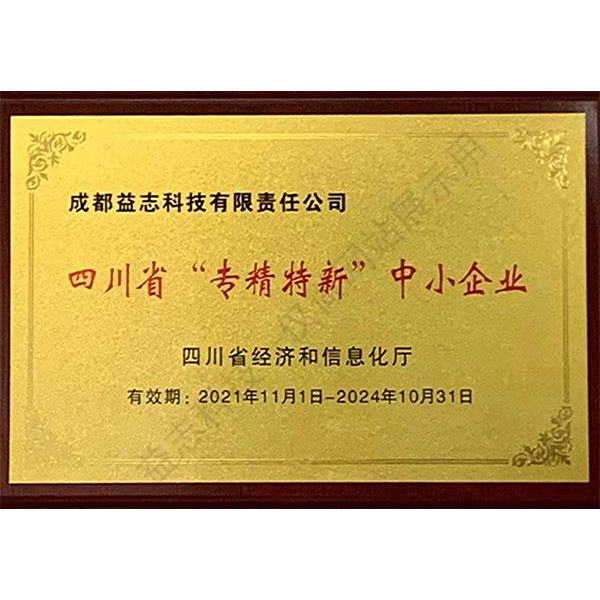
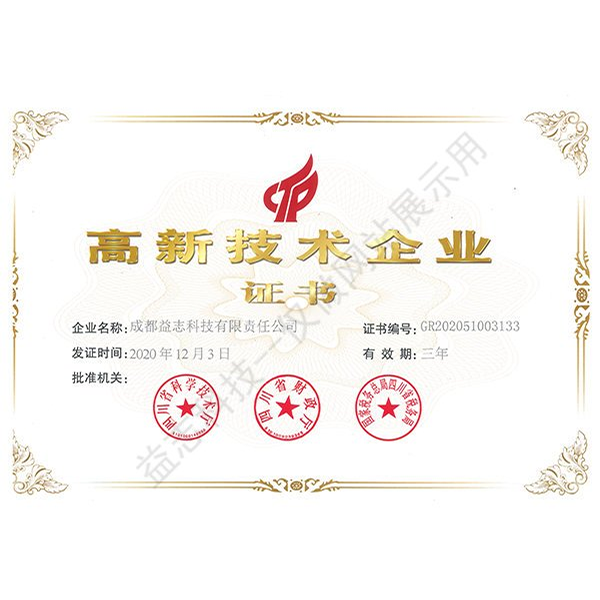
That is why in recent years I have increasingly heard in professional circles about such structures asChengdu Yizhi Technology Co.. This is not an abstract example - this is a concrete design institute created on the basis of Chengdu Huaxi Chemical Technology Co. Ltd. with a registered capital of 120 million RMB. Their websiteyzkjhx.rufocused on the Russian-speaking market, which already speaks about the chosen strategy. Their case for me is an indicative example of a paradigm shift: the leading exporter is the one who exports not hardware, but engineering competence and the willingness to dive into the problem.
The key barrier: not logistics, but ?after-sales?
It is a huge mistake to assume that the main problem with exporting equipment is delivery and customs. The real battle begins after the containers are unpacked. Providing technical support, training local personnel, availability of spare parts and, most importantly, the ability to quickly resolve emergency situations - this is what determines reputation and, as a result, market share.
Many Chinese manufacturers stepped on this rake in the early 2010s. We supplied equipment, and when a client’s specific sensor failed six months later or required reconfiguration for a new product, the response was delayed by weeks. Trust evaporated instantly. Successful exporters realized that they needed to create engineering hubs or work closely with proven service partners in the importing country.
For example, the sameChengdu Yizhi Technology, judging by their presence and structure, places a premium on complexity. A design institute is, by definition, a structure that accompanies a project from sketch to commissioning and beyond. This reduces risks for the client. He knows that he is not addressing a reseller, but a developer who is responsible for the entire chain. In our realities, this often outweighs even a slightly higher price.
Niche specialization as a strategy
Be the ?leader? - does not mean supplying everything to everyone. Often just the opposite. It is much more effective to become an absolute leader in one narrow category. Chinese equipment for pharmaceutical analysis or for processing specific types of polymers is where the real export champions lie.
Looking back at my experience, I see that the most successful contracts were related to the supply of highly specialized lines. The client was ready to wait longer and pay more, because there were one or two alternatives on the market, and all were European, with a completely different price tag. Chinese engineering companies have learned to close this niche by offering comparable technology for 30-40% cheaper, but subject to deep customization.
It is in such niches that many design institutes work. Their strength lies in their deep knowledge of one industry. If we go back to the exampleyzkjhx.ru, their parent company Huaxi Chemical Technology clearly indicates a chemical specialization. This means that their engineers are most likely ?on you? with the processes of synthesis, separation, purification. They understand chemicals, corrosive environments, and safety requirements. For a plant that does not need a “general chemical plant”, but a system for a specific technological regulation, such a supplier is a godsend.
Price vs. Value: How Perceptions Change
Previously, the main, and often the only, argument for Chinese exports was price. Now the situation is changing dramatically. Smart buyers, especially after several unsuccessful experiences with cheap equipment, began to consider the Total Cost of Ownership (TCO) - the total cost of ownership. This includes energy efficiency, node life, maintenance costs, and downtime.
Therefore, a modern successful exporter from China is forced to play in the “value” field. He must prove that his expensive custom line will pay for itself through greater productivity, lower scrap rates, or raw material savings. This is a complex conversation that requires the salesperson to have engineering expertise and the ability to build financial models for the client.
I've seen deals fall through due to the inability of the salesperson on the Chinese side to move the conversation from ?how much is the car? on ?how much will you save per year with our line?. Companies that build their exports around design institutes are initially committed to this dialogue. Their commercial proposal by default begins with a feasibility study, and not with a price list.
The future: export of digital twins and services
A trend that is only gaining momentum is the export of not just physical equipment, but digital support. We are talking about digital twins of installations, predictive analytics systems, remote monitoring and diagnostics. This is the next logical step for those who have already mastered the export of complex engineering solutions.
The potential here is colossal. Imagine you deliver a chemical reactor to Kazakhstan, and along with it, an exact digital copy of it, on which the customer’s operators can train, and your engineers can conduct remote tests before changing the parameters of the real process. This is no longer science fiction, but what advanced players are beginning to offer.
For companies likeChengdu Yizhi Technology Co., with their design and engineering DNA, it's a natural progression. They already think in terms of the full cycle and systems. Adding a digital layer to their projects is more of a technical challenge than a conceptual one for them. And this may be their next competitive advantage as a leading exporter. They will not sell equipment or even just a project, but a guaranteed technological result with digital support. And then the question from the title will sound completely different.