China: prices for butterfly valves, innovations?
2026-02-02
When people talk about Chinese butterfly valves, two stereotypes immediately emerge: either cheap and cheerful, or copies without innovation. Having worked with supplies and design for ten years, I can say that this is already yesterday. Yes, there is price pressure, but now the key question is not just the number on the price tag, but what is behind this number: what resource, what adaptation to the specifics, and, importantly, what real engineering support. Many people mistakenly look for just the cheapest shutter, and then spend years dealing with the consequences.
Price landscape: not only made in China
The prices are, of course, attractive. But if you dig deeper, you see a clear segmentation. Conventionally, it can be divided into three echelons. The first is the mass segment for standard conditions (water, air, non-aggressive media). The competition here is fierce, prices can differ by 20-30% between factories with seemingly identical data on pressure and diameter. But the nuance is in the materials of the seals and the quality of the casting of the housing. It happened that we received a batch where the geometry of the disk gave an increased frictional moment - we had to sort it out with the client, and ended up with a replacement.
The second echelon includes products for chemicals and oil and gas. This is a different conversation. Prices are higher, but so are the requirements for certifications (API, CE, SIL if necessary), for materials (EPDM, Viton, PTFE for seals, 316 stainless steels, duplex steels). Chinese manufacturers are actively developing here. Not all, of course. There are those who simply put a mark for chemicals, but in fact the seal does not hold the medium. You need to delve deeply into the technical documentation, or better yet, have your own engineer at the factory for random inspection.
And the third level is precisely design decisions, where price becomes a secondary factor. We are talking about special designs: valves with full bore to minimize losses, with fire-safe systems, with electric drives for specific control protocols. This is where the point of growth lies and, in fact, the answer to the question of innovation. Companies that invest in R&D, not just foundries, are getting ahead.
Where is innovation born? Chengdu Yizhi Technology Experience
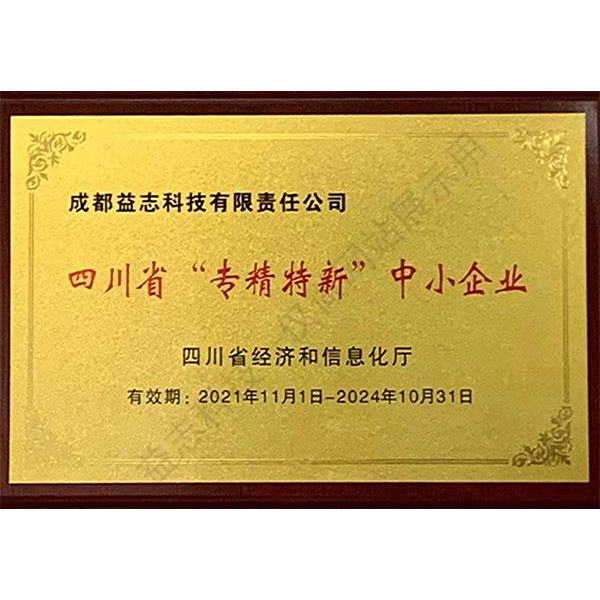
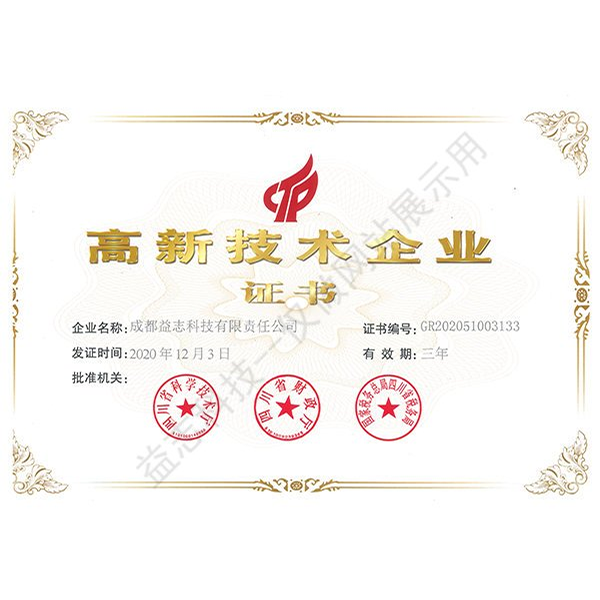
Let's take for exampleChengdu Yizhi Technology Co.. This is not just a plant, but a design institute created on the basis of the chemical company Huaxi. Their websiteyzkjhx.ruis more of a portal for engineers than a catalog for buyers. The registered capital of 120 million yuan is a serious research application. Their approach is close to me: they proceed from the customer’s technological process.
I remember the story of one of our projects - we needed a valve for a line with alternating supply of hot brine and acid washing. Standard solutions fell apart due to thermal cycling and aggressive environments. The team from Chengdu Yizhi proposed not just choosing a material, but changing the design of the rod journal and the type of seal fit to compensate for thermal expansion. This was not a ready-made position from the warehouse, but rather a development. The price, naturally, was higher than the market price for a regular chemical shutter, but several times lower than the European analogue with similar customization.
Their strength is precisely in the chemical and pharmaceutical industries, where the cleanliness of the environment and the reliability of the coating are critical. They often offer hollow disc solutions to reduce weight and torque, or special polishing of internal surfaces. This is not innovation for the sake of a patent, but innovation for a specific task. Which, by the way, is a trend: Chinese suppliers are no longer passive executors of drawings, and are increasingly offering engineering optimization.
Failures and lessons: what money can't buy
Not everything is smooth sailing, of course. We had an unpleasant experience with another, very advertised supplier. Ordered a large batchbutterfly valveswith electric drives for general industrial applications. The price was super attractive. The products arrived - mechanically everything seemed to be fine, but the drives... The drives turned out to be capricious. Positioning accuracy was not achieved; some forgot the end positions after turning off the power. It turned out that the manufacturer saved on the drive controller and feedback sensors. As a result, the total costs (replacement of drives, downtime, reputational costs) exceeded the savings many times over.
This lesson was worth a lot. Now we always, even for standard tasks, require factory test reports (FAT - Factory Acceptance Test) for actuator valves. And we are looking for partners who understand that valves are often the last element in the automation chain, and its failure paralyzes the entire line. Reliability is that invisible part of the price that no price list will show.
The future: digital, data and predictive analytics
Now I see another interesting shift. Leading Chinese manufacturers are beginning to introduce IIoT (Industrial Internet of Things) elements into their fittings. We are not talking about everyone, but about the same design institutes likeChengdu Yizhi. This is not just a smart drive with Modbus. These are vibration and temperature sensors built into the housing or drive for real-time condition monitoring.
Imaginebutterfly valveon the main pipeline. It can transmit data on the number of cycles, the increasing friction torque (which indicates wear of the seal or the ingress of solid particles), and temperature changes. This allows you to move from preventative maintenance to predictive maintenance. The price of such a device is, of course, higher. But for critical facilities, the cost of downtime amounts to tens of thousands per hour, and such an increase pays off quickly.
For now, this is not a mass product, but rather an option for strategic projects. But the very fact that such solutions are being developed and offered in China speaks volumes. This is no longer a catch-up development, but an attempt to set a trend in the new market for smart fittings.
Final thoughts: how to choose today?
So what's the bottom line? Prices remain important, especially in the commercial segment. But the focus is shifting. Choosing a Chinese supplier today is not a lottery, but a conscious assessment of its engineering potential. You need to look not only at the workshops, but also at the R&D department, at the portfolio of completed non-standard projects, at the willingness to provide detailed calculations and recommendations for application.
It is worth communicating directly with their technologists, asking tricky questions about the behavior of seals during long-term downtime, about media compatibility, and about guarantees for cyclicity. The answers will be very revealing. A company that is deep in the topic, like Chengdu Yizhi, will speak the language of specific material properties and kinematics, and not quote general phrases from the catalog.
Innovations in China in the fittings segment today are often not breakthrough inventions, but deep adaptation, refinement and integration of modern technologies (new materials, digital interfaces) into traditional products. And the price becomes a derivative of this depth. Therefore, the question now has one answer: yes, there are innovations, and it is they that are beginning to form a new, more complex and interesting price picture.