?China: PSA O2 installations – innovation and ecology??
2026-02-03
China: PSA O2 installations – innovation and ecology?
When they talk about Chinese PSA O2 installations, many people immediately think about low price and copying. But this is superficial. In fact, over the past 8-10 years, a serious shift has occurred here - from simple manufacturing to real engineering solutions, where ecology and energy efficiency have become not a marketing ploy, but a condition for survival in the market. I'll try to break down what it looks like from the inside.
From ?iron? to the system: evolution of the approach
Previously, years before 2015, the focus was on the main components: adsorbers, valves, compressors. Assembled, connected - and that's it. Problems began later: unstable O2 concentration, high zeolite consumption, pressure surges. Many local manufacturers worked on the “sell and forget” principle. But the market forced me to change. Environmental standards are especially strict in the metallurgy and chemical industries, where our plants are often installed.
Now the key word issystem integration. A PSA installation is more than just a series of columns. These are cycle management, preliminary air purification (they often save money here, but in vain), precise control of the dew point. For example, they began to widely use multilayer adsorption with different types of molecular sieves in one column - not just 13X, but a combination. This reduced power consumption by 15-20% in typical configurations. But they did not implement it right away; there were problems with the backfill being mixed up in production.
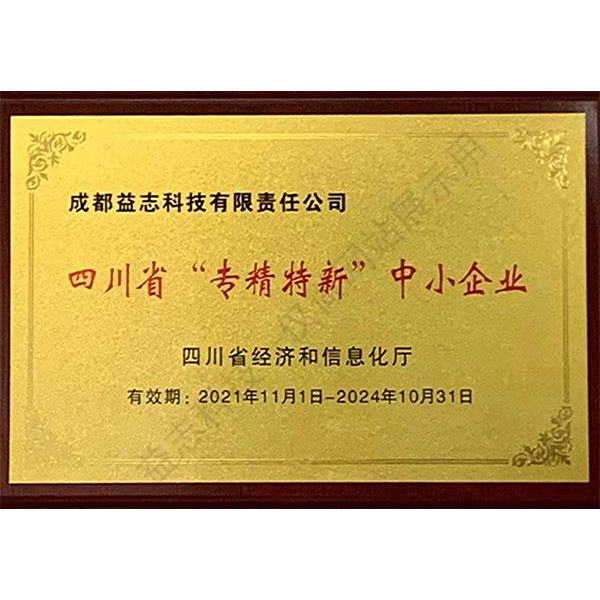
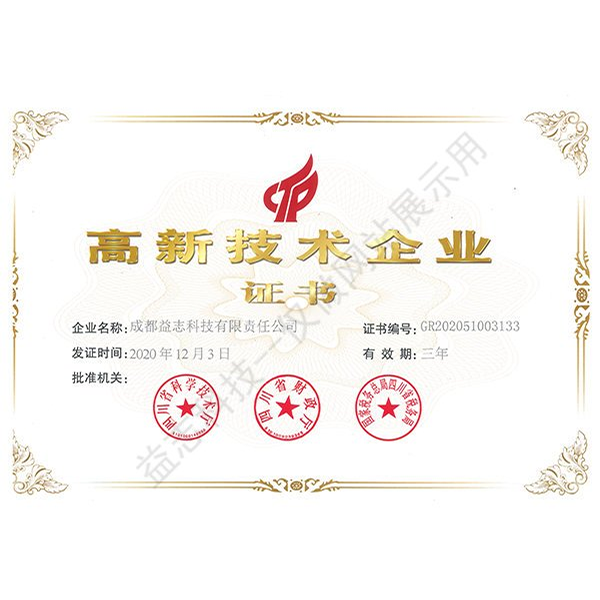
This is where the role of design institutes is clearly visible, which do not just draw diagrams, but lead the project from calculation to commissioning. Let's take, for example,Chengdu Yizhi Technology Co.(their website ishttps://www.yzkjhx.ru). This is not just a plant, but a design institute created on the basis of chemical technologies. Their approach is often based on in-depth modeling of adsorption processes for a specific client problem, rather than on selling a ready-made “box”. The registered capital of 120 million yuan is not about scale, but about serious investments in R&D and test benches, which is critically important for this market.
Ecology: not only on paper
The environmental friendliness of PSA oxygen generators is often reduced to the fact that they do not use chemicals. This is true, but this is just the tip. Real "ecology" in the Chinese version now it is about minimizing losses. Air loss for blowing, energy loss for compression, and finally, adsorbent loss.
One of the practical cases is the integration of heat from a compressor. Previously, this heat was simply dissipated into the atmosphere. Nowadays it is increasingly used for the regeneration of inlet air dryers or even for heating process water in the same workshop. This is not a revolution, but such a modification increases the overall efficiency of the system. We implemented a similar recuperator at one of the glass production facilities. The savings in numbers were modest, but most importantly, the stability of the dry air supply increased, which extended the life of the zeolite.
Another point is noise. PSA valves, especially fast-acting ones, are a major source. Now many Chinese manufacturers, including teams like Yizhi Technology, have switched to proprietary air-actuated valves with improved mufflers. Not perfect, but progress is noticeable. The noise map of the facility has become an important section in the design documentation.
Failures and lessons: about being “smart” systems
We had a period when everyone rushed to do “smart” things. PSA with total digitalization. Sensors at every step, cloud monitoring, adsorbent replacement forecast. Beautiful. But in practice, in many enterprises (especially old steel mills) the staff simply did not trust these systems. The pressure and concentration sensors became clogged with dust, the signals “floated”. The expensive control system worked in basic mode.
The conclusion was simple: automation must be modular and redundant. Nowadays, two independent lines for monitoring key parameters are often installed: the main one - electronic, and the backup one - simple mechanical pressure gauges and rotameters. Reliability is more important than “innovation”. This, by the way, is clearly visible in projects for remote areas, where maintenance is done every six months.
Details that make the difference: a view from the shop floor
Often the success or failure of a project is visible in small details that cannot be described in catalogs. For example, the quality of welds on adsorbers. Internal polishing. It would seem like a small thing. But if the seam is rough, microturbulence begins there, which over time leads to abrasion of zeolite granules, dust formation and a decrease in performance.
Or a problem with shut-off valves on bypass lines. First we installed standard ball valves. But under constant pressure/vacuum cycles (in vacuum PSA, VPSA), their seals quickly wore out. Switched to valves with reinforced PTFE seals specific to cyclic loads. A simple solution, but it eliminated 80% of leakage complaints in the first years of operation.
Another pain is pre-cleaning. Chinese air at industrial sites often contains a high content of oils and aerosols, even after compressor filters. It was necessary to develop and install additional, thinner coalescent filters at the inlet. They need to be changed more often, but this has significantly increased the service interval for the adsorbers themselves. This is the same “practical ecology” – less consumables (zeolite) in the long term.
What's ahead? Not about nanotechnology
The future, in my opinion, does not lie in some breakthrough materials for adsorption (although work is underway), but in flexibility. We need installations that can quickly adapt the adsorption cycle to changing oxygen demand. For example, in metallurgy, a furnace operates cyclically. Why run 95% O2 at full capacity if you need 80% for half a shift? Modern control systems already allow smooth adjustment of cycle parameters, saving resources.
The second trend is service contracts. SameChengdu Yizhi Technology Co.no longer offers just a salePSA O2 installation, and long-term contracts for the provision of oxygen with a guarantee of purity and pressure. They are responsible for the entire chain. This changes the business model and forces the manufacturer to make truly reliable equipment, because they will have to repair it themselves.
In general, to summarize. Chinese PSA for oxygen are no longer a cheap standard product. This has become an area for engineers where innovation is not just a buzzword, but a daily effort to improve reliability, efficiency and integration into real, often imperfect, industrial environments. And ecology here is not an abstraction, but a direct result of this work: less wasted energy, less discarded materials, more precision. It will only get more interesting in the future, because competition forces you not to copy, but to think.