China's key exporters for PD adsorption removal?
2026-02-28
- Key exporters of China for PD adsorption removal
- Who really supplies technology, and not just columns
- Pitfalls in process adaptation
- Logistics, installation supervision and the last mile
- Pricing policy and what is hidden behind the “cost of the project?”
- A look into the future: trends and new players
Key exporters of China for PD adsorption removal
If we talk about the supply of technologies and equipment forremoval by adsorption during PDfrom China, many immediately imagine giants like Sinopec. But the real picture on the export market is much more subtle and interesting. The main flow comes not from them, but from specialized engineering companies that have grown up solving specific, often very complex problems at domestic refineries and chemical plants. It was they who, having accumulated experience, became key players for projects in the CIS, the Middle East, and Southeast Asia. A common mistake is to evaluate them only from equipment catalogs; in fact, the main export product here is a technological package and adaptation to the customer’s raw materials, which can be radically different from Chinese ones.
Who really supplies technology, and not just columns
When we talk aboutChina exportersin this niche, it is important to distinguish between manufacturers of adsorbents, manufacturers of devices and those who offer the full cycle - from process flow diagram to commissioning. Key contracts, especially in Russia and Kazakhstan, are taken by companies of the latter type. They often began as design institutes at large chemical holdings, which gave them access to real industrial data and the opportunity to test solutions in practice. Their strength lies not in the standard offer, but in the ability to calculate the process for specific raw materials with variable composition, which is typical for many deposits.
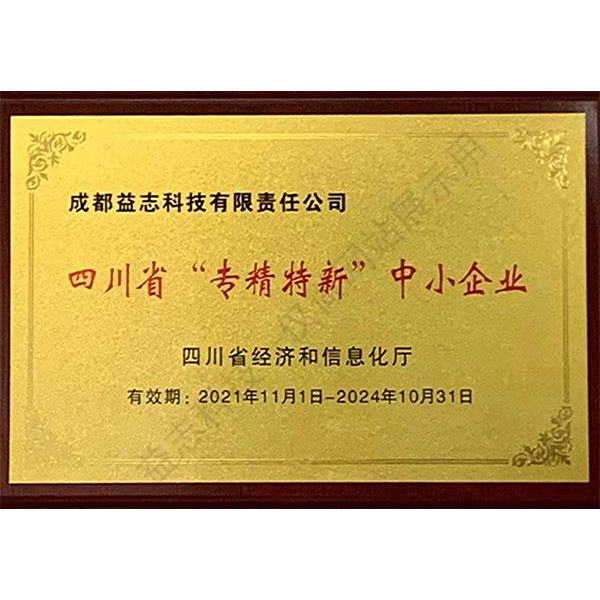
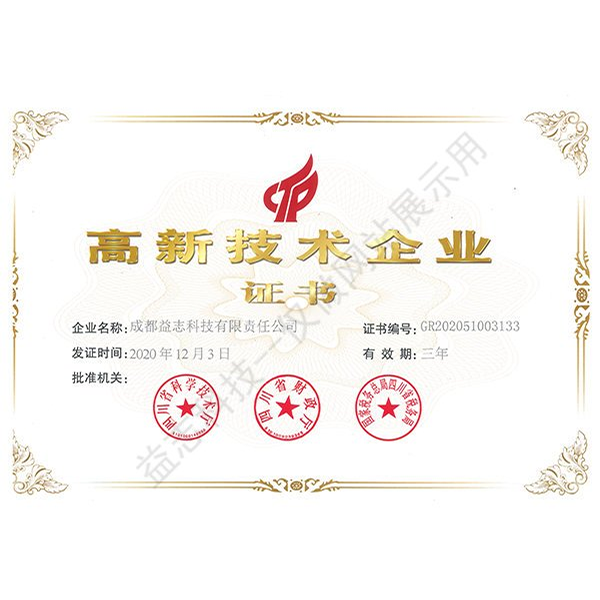
For example, Chengdu Yizhi Technology Co. - this is just such a case. The company established as a design institute under Chengdu Huaxi Chemical Technology Co., Ltd., with a registered capital of 120 million RMB. Their websiteyzkjhx.rufocused on the Russian-speaking market, which already speaks about the strategy. They don't just sell the installation, but promote a technological package for deep cleaning. Their portfolio often includes projects for the modernization of existing plants, where it was necessary to increase the degree of extraction of target components or reduce energy consumption - this is the very practical expertise that customers are looking for.
When working with such suppliers, you are faced with an important nuance: their technological calculations can be very accurate, but sometimes difficulties arise with detailing equipment according to customer standards (for example, according to GOST or ASME). This is an area where additional approvals are often required. Successful projects are usually built on close collaboration at the FEED (Front-End Engineering Design) stage, when Chinese engineers dive deeply into the analysis of raw materials and technical specifications.
Pitfalls in process adaptation
One of the main points that I remember from experience is the choice of the adsorbent itself. Chinese companies often offer their own developments of zeolites or activated carbons, optimized for their processes. And here lies the trap: on paper the characteristics are brilliant, but when working with, say, high-sulfur gas or a liquid with heavy hydrocarbons, premature coking or destruction of the granules may begin. A successful project always included long-term testing of the adsorbent in a pilot plant with real raw materials from the customer. Without this stage, it is absolutely not worth the risk.
There was a case at one of the enterprises in Omsk, where they initially purchased a ready-made installation from another, less experienced supplier. Processremoval by adsorptionwas designed for a certain moisture content, but the actual flow turned out to be periodic? water pickups. This led not only to a decrease in efficiency, but to swelling and destruction of the adsorbent layer in the columns. It was necessary to urgently involve another contractor, the same Chengdu Yizhi, to redesign the drying system and protect the adsorption columns. The solution turned out to be non-standard - they introduced an additional pre-separation stage with heating, which was not initially thought about.
Hence the conclusion: key exporters are valuable precisely because they have not one, but several proven schemes in their arsenal, and they can offer a non-obvious solution based on similar problems solved earlier in China. Their presentations are rarely smooth - they usually have a lot of graphs with real operational data, including breakdown curves and regeneration graphs, where all the “bumps” are visible. process.
Logistics, installation supervision and the last mile
Another aspect that greatly influences the choice of supplier is the willingness to accompany the project until launch. Many Chinese companies in this area have learned to work on a turnkey model, including delivery, installation supervision and commissioning. ForChina exportersworking with the CIS, this has become a competitive advantage. They form multilingual engineering teams capable of working on site.
But this is not without difficulties. There is often a delay at the customs clearance stage for specialized equipment or chemicals for regeneration. I remember one project stalled for three weeks due to problems with the classification of fine cartridge filters that came with the kit. This is the same practical experience that is not described in brochures: it is necessary in advance, even at the stage of invoice formation, to coordinate in detail the HS codes with all participants in the chain.
In addition, there is a nuance with staff training. Chinese specialists provide excellent instruction on operation, but their manuals, translated by machine translation, sometimes require serious modification by local engineers. Successful exporting companies are now increasingly hiring Russian-speaking technical writers or collaborating with local engineering bureaus to adapt documentation.
Pricing policy and what is hidden behind the “cost of the project?”
When you request a quote, the first figure is usually the cost of the main piece of equipment. But for technologyremoval by adsorption during PDMajor costs and, more importantly, risks are often hidden in the ?soft? parts: technological audit, development of a detailed regeneration scheme (steam, vacuum or thermal-free), guarantees for the operation of the adsorbent. Major market players understand this and base their prices on the full cycle.
For example, in proposals from Chengdu Yizhi Technology Co. You often see a breakdown: separately - a technology license, separately - a basic design (Basic Design), separately - equipment. This is a transparent and professional approach. It allows the customer, if he has his own facilities, to do some of the work himself, saving money. But they always leave the key components - calculations of adsorption-desorption cycles and selection of adsorbent - behind them, and rightly so.
There have been cases when they tried to save money by taking only the technology from one supplier and ordering the equipment locally. This almost always led to increased costs at the installation and commissioning stage due to imperfect joining. PD equipment is not just pressure vessels; These are precise piping, a valve system with tight switching times, and sensitive temperature and pressure control systems. The slightest discrepancy in parameters leads to slippage or excessive consumption of energy for regeneration.
A look into the future: trends and new players
The market does not stand still. Nowadays there is a trend towards combined installations, whereremoval by adsorptionis just one step in the chain, for example, preceding low-temperature separation or membrane separation. Key exporters who previously specialized only in adsorption processes are now actively developing competencies in related areas or creating alliances with other specialists. This is a response to the market request for comprehensive solutions.
New, more highly specialized players are also emerging, for example, focusing only on hydrogen purification or ethane extraction from APG streams. Their strength lies in the deepest study of one specific task. They may not be giants, but their technological solutions are often sleeker and more efficient for a specific purpose. When choosing a supplier, you now need to clearly understand whether you need a universal contractor for complex multi-component raw materials or the best specialist in the world for one operation.
What will definitely be in demand is digitalization. Leading companies, including the aforementioned Chengdu Yizhi, are already implementing predictive analytics systems in their installations, which, based on sensor data, predict the breakdown time of the adsorbent and optimize regeneration cycles, saving energy. This is the next level, beyond which the future lies. Exporting now is not just the sale of iron boxes, but the transfer of an entire digital dual process along with a physical installation. And those who are already doing this are, in fact, the key exporters of today and tomorrow.