China's conditions for LNG: technologies and trends?
2026-02-28
When people talk about the Chinese LNG market, they often immediately think about gigantic import volumes and long-term contracts. But behind this lies a more complex picture - the specific technical conditions that shape the actual work on the ground. Many, especially new players, mistakenly believe that it is enough to buy a standard foreign technology package. In fact, adaptation to local requirements for safety, ecology, and, importantly, to logistics and raw material features is a separate story, full of nuances and not always obvious solutions.
Technological adaptation: not just ?copy-paste?
Take, for example, the requirements for the purity of commercial gas. Chinese standards such as GB 17820 have strict standards for sulfur content, hydrocarbon dew point and water. These are not just numbers on paper. In practice, this means that a classic treatment scheme, say, based on monoethanolamine (MEA), may require additional steps or hybrid solutions if the feed gas comes from fields with high CO2 and sour content, which is not uncommon in some regions.
I remember one project to modernize a gas treatment plant near Shandong. Initially, the technology was designed for “averaged” parameters. But when actual samples began to be analyzed, it turned out that seasonal variations in composition were much more significant. We had to modify the adsorption stage on the fly and select specific molecular sieves. It was not a failure, but a good lesson: laboratory analysis of raw materials before design is not a formality, but a necessity. Sometimes it’s easier and cheaper to build a more flexible design from the very beginning than to fix it later.
Another point is the requirements for energy efficiency. China is actively promoting a "dual carbon" policy. (peak emissions and carbon neutrality). For LNG plants, especially small and medium-sized ones (SMR, mid-scale), this translates into increased attention to optimization of the refrigeration cycle. It's not just about choosing between a cascade cycle or a nitrogen refrigerant cycle, but also about the details: recycling the cold of regasified LNG, integration with the power grid, the ability to operate at part load. The trend is clearly shifting towards hybrid and customized solutions, rather than buying a ready-made “black box”.
Logistics and infrastructure as a determining factor
Production technologies are only half the battle. The second half is delivery and storage. And here Chinese conditions sometimes dictate non-standard approaches. Deep-water ports for large-capacity gas carriers are not available everywhere, so a network of small satellite terminals and transshipment bases is actively developing. This is generating demand for mini-LNG technologies, mobile regasification units and, importantly, storage systems.
For example, full-volume reinforced concrete LNG storage tanks are becoming widespread. Compared to steel, they have their advantages in terms of safety and durability in local climatic and seismic conditions. But their construction requires very high precision and specific experience of contractors. We observed a project where microcracks occurred due to errors in concreting temperature control, leading to delays and major rework. This is about the importance of localizing not only technologies, but also construction competencies.
A separate topic is land transport. The development of a network of LNG filling stations for freight transport stimulates the creation of compact and fast loading systems. Here the key is not only the performance of the pumps, but also the control and safety systems, adapted to work in conditions of high load and sometimes insufficient experienced personnel on site. A simple and reliable interface is often more important than maximum automation.
The role of engineering and localization
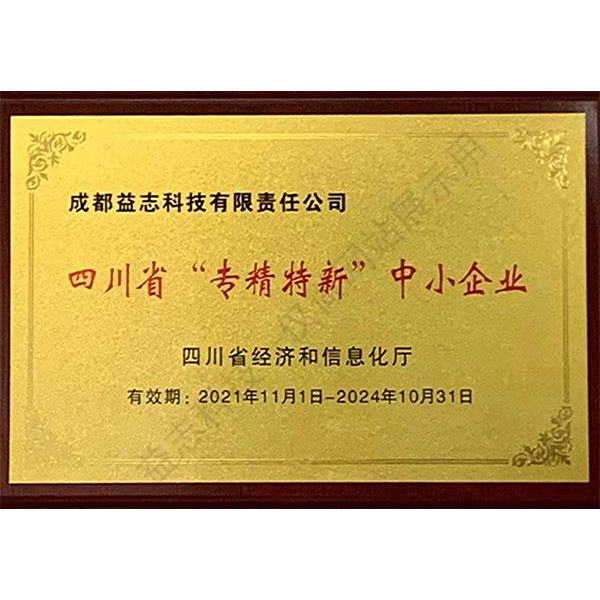
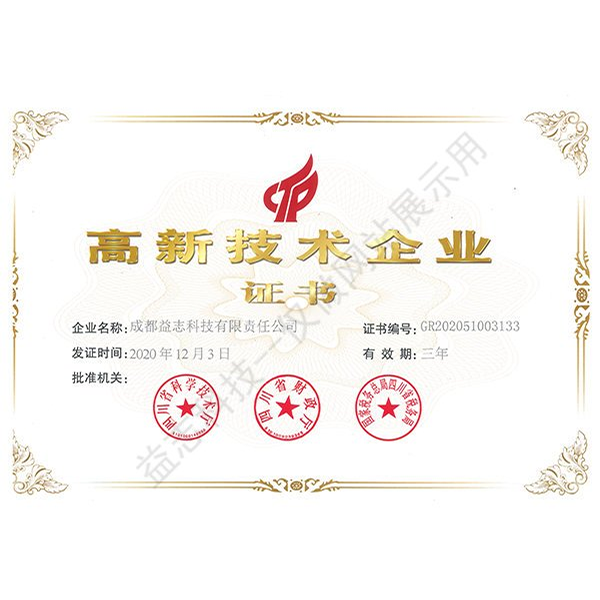
This is where local design institutes come into play, becoming a bridge between international technologies and Chinese characteristics. Their value lies in understanding both worlds. Let's take for exampleChengdu Yizhi Technology Co. (https://www.yzkjhx.ru). This is not just a “sales office”. This is a design institute created on the basis of a technology company with a significant authorized capital. Their work shows how theoretical calculations collide with practice.
Their approach is often based on a deep analysis of initial data from the client - not only the composition of the gas, but also site details, availability of utilities, even the future operating model. I saw their proposals for gas processing modules, where there was clearly an attempt to find a balance between the reliability of proven components (say, turboexpanders of certain brands) and the economic feasibility of using localized equipment where it is not critical for key parameters.
Localization is not a simple replacement. This is a validation process. It is possible to localize the production of heat exchangers, but it is necessary to carry out a full cycle of tests to ensure compliance with the requirements for operation at cryogenic temperatures and cyclic loads. Institutes like Yizhi Technology are engaged in just such verification, accumulating experience. Their website is not just a showcase, but a reflection of this work, although, of course, the details of commercial projects remain behind the scenes.
Trends: which way is the wind blowing?
Looking forward, in addition to the already mentioned “green?” agenda, I would highlight several practical trends. Firstly, digitalization and predictive analytics. We are not talking about the abstract “Industry 4.0”, but about specific systems for monitoring vibration of pumps, analyzing gas composition in real time to optimize modes, and predicting freezing. This is gradually ceasing to be an option and becoming standard for new projects.
Secondly, modularity. Assembling installations from ready-made modular blocks (skid-mounted) significantly reduces construction time and reduces risks on site. But the key challenge here is ensuring the quality of assembly and testing of modules at the manufacturing plant. Because correcting a mistake made inside a sealed unit on site is many times more expensive.
Thirdly, flexibility in terms of raw materials. More and more projects are emerging that must be able to work with associated petroleum gas (APG), gas from coal seams, and biogas. The compounds can float a lot. This requires technologies with a wide operating range, possibly with the ability to quickly change settings. It will be interesting to see the development of small scale liquefaction technologies that can be economically feasible on such specific feedstock sources.
Thinking out loud and instead of concluding
Working in this area, you understand that there is no universal answer to the question of “China's conditions for LNG”. There are always trade-offs: between capital and operating costs, between cutting-edge technology and proven reliability, between global standards and local realities. A successful project is one where these trade-offs are made based on a deep understanding of the details rather than marketing presentations.
Often the most difficult thing is not even the engineering task, but the coordination and explanation of your decisions to regulators and the end customer, who may be far from technical intricacies. You need to be able to translate from the language of technology to the language of economics and security.
So, going back to the beginning, trends and technologies are important. But even more important is the mechanism of their adaptation. And in this mechanism today, the key role is played by those local players who have learned not just to import equipment, but to integrate knowledge, creating solutions that actually work in the specific conditions of the Chinese market. This is, perhaps, the main condition.