China: hydrogen from hydrocarbons - technology and ecology?
2026-02-28
When people talk about the hydrogen economy in China, many people immediately think of “green”. hydrogen from electrolysis. But the real picture on earth, especially on an industrial scale, is still based on something else - hydrogen from hydrocarbons. And here lies the main paradox and challenge: how to combine large-scale production with environmental requirements, which are becoming stricter by leaps and bounds. I myself have worked on several projects on steam methane conversion, and I’ll be honest: talking about ecology here is not about abstract “green” ideas. labels, but about specific CO2 capture technologies, process efficiency and, what is often missed, about the complete life cycle of the plant.
Technological basis: not only CH4
Of course, steam methane reforming (SMR) is the basics. Worked out, predictable. But when you look at the raw material base in different regions of China, you understand that technology alone cannot do it. In the northwest, for example, where there is a lot of coal, gasification followed by conversion is still in demand. Lower efficiency, lower carbon footprint more - but the economics of the project sometimes dictate just such a choice. The key point that we often discuss with colleagues fromChengdu Yizhi Technology Co.— this is the adaptation of the technological chain for specific raw materials. You can’t just take the “ideal” one. diagram from the textbook.
I remember one project in Shanxi, where they tried to combine the gasification of brown coal with modern synthesis gas purification systems. The goal was to obtain hydrogen for the local refinery. The main headache was not even in the main process, but in the preliminary preparation of coal and the stable operation of sulfur and dust removal systems. Frequent stops to regenerate adsorbers consumed the entire economy. As a result, the project was significantly revised towards simplifying the design, but with a loss in overall environmental friendliness. This is a typical example of compromise.
Nowadays more attention is paid to the processpartial oxidation(PO) heavy residues. The technology is not new, but modern catalysts and reactor designs allow for better performance. This is especially true for large petrochemical complexes, where such hydrogen is a by-product or is integrated into the overall scheme. The environmental issue here revolves around heat recovery and CO removal. If this stream is not used, all ?purity? hydrogen is lost during its production.
Ecology as an engineering task, not a slogan
This is where the fun begins. When a customer says “we need green hydrogen?”, the first thing we do is decipher what he means. Most often this is a carbon capture and storage/utilization (CCUS) requirement. But implementing CCUS into an existing PCM installation is not just about adding a unit. These are changes in pressure, rebalancing of heat flows, new requirements for materials.
On the websiteyzkjhx.ruatYizhi Technologytheir approaches to engineering such complex solutions are described. From practice: the most difficult stage is not design, but “binding?” capture technologies to specific plant conditions. The composition of impurities in flue gases, the available space, the requirements for the purity of the resulting CO2 for further transportation - all this kills any standard solutions. Once we were faced with the fact that an amine scrubber, which worked perfectly on the bench, quickly degraded in a real plant due to trace amounts of oxygen and metal impurities in the gas. We had to completely redo the pre-cleaning system.
Another aspect that is not talked about much is water consumption. PCM is a thirsty process. In the arid regions of China, the issue of water supply to an installation can become critical from both an environmental and economic point of view. Closed-loop or treated wastewater schemes have to be considered, which adds both cost and complexity. Ecology in this context is not only about carbon.
Integration and synergy: where to look for efficiency
Isolated hydrogen production from hydrocarbons with full CCUS is often uneconomical today. Another thing is integration into a large chemical cluster. For example, captured CO2 can not be injected into the reservoir, but can be used to produce urea or methanol. This immediately changes the economics of the project.
While working on the concept for one complex in Jiangsu province, we were just considering an option where the CO2 flow from the hydrogen plant went to the neighboring carbonate production. This allowed us to avoid the costs of compression and long-distance transportation. But a problem arose in synchronizing the work of two production facilities. If a chemical plant is down for scheduled maintenance, where should the CO2 go? We had to design a buffer system for compression and short-term storage, which, of course, ate up some of the benefits.
There may also be synergy in the use of waste heat. Modern waste heat boilers can significantly increase the overall efficiency of the system. But their implementation comes down to the issue of reliability. In a chemical production plant, a shutdown due to the breakdown of auxiliary equipment means colossal losses. Therefore, customers often prefer simpler, albeit less efficient, but proven heat dump schemes. A risk-based approach prevails in such decisions.
The role of specialized engineering companies
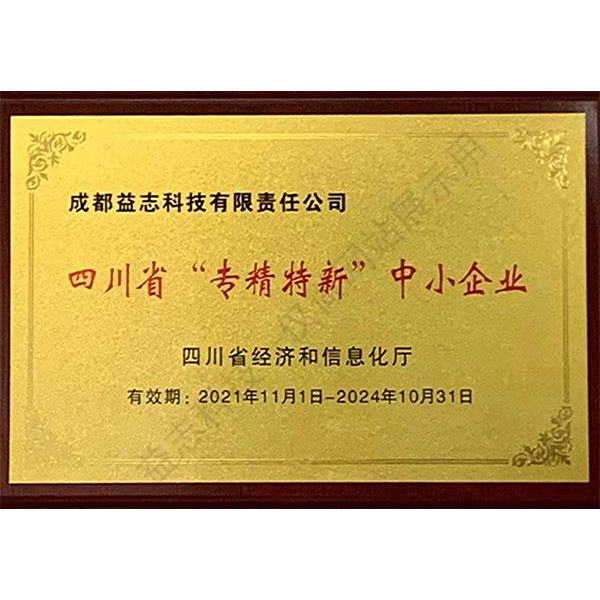
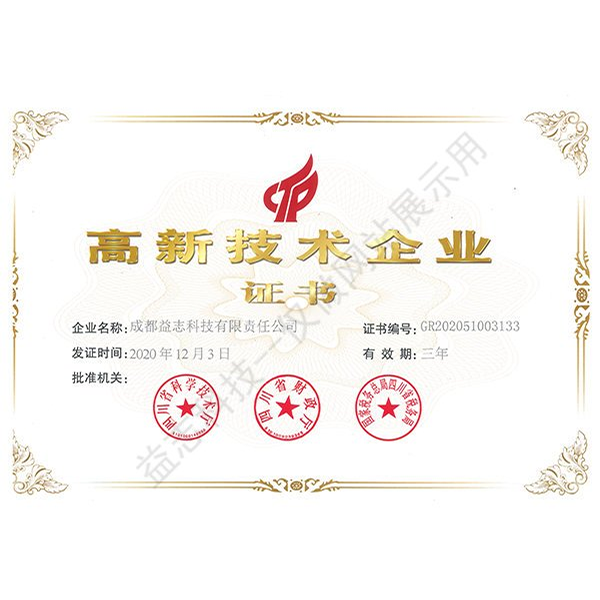
It is in such complex, ambiguous conditions that companies likeChengdu Yizhi Technology Co., Ltd.Their profile is not the sale of finished equipment, but design and technological integration. As a design institute created on the basis of Huaxi Technology, they have gained experience precisely in adapting technologies to “non-ideal” ones. conditions of real production. It's valuable.
From talking with their engineers, you understand that their strength is in the details. It’s not about saying “we’re making green hydrogen?”, but about calculating which sorbent for pre-purifying gas from aromatics will last longer under given conditions, or how to design a heat exchanger so that it can be cleaned of possible deposits without long downtime. The authorized capital of 120 million yuan, which is indicated in the company description, indicates serious opportunities for conducting a full cycle of design work, from feasibility studies to working documentation.
Their website is not just a business card, but often a starting point for dialogue. It is clear that the materials are prepared by practitioners: there are diagrams, descriptions of technological components, but without loud marketing promises. It's a style that inspires trust in an industrial environment where everyone knows each other and values specifics.
Looking ahead: dead end or bridge?
So where is the industry heading? Many people are now arguing: is hydrogen from hydrocarbons with CCUS a dead-end branch or a necessary “bridge?” towards a renewable energy future. From a practical point of view, it is definitely a bridge, and quite a long one. Because the demand for hydrogen in oil refining and chemistry is growing now, and not in 20 years. And this is the only way to satisfy it in the short term.
The main vector of technology development is seen to be increasing conversion efficiency and reducing capital costs for recovery systems. Working on new membranes for hydrogen separation, more durable catalysts for processes with high CO content, is what laboratories and engineering centers are struggling with. Success will come from solutions that reduce complexity. Because every additional pump, every extra heat exchanger is a point of potential failure and an expense item.
Ultimately, the sustainability of hydrogen production from hydrocarbons is not a binary yes/no issue, but a continuous scale. The task of engineers is to shift specific projects along this scale towards greater purity, minimizing the increase in cost. This is difficult, but absolutely real work. And judging by the activity in the industry and the requests that go to companies like Yizhi Technology, this path is the only possible one for China for the foreseeable future. Without illusions, but also without panic, with an emphasis on specific technological solutions.