China's LNG conditions: technology and ecology?
2026-03-06
When people talk about Chinese LNG, they often immediately think about scale and volume. This is of course important, but behind this facade lies a much more complex and sometimes contradictory picture, especially when it comes to the intersection of technological requirements and environmental imperatives. Many, especially from the outside, see only ready-made terminals and pipelines, losing sight of that inner “kitchen”. — conditions, standards, local features and that same constant balancing between efficiency and “green?” course. I'll try to describe what it looks like from the inside, without the gloss.
Technological landscape: not only import, but also adaptation
China has long ceased to be just a buyer of ready-made LNG technologies. Yes, it started with imports, but now the key word is localization and adaptation to local onesconditions. Take cryogenic storage equipment, for example. Climatic zones in China - from the humid subtropical south to the harsh continental north - have completely different requirements for insulation, materials, and control systems. Technology that works perfectly in Guangdong province may encounter unexpected problems in Xinjiang due to temperature fluctuations and dust storms.
This is where the role of local engineering companies comes into play. They act as a necessary adapter between Western or Russian technology packages and Chinese reality. It is necessary not only to install equipment, but to recalculate loads, check compatibility with local materials (which sometimes have different quality standards), and adapt automation systems to local networks and regulatory requirements. This is painstaking work, often invisible from the outside.
One clear example is working with evaporator systems. Some projects have attempted to directly use models designed for more stable conditions. Result? Suboptimal efficiency during peak periods of consumption and increased wear. We had to modify it, increase the heat exchange surface taking into account the local water and air temperature, and make changes to the control circuit. This is not a failure, but a standard iterative process that is rarely written about in press releases.
Ecology: from slogan to specific technical specifications
The environmental agenda is no longer just a “trick”, but a tough onecondition, specified in the design documentation. We are talking not only about CO2 emissions, but also about the entire chain: noise during compressor operation, possible methane leaks (even minimal ones), disposal of refrigerants, impact on the water area during the construction and operation of floating terminals.
This is where there is often a gap between expectations and budget. The customer wants the “greenest solution”, but when they see an estimate for a vapor recovery system (Vapor Recovery Units) with an additional 20% to the cost of the unit, discussions begin. Our job as designers is to find a balance. Sometimes this means offering a phased implementation: a basic system that meets standards first, with upgrade options later. But regulators, especially in the developed eastern provinces, are becoming increasingly less accommodating.
An interesting case involves the use of associated heat. On one of the projects for a mini-LNG plant, we proposed to integrate a heat recovery system from operating units for the needs of a local greenhouse economy. The economics of the project seemed to converge, but in the end the idea was postponed - not because of technological complexity, but because of difficulties with land allocation and coordination between different departments (energy and agriculture). Ecology depends not only on technology, but also on administrative barriers.
Raw materials and logistics: flexibility is a must
China is diversifying its LNG sources, and this has a direct impact on technological solutions. Gas from different sources has different composition, calorific value, and content of inerts. A terminal, initially designed for stable gas from, say, Australia, must be ready to accept a shipment with different characteristics, for example, from Russia or Qatar. This requires flexibility in setting up odorization systems, pressure control and, critically,technologyre-liquefaction.
This is especially acute at small distribution stations, which do not have such a safety margin as large coastal hubs. It is necessary to include a larger number of work scenarios in the process control system and provide additional sampling points for online analysis. This increases complexity and cost, but today we cannot do without it - the market has become too volatile.
Last mile logistics - separate headache. Construction of new pipelines is not always possible or economically feasible. Therefore, the demand for mobile solutions is growing: container mini-regasification stations, transportation of LNG by tank trucks. But here, too, the environment comes into play: emission standards for trucks are being tightened, and special parking lots with monitoring systems are required. The technology is becoming mobile, but is acquiring a new layer of regulatory and environmental requirements.
The role of specialized institutions: a case study
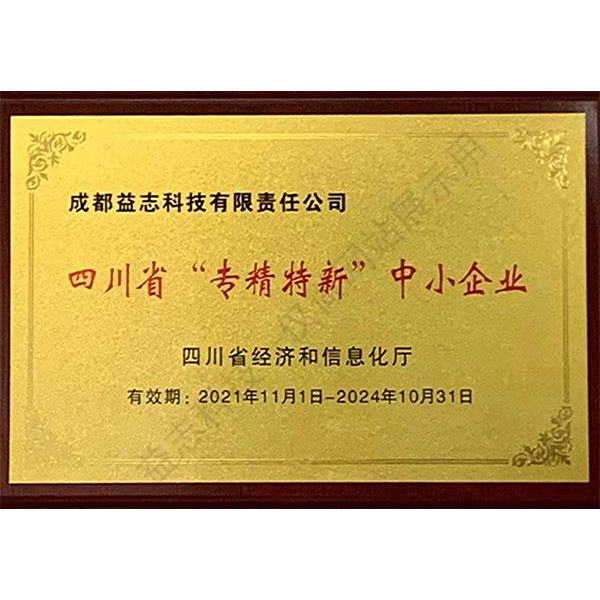
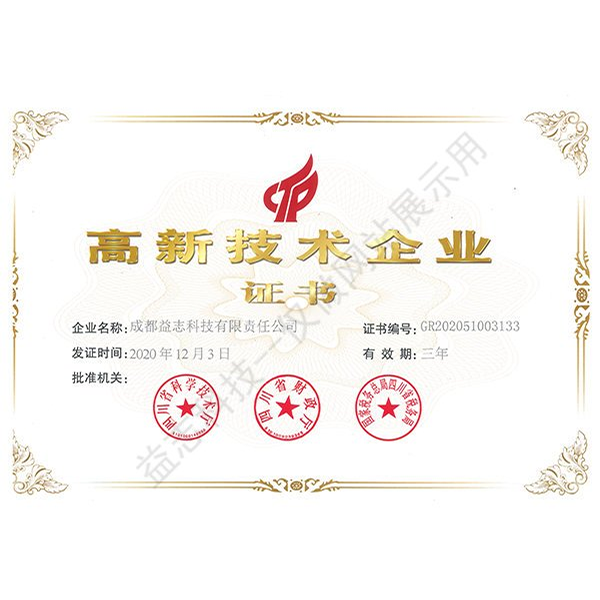
In this complex system of coordinates - between global technologies, local conditions and environmental regulations - local design and engineering institutes play a key role. They act as translators and integrators. Let's take for exampleChengdu Yizhi Technology Co.(their website isyzkjhx.ru). This is not just “another company”, but a design institute created on the basis of chemical and technological experience. Their registered capital of 120 million yuan shows serious intentions.
Why are such players valuable? They understand the context. When an institute such as Yizhi Technology undertakes the design of a gas purification unit before liquefaction, it takes into account not only typical technological schemes. He knows which reagents are easier and cheaper to purchase in Sichuan, how the equipment will perform in the high humidity conditions that characterize the region, and what environmental regulations will be enforced by the local environmental protection bureau. This is knowledge that cannot be bought in the form of ready-made software or hardware.
In one of their joint discussions on the storage project, they drew attention to a seemingly trivial matter: the specifics of the groundwater at the site. This led to adjustments to the design of foundations for cryogenic tanks, which ultimately saved time and money during the construction phase and prevented potential problems with ground icing. Such details are born only from experience working within the system.
Looking forward: where it is thin, there it breaks
The main challenges, in my opinion, are now shifting to the area of synergy and numbers. The first is the integration of LNG facilities into the wider energy grid, especially with the growing share of intermittent renewable energy. LNG power plants must become more flexible, which places new demands on regasification and control technologies.
Secondly, pressure towards "green" LNG and hydrogen will only grow. So far these are more pilot projects and statements of intent, but the technological base should be laid now. For example, is it worthwhile to include in new terminals the ability to receive small batches of bioLNG or, in the future, liquid hydrogen? This is a difficult decision involving a huge investment in an uncertain market.
And finally, the footage. Complex, hybrid systems require specialists who understand liquefaction technology, environmental monitoring, and energy fundamentals. Their preparation is the next frontier of work. Without them everyone is advancedtechnologyand strictenvironmentalstandards will remain just beautiful drawings. The conditions for success in the Chinese LNG sector are no longer just money and political will, but a deep, detailed study at the intersection of disciplines, where every little thing, taken into account or missed, matters.