Is China an exporter of technology for extracting methane from coal?
2026-03-05
When you hear this question, the first thought is, of course, yes. But if you dig deeper, everything is not so clear. Many people imagine simply selling installations or drawings. In fact, the real export of technology is the transfer of a whole complex: from geological assessment and well design to personnel training and adaptation of solutions to specific, often completely different from Chinese, formations. And here the nuances begin, which are rarely written about in press releases.
From ?iron? to comprehensive solutions
Previously, about ten years ago, Chinese companies were indeed often positioned simply as suppliers of equipment formethane extraction from coal seams. Pumps, compressors, and wellhead equipment were shown at the exhibitions. And there was demand. But gradually the understanding came that the equipment itself is a small part of success. The key is know-how in the field of reservoir engineering and project management.
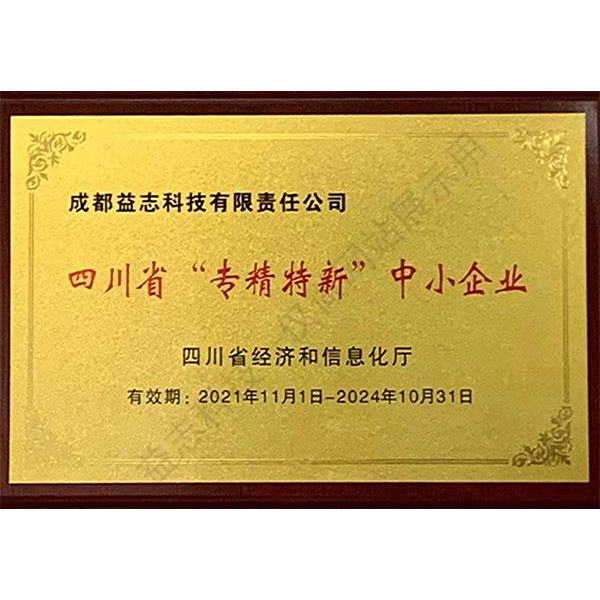
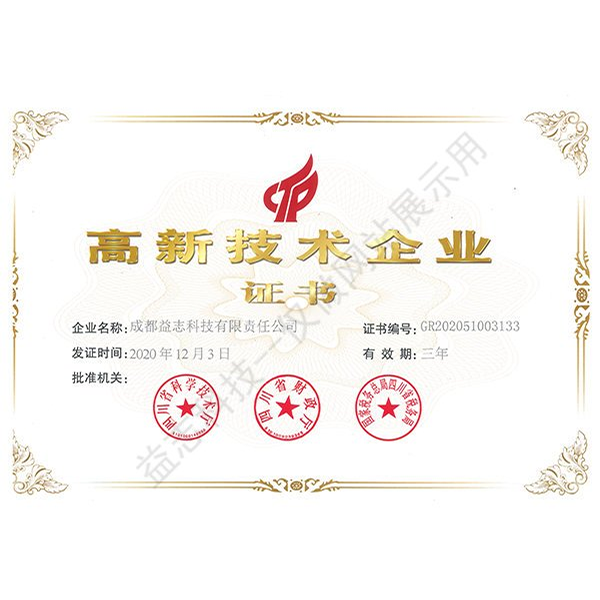
Now the focus has shifted. Let's take, for example, a design instituteChengdu Yizhi Technology Co.(their website isyzkjhx.ru). They don't just sell technology, they offer the full cycle: from initial research and modeling to field commissioning. This is already a different level. Their establishment in 2013 with a registered capital of RMB 120 million reflects this shift from purely technical support to comprehensive project engineering.
Why is this important? Because coalbed methane in Kuzbass, for example, and in Shanxi are two big differences. Depth, permeability, formation structure, mining and geological conditions... You can bring the most expensive American or Chinese pump, but if the hydraulic fracturing strategy or drainage mode is chosen incorrectly, the project will fail. This is where Chinese experience, accumulated in the most difficult conditions, became a commodity.
Experience bought by mistakes
Speaking about export, one cannot help but recall the first attempts, which often ended in mutual disappointment. The Chinese side brought “proven” products. decision, but on the spot it turned out that the seam was more watered, or the coal was too soft, or the legislation required different environmental standards. I myself saw a project where drilling is done according to the “Chinese” method. scheme led to rapid silting of wells. The equipment was in order, but the technology for its use was not.
From such situations, a new model was born - the creation of joint research centers or adaptation projects. First, detailed surveys are carried out on site, then they are “tailored” to suit them. technology package. It takes longer and is more expensive, but the result is more predictable. This is no longer pure export, but rather joint development.
By the way, about legislation. It is often forgotten that the export of technology also means the export of safety standards. Chinese standards for control of degassing and industrial safety in coal mines are now among the strictest in the world. And this regulatory baggage is an integral part of the proposed package. Sometimes for a foreign customer this becomes an unexpected, but very valuable bonus.
Market specifics: CIS as a testing ground
For Chinese technologiescoalbed methane productionCIS markets, especially Russia and Kazakhstan, became a natural first step for exports. The reasons are obvious: a similar raw material base, a historically developed coal industry and, most importantly, an understanding of the importance of methane as a security threat. The Chinese are not pioneers here; they compete with established approaches, and this forces them to offer not just an analogue, but a more profitable solution.
In practice, this often looks like offering higher methane recovery rates. Not just degassing for safety, but commercial production with purification to the quality of main gas or electricity generation. This is where economics comes into play. Chinese companies have learned to optimize capital costs by offering modular, scalable solutions, which for medium-sized fields in the CIS are often more attractive than giant projects of Western companies.
But there are also enough problems. Localization of equipment production is a sore point. Customs barriers, differences in standards for steel pipes or electrical equipment can negate any cost benefit. Often a project is slowed down not by technology, but by bureaucratic procedures for certifying Chinese equipment for compliance with local TR CU or GOST standards. This is a reality that cannot be described in a technical brochure.
Technological tricks and their real effectiveness
If we talk about specific technologies that are exported, it is often not one “silver bullet”, but a combination. For example, multi-stage hydraulic fracturing in horizontal wells, developed in the Ordos basin, or specific technologies for isolating formations during drilling. The Chinese have made significant progress in working with low-permeability formations that were previously considered unprofitable.
But here lies a trap for the buyer. Success in China is guaranteed by huge government investment in R&D and preferential taxation for such projects. In other countries, this state support may not be available. Therefore, when exporting, the emphasis is on the economic model, which must be profitable and without subsidies. This doesn't always work out. I saw calculations where the declared production cost was clearly underestimated due to “forgotten” ones. operating costs for servicing complex equipment in the field.
Another point is monitoring and data analysis. Chinese projects are now literally packed with sensors. This approach is also exported: a real-time data collection system for flow optimization. This is a powerful tool, but it requires skilled local personnel to interpret. Without this, all this “digit” turns into an expensive toy. Therefore, training has become a key clause in contracts.
The future: partnership instead of sale
So, getting back to the main question: is China a technology exporter? Yes, definitely. But today this is no longer an export in the “bought and installed” style. This is the export of experience adapted to specific conditions, and often in the format of strategic partnerships. The point is to convey the methodology: how to assess the potential, how to design wells, how to manage the life cycle of the project.
Successful cases, such as the cooperation of some Chinese institutions with coal mining companies in Kuzbass, show that this path works. There, Chinese specialists not only provide consultations, but, together with Russian engineers, go all the way from desk research to the launch of a pilot group of wells. This is a real technology transfer.
Conclusion? China has become a serious player in this market not because it has the best equipment in the world (although it has become very competitive), but because it has learned to package its often bitter experience into workable commercial solutions. And this ?batch? the product - engineering, equipment, training, and sometimes financing - is now the main export product. The question now is: how flexibly these solutions will be able to take root in a soil with a different business and geological culture. We will see the answer to this in the next five to ten years based on real production indicators at joint projects.