China: hydrogen from coke oven gas - prospects?
2026-03-05
When you hear “hydrogen from coke oven gas?”, many people immediately think of an old, almost museum-like process. And this is the main misconception. In fact, this is not about archaism, but about how to give a second life to a by-product that would otherwise simply burn in a torch. In China, with its colossal volumes of coke production, this issue has long turned from theoretical to purely practical - and very controversial.
Not just a side stream, but a raw material base
Pretty presentations aside, the key is composition and consistency. Coke oven gas is not natural gas; its composition varies depending on the type of coal, the coking mode, and even the weather. The hydrogen content can range from 50% to 60%, but along with it comes methane, carbon monoxide, heavy hydrocarbons and, critically, sulfur. The first thing you encounter in practice is not “hydrogen production,” but preliminary purification. Hydrogen sulfide, cyanide, naphthalene - all this must be removed before the gas reaches theadsorption unit. Many projects stumble at this stage, underestimating the costs of preparation.
For example, at one of the old factories in Shanxi they tried to install membrane separation immediately after rough cleaning. The idea was speed and economy. But the membranes quickly became clogged with residual resins, and the project went into deep downtime. I had to go back to the classics -pressure swing adsorption(PSA), but with a more serious pre-wash? gas This added both capital costs and operational difficulties. It turned out that cheap raw materials do not require cheap preparation.
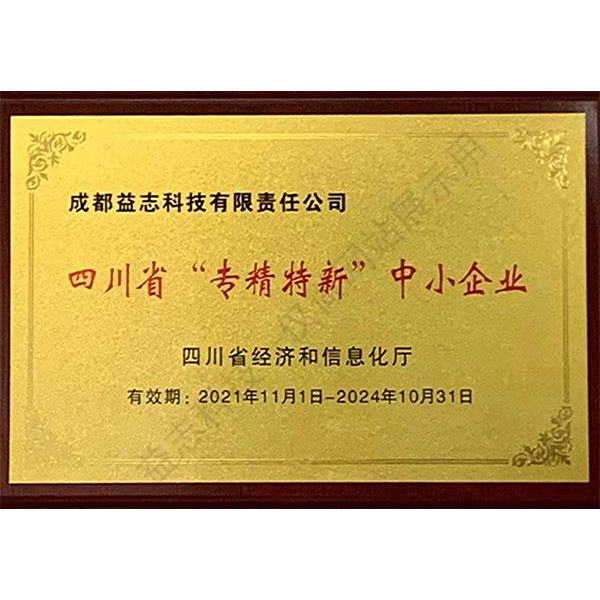
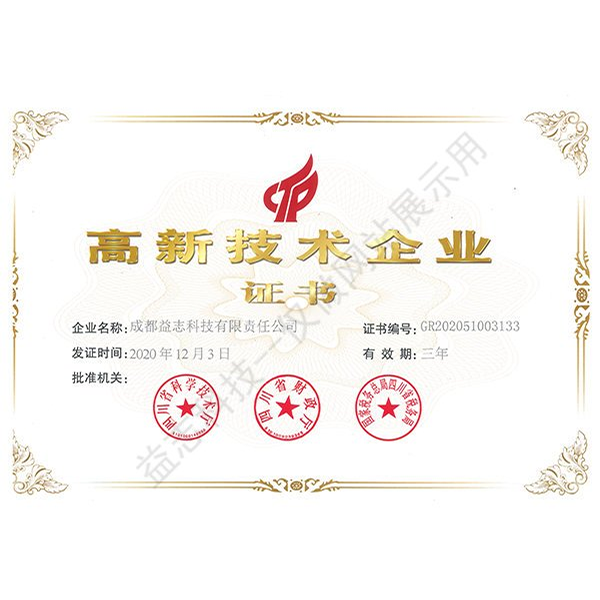
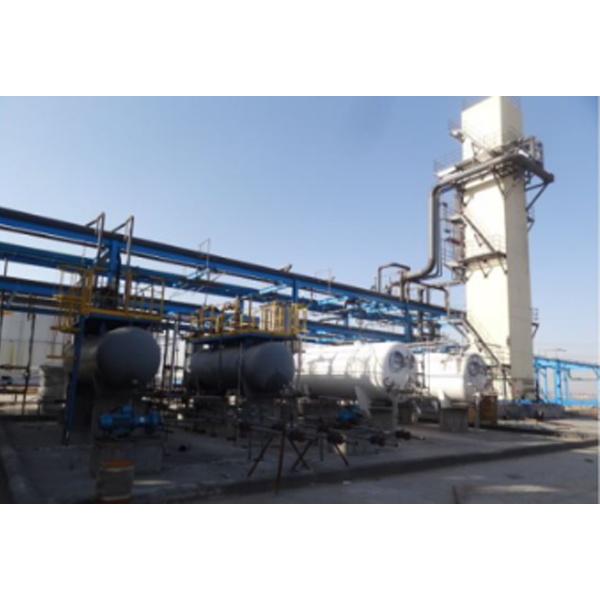
And here you can see the difference between just an engineering firm and a specialized design institute. It is necessary to deeply understand coke chemistry, and not just gas separation. I have seen projects where the process line was built from the furnace itself, taking into account the cyclicity of gas output and its temperature parameters. This is already a different level. By the way, one of the few who systematically works in this narrow niche in China isChengdu Yizhi Technology Co.(their website isyzkjhx.ru). They grew out of Huaxi chemical technology and, judging by their portfolio, approach the issue comprehensively: they don’t just sell a PSA unit, but design the entire cycle from gas acceptance to commercial hydrogen production. Their experience is precisely that without detailed study of raw materials you will not go far.
Economics: where is the profit hidden?
The main argument?for? - low cost of raw materials. Gas is actually free, it just needs to be disposed of. But this is a trap for investors. The main costs are capital investments in purification and separation, and then in compression and storage of hydrogen. Pure hydrogen from PSA is not a product yet. It must be brought to the consumer's requirements, be itoil refining, ammonia productionor emerginghydrogen energy.
On one of the projects where I participated, everything was calculated down to the smallest detail. It turns out that the break-even point strongly depends on two factors: the stability of the coke oven batteries (so that there is no downtime or fluctuations in gas volume) and the price of alternative hydrogen, for example, from steam reforming of methane. When natural gas prices are low, the entire economy of ?coke? hydrogen collapses. But in China, in recent years, policy has been moving towards diversifying sources and reducing the carbon footprint. And here hydrogen from by-product gases gets a second wind - not so much economic as environmental and strategic.
Another nuance - what to do with the waste gas after hydrogen extraction? It still has calorific value. The most logical way is to return it to the plant's energy system to heat coke ovens or generate steam. But this requires integration with the existing infrastructure, and in old factories its modernization is a separate headache. It turns out to be a puzzle where technical solutions directly affect the economy.
Technological forks: PSA, membranes or cryogenics?
Dominates the worldPSA technology. Reliable, proven, allows you to obtain hydrogen purity up to 99.999%. But the installations are bulky, require a complex system of valves and automation, and are expensive to maintain. Chinese manufacturers, including the aforementioned Yizhi Technology, have localized this equipment long ago, which has reduced the cost. But you can’t fool physics - the process is cyclical, there is loss of hydrogen with the waste stream (up to 15-25%). For large productions this is already significant.
Membrane separation looks more elegant - compact, fewer moving parts. But, as I already mentioned, it is critical to the purity of the inlet gas. If even traces of higher hydrocarbons or aromatic vapors remain in the coke oven gas after cleaning, the membrane fails. I have seen attempts at combined schemes: rough cleaning -> membrane (separation of the bulk of hydrogen) -> finishing on a small PSA. In theory, it is optimal in terms of capital and operating costs. In practice, the complexity of managing two dissimilar technological lines often ate up all the savings.
Cryogenic separation is for very large volumes and cases when it is necessary to separate not only hydrogen, but also, for example, ethylene. For standard coke chemistry this is most often redundant. Conclusion? There is no universal solution. The choice of technology is always a compromise between the purity of the raw material, the required volume and purity of the product, as well as the customer’s readiness for more complex management.
Case from practice: a non-obvious problem with “dry” gas
I would like to share one not so obvious failure, which well illustrates the specifics of the raw material. After the successful start-up of the PSA plant at one plant in Hebei, a gradual decline in productivity began after a few months. Pressures, temperatures - everything is normal, the adsorbents are fresh. We searched for the reason for a long time. It turned out that during the rainy season the humidity of the coal supplied for coking increased. This, in turn, affected the composition of the coke oven gas: its hydrogen content slightly decreased and the CO content increased. But the main thing is that the microclimate in the workshop changed, and more atmospheric moisture entered the gas treatment system.
The adsorbents in the pre-PSA drying units were designed for standard conditions, and this additional moisture was not enough. As a result, raw gas entered the PSA columns, and the moisture began to “poison?” zeolite adsorbents responsible for fine purification of hydrogen. The problem was solved not by replacing expensive adsorbents, but by improving the inlet drying system and revising regulations depending on the season. Trifle? On paper - yes. In practice, there are weeks of downtime and tons of lost product. This is the same “practice” that is not in textbooks.
Where to sell? The market dictates purity
Getting hydrogen is half the battle. It needs to be sold. And here the question of purity arises. For hydrotreating in refineries, 99.9% is often enough. But to power fuel cells or electronics, purity is required at a level of 99.999% or higher, with strict control of CO, which is a poison for catalysts. Coke oven gas, even after the most advanced purification, always carries the risk of trace impurities of specific hydrocarbons.
Therefore, most of the existing projects in China are aimed specifically at industrial consumers near the plant - the same refineries or chemical plants. Building an infrastructure for transporting compressed or liquefied hydrogen is a different story with a still dubious return on investment. The prospect is seen in the creation of local clusters: a coke plant - hydrogen production - a nearby consumer enterprise. This reduces logistics risks and costs.
It is interesting that some companies, for example, the same Chengdu Yizhi Technology Co., Ltd., positioned as a design institute with a registered capital of 120 million yuan, offer turnkey solutions, including analysis of potential markets. This is the right approach, because without understanding to whom and at what price you will sell hydrogen, even the most technologically advanced installation becomes a burden.
Results: there are prospects, but they are mundane
So are there any prospects? Definitely yes. But this is not a breakthrough “green” technology of the future, but a pragmatic, resource-efficient solution for an already existing giant industry. Its drivers are not the fashion for hydrogen, but strict environmental standards (ban on flaring of associated gases) and the economic feasibility of waste disposal.
The main potential lies in integration. Not in the construction of individual ?hydrogen? workshops, and in the deep modernization of the entire coke-chemical process with the hydrogen vector as one of the product areas. This requires large investments and competencies, which not everyone has.
Personally, I look at this with cautious optimism. The technology is not new, its pitfalls are known. The success of the project will be determined not so much by the choice between PSA or membrane, but by the quality of engineering, the depth of development of the raw material base and sober economic calculations that take into account everything - right down to the seasonal moisture content of coal. This is not a field for amateurs. This is a job for those who understand coke chemistry from the inside and are ready to solve complex, non-standard problems. And, fortunately, there are already such players on the market.