China: new VOC recycling technologies?
2026-03-05
When do you hear about “new technologies?” in China, you immediately think about scale and speed. But when it comes to recycling volatile organic compounds (VOCs), things are not so clear-cut. Many, especially at the start, mistakenly believe that it is enough to buy the “most advanced” one. installation - and the problem is solved. In fact, the key thing is not so much the device as its integration into a specific technological process, adaptation to the composition of your emissions. And here the Chinese experience of recent years has become especially interesting: not so much the invention of fundamentally new methods, but rather their deep and sometimes very pragmatic refinement to working condition in real production conditions.
From theory to workshop: where the complexity lies
Take catalytic oxidation for example. The technology has been known for a long time, but its widespread implementation in China has faced a harsh reality. The composition of industrial emissions is often complex and unstable: today there are some solvents, tomorrow there are others, plus possible impurities of dust or siloxanes. A catalyst that works great on paper can quickly become deactivated under such conditions. We have to make compromises and combine methods. Often, a pre-purification or concentration system is installed in front of the catalytic unit, for example, adsorption on zeolite rotors. This increases capital costs, but saves the expensive catalytic bed in the long run.
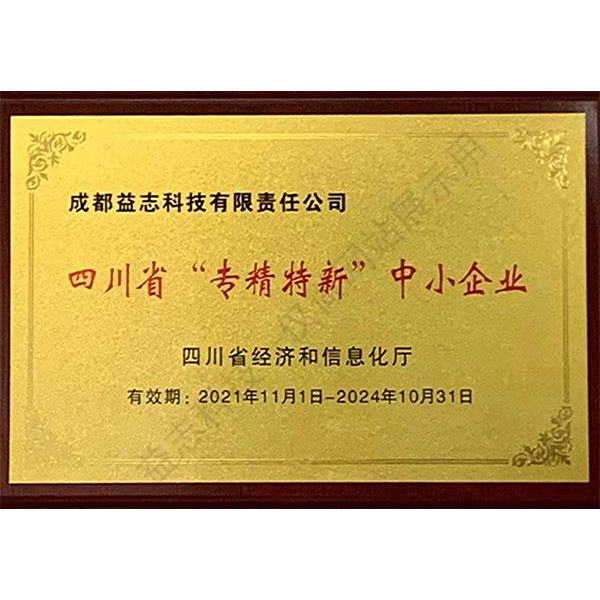
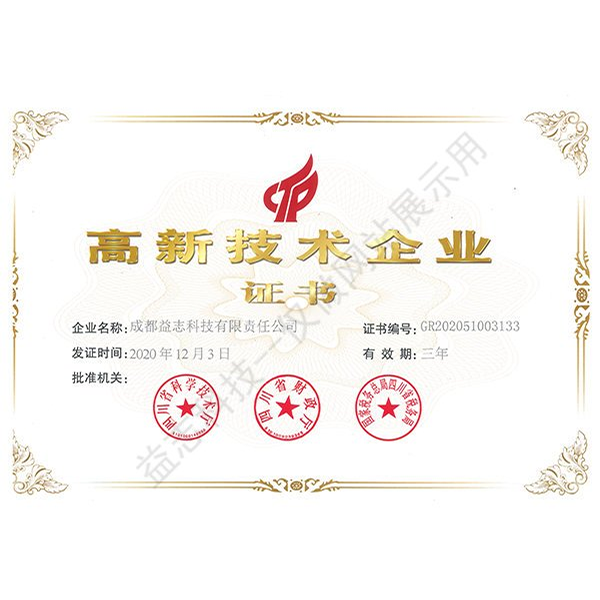
One of the striking examples of such systematic work is the design instituteChengdu Yizhi Technology Co.. They don’t just sell equipment, but build solutions from measuring emissions at a facility to commissioning. Looking at their websiteyzkjhx.ru, it is clear that the emphasis is on engineering. The company was founded in 2013 as part ofHuaxi Technology, and its registered capital of 120 million yuan allows it to take on large complex projects. Their approach is not about a “magic box”, but about the analysis and selection of a chain of technologies: somewhere you need a condensation unit, somewhere you need plasma treatment, and somewhere you need a hybrid system of “adsorption + regenerative thermal oxidation?” (RTO).
I remember an incident at a paint factory in Jiangsu province. The customer immediately wanted RTO, but preliminary analysis showed extremely uneven air flow from the painting booths. Simply installing a powerful RTO would be economic suicide due to the gas consumption to maintain the temperature. Instead, they proposed a design with an adsorption concentrator on a rotating rotor, which accumulates VOCs from a large volume of weakly concentrated air, and then blows them out into a compact afterburner with a small stream of hot air. Energy consumption has dropped significantly. This is what “new technology” is? in the Chinese version - not a discovery, but a smart, economically sound arrangement.
Adsorption: an old friend, but with new nuances
It would seem that adsorption with activated carbon is a classic that everyone knows. However, here too there are some subtleties. Firstly, the issue of utilization of the most saturated coal. If it is simply taken to a landfill or regenerated on the side, the economic and environmental sense is lost. Therefore, systems are now often designed with thermal regeneration of coal directly on site. But this again requires precise calculation: if the temperature or holding time is incorrect, the coal loses its capacity or, worse, smoldering may occur.
Secondly, for specific VOCs, synthetic zeolites, rather than coal, have become increasingly used. Their structure can be “sharpened” for molecules of a certain size, which increases selectivity and resistance to moisture. At one chemical plant near Chengdu, they encountered emissions containing a lot of water vapor. Conventional coal quickly lost efficiency. We switched to a zeolite rotor with a hydrophobic coating - the problem went away. But the price, of course, is different. The choice of adsorbent has become a separate engineering task requiring laboratory tests.
And here the role of integrator companies likeChengdu Yizhi Technology. Their value lies in the fact that they have access to different types of sorbents and catalysts and can conduct pilot tests on the customer’s real gases. The website shows that they position themselves precisely as a design institute, which implies a research component. This is not “brought and abandoned”, but the selection of a solution for the problem, which in the case of adsorption is critically important.
Biological methods: a silent revolution for low concentrations
Less is said about biological treatment, but for some industries - for example, wastewater treatment, food industry, some pharmaceutical areas - this is sometimes the ideal solution. The idea is that microorganisms in a special biofilter or bioreactor consume VOCs as food, breaking them down into CO2 and water. The technology is not new, but its use in China for the treatment of industrial gas emissions (and not water) became widespread only in the last decade.
The main advantage is low operating costs. The main disadvantage is the demanding conditions: stable flow, low and relatively constant concentrations, absence of compounds toxic to bacteria, control of temperature and humidity. If all this is provided, the system works like clockwork for years. I saw an installation at a yeast production plant: air from the fermentation shops with a characteristic odor was passed through a cascade of biological scrubbers. The result is that the smell at the border of the sanitary zone has become almost imperceptible.
But there was also an unsuccessful experience at a small furniture workshop. The owners decided to save money and installed a biofilter to purify the air from the spray booth, where complex paints with additives were used. The concentration and composition of VOCs “jumped?”, plus there was paint dust in the emissions. The bacteria couldn’t cope, and after six months the filter turned into a source of problems. We had to dismantle and install an adsorption-catalytic system. Conclusion: the biomethod is not a panacea, but an accurate tool for its niche conditions.
Energy efficiency as a driver of innovation
Now the trend is not just to recycle, but to do it with minimal energy consumption or even with energy recovery. This is the area where the most interesting “new products” appear. For example, regenerative thermal oxidation (RTO) systems with ceramic packings have become the standard for medium to high concentration streams. Their heat recovery efficiency reaches 95%, making the process almost autothermal at a certain VOC concentration.
But there are pitfalls here too. High efficiency is achieved only with stable operation. With frequent stops and starts of production (for example, in an operating mode of “five days a week, two days off?”), the efficiency drops, since each time you need to warm up the massive ceramic nozzle. For such cases, regenerative oxidation (RCO) systems are sometimes more effective, where compact plate heat exchangers are used as a recuperator rather than ceramics, or even a combination with a condenser to capture condensed vapors before oxidation.
In this regard, it is interesting to observe the evolution of proposals. Previously, the specifications simply wrote “Cleaning efficiency >98%?”. Now in technical and commercial proposals from serious players, includingChengdu Yizhi Technology Co., Ltd., there is definitely a section on calculating the energy balance and modeling operation under variable load. This indicates the maturity of the market. Customers began to ask questions not only about the price of the equipment, but also about how much it would “eat”? gas or electricity after five years of operation.
Looking to the future: digitalization and hybrid systems
What's next? In my opinion, we should not expect breakthroughs in the form of the discovery of a single new physicochemical method. The main development is taking place in two directions. The first is deep digitalization and predictive analytics. Sensors that monitor not only total VOCs, but also key components in real time, plus algorithms that predict canister loading or catalyst condition, allow you to optimize regeneration cycles, save energy and prevent emergency emissions.
The second direction is the creation of smart hybrid systems. It is no longer uncommon to see a project where the first stage is condensation to capture valuable solvents, then adsorption on zeolite to concentrate the residues, and the final stage is catalytic oxidation. Each stage is switched on as needed, depending on the current gas parameters. This is more difficult to set up, but provides maximum flexibility and savings.
It is in the creation of such complex, “cross-linked” solutions and demonstrates the competence of modern engineering companies in China. This is not about purchasing ready-made modules, but about designing a system from scratch. under the plant technological map. The experience of institutions likeChengdu Yizhi Technology, created on the basisHuaxi Chemical Technology, is invaluable here. Their strength lies in their ability to carry out the full cycle: from audit and laboratory research to installation, startup and personnel training. Therefore, when they talk about “new VOC recycling technologies in China?”, I increasingly think not about a specific device, but about such complex, adaptive engineering, which turns a set of methods into a reliable and economical solution.