China: is hydrogen from hydrocarbons environmentally friendly?
2026-03-05
Here's a question that comes up all the time in conversations with clients and at industry meetings. Everyone is looking for a simple answer, but there is none. Many people immediately say: “What kind of green is this?” hydrogen if the source is gas or coal? This is a step back!?. But the reality of the projects in which we participate is much more complex than these labels.
Where do the legs of this “blue” come from? hydrogen
It all started with the fact that China needs hydrogen here and now. For transport, for industry, for the same chemistry. Renewable sources (RES) are growing rapidly, but the scale of demand is colossal. And infrastructure for a clean “green” No H2 yet. But there are gas pipelines. There are coal deposits. And conversion technologies have been developed for decades. The logic is simple: we take what is at hand and try to make the process cleaner. This is where the emphasis oncarbon capture(CCS/CCUS). Without this, the whole concept of ?low carbon hydrogen from hydrocarbons? it just falls apart.
In practice, it looks like this: we are not talking about old steam methane reformers (SMRs) that smoke like steam locomotives. We are talking about new or modernized complexes, whereCO2 emissionsare not released into the atmosphere, but are designed to be captured. But here’s the first pitfall: capture efficiency. In theory, you can catch 90% or more. In practice, in existing Chinese projects, the figures are often more modest - 60-75%. Why? Questions of economics, energy costs for the capture process itself and, critically, geology - where to pump this CO2 then.
I remember one of the early projects where we were just evaluating the integration of a CCS unit into a plant for producing hydrogen from coke oven gas. The numbers in the modeling were beautiful, but when they began to calculate the balance along the entire chain - from additional steam consumption for sorbent regeneration to the logistics of compressed CO2 - "greenness"? the whole idea has faded greatly. The result was not “blue”, but rather “bluish-gray”. hydrogen. But it is precisely such attempts, even imperfect ones, that provide the very data without which it is impossible to move further.
Technological kitchen: not only reforming
When they say “hydrogen from hydrocarbons”, everyone immediately thinks about methane. But in China, coal plays a huge role. Steam gasification of coal is a technology with a history, and it is now being actively developed for the hydrogen economy. The problem is that coal is not pure carbon. Sulfur, ash, other impurities. You will get hydrogen, but how much energy will be spent on the preliminary purification of the synthesis gas and the subsequent separation of H2? And again the question with CO2: during gasification it is formed even more than during gas reforming.
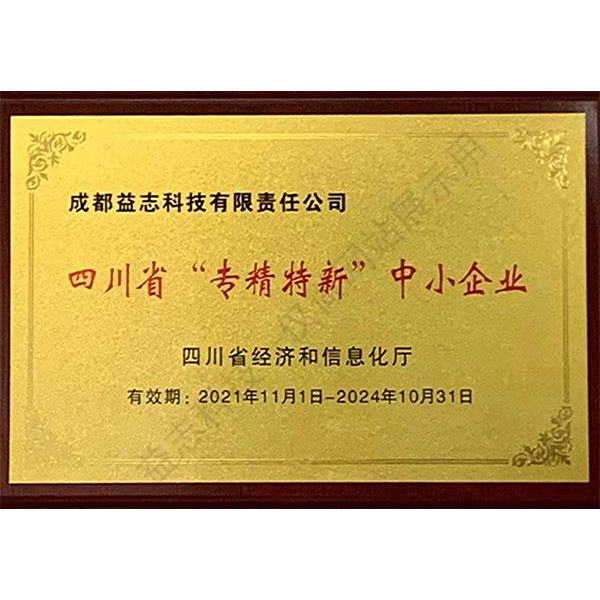
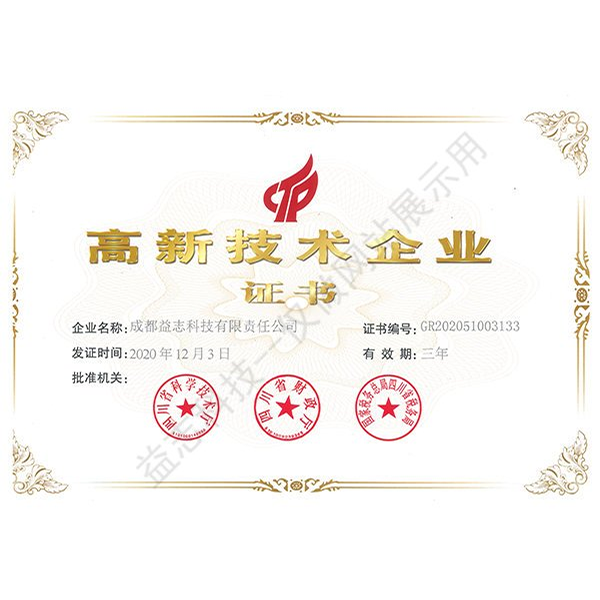
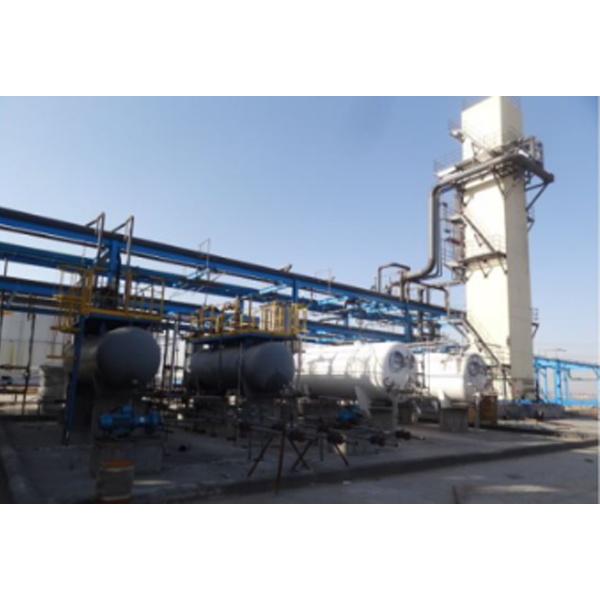
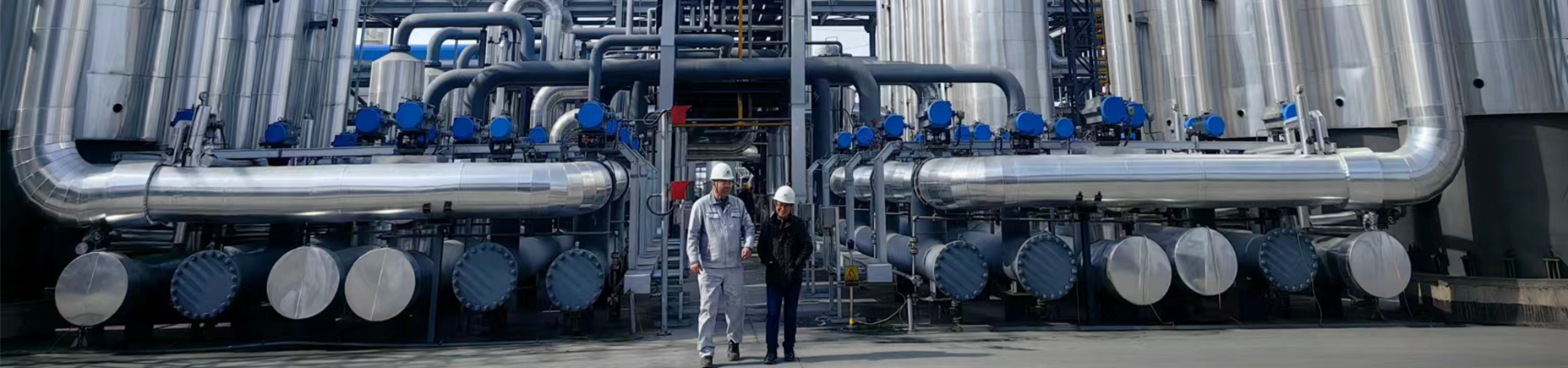
Here it is interesting to observe the work of specialized institutes that are engaged in full-cycle engineering. Here, for example,Chengdu Yizhi Technology Co.(their website ishttps://www.yzkjhx.ru), this is precisely the design institute created by Huaxi Technology. They don't just sell technology, but conduct turnkey projects. - from process modeling to commissioning. Their portfolio includes plants for the purification of hydrogen-containing gases, and this is a key stage. Because even if you captured carbon, if your end product is hydrogen with CO impurities, which will poison the fuel cell, the whole point is lost.
One thing stood out from conversations with their engineers: they do not hide that the main challenge is not the chemistry of the process itself, but its energy efficiency and equipment reliability in real production conditions, not in a laboratory. Often the customer wants the “most modern”, but when you show estimates for highly efficient membranes for gas separation or poison-resistant catalysts, the conversation turns to the plane of compromises.
Environmental friendliness: count on a full cycle
This is perhaps the most important thing. Can such hydrogen be called environmentally friendly? It all depends on the boundaries of the calculation. If we take only the point of hydrogen exit from the installation, perhaps yes, especially if the CO2 is buried. But if we consider the full life cycle (LCA) - gas/coal production, their transportation, methane losses, energy for operating CCS compressors, risks of leakage of CO2 storage facilities - the picture changes.
We had an internal analysis for one project in Shanxi. Have you compared ?blue? hydrogen from local coal with imports of ?green? hydrogen in the form of ammonia. By carbon footprint at the time of use at the gas station ?blue? was better. But when long-term risks were added to the model (for example, the probability of partial degradation of a geological repository within 50 years), the advantage became illusory. This does not mean that from ?blue? hydrogen must be abandoned. This means that its role is transitional technology. It helps create demand for hydrogen here and now, build a refueling network, and establish logistics. And in parallel, generation from renewable energy sources should grow.
By the way, about risks. There is a lot of noise around methane leaks. When extracting and transporting gas, methane is a powerful greenhouse gas. If these leaks are not controlled, the entire climate benefit of CCS at the reformer could be negated. In China, more and more attention is now being paid to this, but the monitoring system has not yet been implemented everywhere. Is this the same “dirty” one? a practical detail that is often missed in a beautiful concept.
Field observations: what works and what doesn't
On paper everything is smooth. In reality, you come across things that are not written about in reports. For example, corrosion. Units operating with CO2 capture using amine solutions are hell for the metal. High humidity, temperature, chemically active environments. I saw an installation where almost all the heat exchangers in the amine regeneration unit were replaced in two years. Simply because the equipment supplier saved on the grade of steel. The client was screaming about the technology being unenvironmentally friendly, but the problem was a simple engineering mistake.
Another point is raw materials. The quality of natural gas in the network is variable. Batches arrived with a high content of higher hydrocarbons or sulfur - and that’s it, the operating mode of the reforming catalyst is disrupted, efficiency drops, emissions increase. Or coal: its composition varies from car to car. The system must be flexible, and this is expensive. Many first-generation projects did not take this into account and are now operating on the edge of profitability or are idle.
That is why the experience of companies that have traveled this path is valuable. Let's go back to the exampleChengdu Yizhi Technology Co.. From their description it is clear that this is not a startup, but an institute with a registered capital of 120 million yuan, created on the basis of a chemical technology company. Such players usually come with a deep knowledge of real production processes, not just theory. They understand that the key is the reliability and adaptability of the technology to the non-ideal conditions of Chinese raw materials and operation.
So where are we going?
To summarize my view from the inside: calling hydrogen from hydrocarbons with CCS absolutely environmentally friendly is disingenuous. But to reject it as an absolute evil is stupidity, which slows down the energy transition. This is necessaryintermediate stage. Its environmental friendliness is not black and white, but a scale. It depends on hundreds of factors: from capture efficiency to measures to reduce methane leaks at the well.
China is betting on this not because it is ideal, but because it can be implemented in a short time and on an industrial scale. This allows you to increase capacity and reduce costs for infrastructure (pipelines, gas stations, storage facilities), which can then be used by “green” companies. hydrogen.
The main takeaway for me after all these years is that there is no magic technology. There is hard, often thankless work to optimize chains, integrate solutions, and deal with a thousand small technical problems. It is this work - calculations, field tests, error correction - that determines how "blue" we are. or ?gray? will be the final product. And labels are for marketers and politicians.