China: technology for extracting methane from coal?
2026-03-05
When people talk about the extraction of methane from coal seams in China, many people immediately imagine something like shale gas, only more complicated. In fact, this is not a completely new story, but in the last ten years there has been a qualitative leap here - from attempts to copy Western methods to our own, adapted to the specifics of local basins like Ordos or Jinzhong-Nanxiang. The main paradox that you encounter on site: the theoretical reserves are colossal, but the permeability of the formations is often disgusting, and the depth of occurrence and geological complexity negate standard approaches. So we have to invent.
From theory to well: where the catch lies
In the textbooks, everything looks simple: drill a well into a coal seam, reduce the formation pressure, desorb the methane and pump. The reality in China is different. Take the Shanxi Basin for example. There coal seams are often multi-layered, with high ash content, and the hydrogeology is complex. A standard vertical well with hydraulic fracturing (fracturing) can initially give a decent flow rate, but it drops significantly in the first six months. Why? Because the created crack closes quickly due to geomechanical stresses, and the system of natural cracks (cleats) in the coal is not developed as expected from the core. Laboratory data on permeability and real field data are two big differences.
Therefore, Chinese engineers en masse switched tohorizontal drillingwith multi-stage hydraulic fracturing. But this is not a silver bullet either. The technology is expensive, and efficiency is highly dependent on geosteering accuracy and in-situ understanding of stresses. There were cases when the trunk of a horizontal well ran along the formation, but fell into a zone of tectonic disturbance, and the entire subsequent fracture went into emptiness - methane did not flow. Errors in the design of crack geometry, their orientation relative to the cleats, cost millions of yuan. These are not theoretical delights, but daily practice.
Another nuance that is rarely written about in glossy reports is the problem of watering. In many Chinese coalbed methane (CBM) fields, formation water is not just a background, but a major factor determining the economics of the project. It is necessary not only to pump out the depression water, but also to dispose of it - often these are highly mineralized brines. The construction of treatment and injection systems increases the cost of the project by 15-20%, and not all companies agreed to this, preferring to discharge water into storage tanks, which then resulted in environmental fines and suspension of work.
Equipment and materials: adaptation or import substitution?
Previously, key equipment - for example, submersible screw pumps for wells with a high content of mechanical impurities or telemetry systems for monitoring hydraulic fracturing - was purchased from Baker Hughes or Schlumberger. Now the situation is changing. Local manufacturers, such as companies from Chengdu or Xi'an, offer analogues that are sometimes better adapted to local conditions. For example, pumps with an increased service life in an abrasive environment, because Chinese coal contains a lot of small rock particles.
But there are still questions with materials for hydraulic fracturing. The proppant is the one that keeps the cracks open. Ceramic proppant from the USA or China? Chinese is cheaper, but its strength and sphericity are not always consistent from batch to batch. At one of the projects in Anhui province, due to a batch of substandard local proppant, three stages of hydraulic fracturing had to be redone - the loss of time and money was enormous. Now many operators, even Chinese ones, prefer to use a hybrid approach: imported high-strength proppant for the first, most important stages, and local proppant for subsequent ones. This is not about patriotism, but about the economics of risks.
An interesting case involves chemical additives for fracturing fluids. In conditions of water shortages in some regions (for example, in the western part of the Ordos basin), technologies using polymer-based gels or even foam began to be used. But here we were faced with another problem - the difficulty of subsequently cleaning the formation from these chemicals. Residual polymers clogged the already low-permeability coal. It was necessary to develop compounds with controlled destruction time, which self-destruct within a specified period after surgery. Such solutions, by the way, are actively promoted by some localdesign institutes, specializing specifically in chemical technologies for oil and gas.
The role of specialized engineering companies
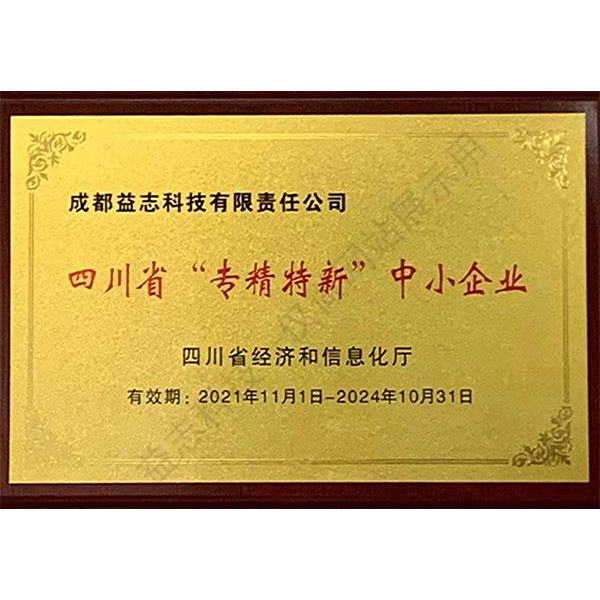
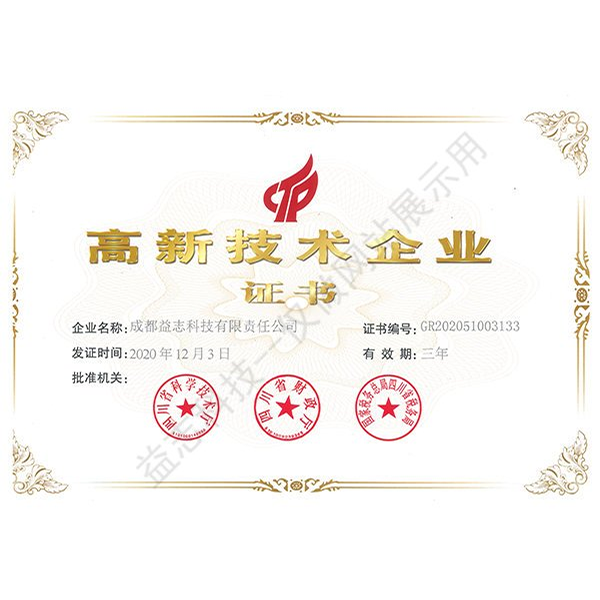
Here it is worth mentioning a specific example -Chengdu Yizhi Technology Co.(their website isyzkjhx.ru). This is not just a contractor, but a design institute created on the basis of a chemical technology company. Their capital of 120 million yuan indicates serious investment in R&D. Why are they interesting in the context of CBM? They are exactly those who work at the intersection of geology, drilling and chemistry. In their portfolio, I saw projects to optimize the compositions of fluids for hydraulic fracturing specifically for complex coal seams, where it is necessary to minimize formation damage.
When working with such institutions, operators often receive not a template solution, but one adapted to a specific block. For example, for a site with high clay content in the coal, they may suggest a salt water system (brine) with special swelling inhibitors, instead of standard fresh water. Is this a small thing? No, this can solve the issue with the drop in flow rate in the first months. Their approach is an in-depth analysis of core and reservoir fluids before proposing technology. This is the same ?project? a job that is often lacking in large service companies operating on global standard protocols.
Of course, not all of their developments become commercial success. At one seminar, a Yizhi representative once talked about a pilot project to use nitrogen injection technology to increase the methane recovery ratio (EOR for CBM). The idea was to not only reduce pressure, but also displace methane. Everything worked in the laboratory and in numerical simulations. But in the field, in a small area, the effect turned out to be marginal - the costs of producing and pumping nitrogen were not recouped by the increase in production. This is a typical story: laboratory conditions are ideal, but the reservoir is always a black box with a bunch of unknown parameters.
Economics and regulation: what slows down and what moves
Without talking about money and laws, the picture will be incomplete. Production stimulationcoal bed methanein China it is a story of mixed success. There were periods of generous subsidies for drilled meters, then the emphasis shifted to subsidies for the produced cubic meter of gas. This forced companies to think not about the number of wells, but about their actual productivity. A good incentive to introduce more advanced technologies.
But there are also bureaucratic barriers. Obtaining all drilling permits, especially in densely populated or agricultural areas, can take a year or more. Coordination with coal companies, if the coal seam is also the object of future mine production, is a separate complex process where interests often conflict. Sometimes it is easier to abandon a promising site than to agree on safe joint exploitation regimes for years.
The trend now is integration. Not just CBM production, but the creation of clusters: methane production, purification, use to generate electricity at local power plants or refuel vehicles. This increases the overall economic sustainability of the project. But this requires infrastructure and, again, coordination with local authorities and energy companies. Technologically this is doable, organizationally it is often a headache.
Looking to the future: which way is the wind blowing?
To summarize, the future of technology in China is seen not in revolutionary breakthroughs, but in the gradual, persistent optimization of existing methods for each specific basin and even site. The area of smart wells with sensors for constant monitoring of pressure, temperature and flow rate is actively developing - this allows you to precisely control the process of pumping water and gas, rather than working blindly.
Great hopes are placed on combined technologies, for example, the joint production of methane from underlying coal seams and shale horizons in one well structure. This can dramatically improve project economics. But these are again questions of geology and precision engineering.
And one last thing. The most valuable resource now is not technology per se, but data and experience. Those same databases of thousands of wells, including unsuccessful ones, the analysis of which allows you to avoid repeating mistakes. Companies likeChengdu Yizhi Technology Co., who have accumulated experience in specific regions and are ready to dive deeply into the problem, rather than sell a boxed solution, in my opinion, will be in more and more demand. Because extracting methane from coal in China is no longer a question of “to drill or not to drill?”, but a question of “how to drill and process it here, taking into account all the local pitfalls?” And only those who have walked this path from the very beginning, having filled their bumps, know the answer to it.