Chinese technologies for the Arctic cascade: a breakthrough?
2026-02-23
When they talk about Chinese technologies in the Arctic, many immediately imagine either cheap equipment or something completely experimental. The reality, as usual, is more complex and boring. Over the past five years, I have seen the approach change - from trying to simply sell something “frost-resistant?” to real engineering solutions for specific cascade conditions. And what is important here is not the big word “breakthrough”, but the details that are often missed in industry reviews.
From ?universal? to specifics: evolution of the approach
Early attempts by many, including Chinese suppliers, boiled down to adapting existing solutions. Like, we take a standard pump, strengthen the body, install frost-resistant rubber - and here it is, a product for the North. On paper everything matched, but in reality it was the sameArctic Cascadenuances emerged that simply could not be simulated in China. Thawing-freezing cycles, the specifics of icing on structures, even the influence of the polar night on the operation of sensors - all this required not adaptation, but redesign from scratch.
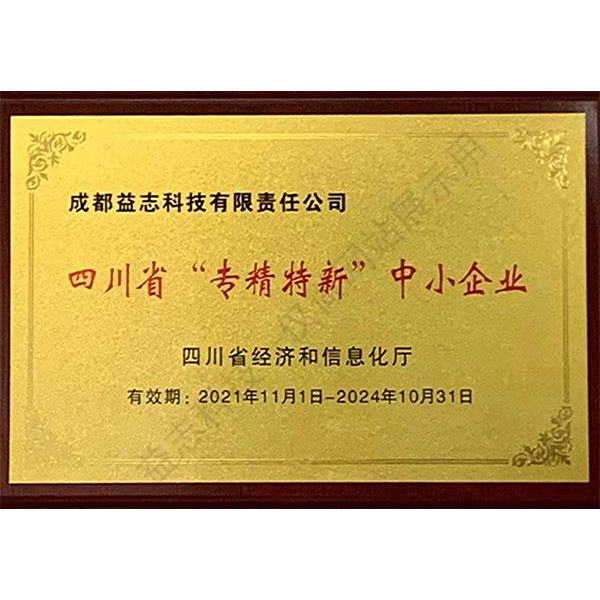
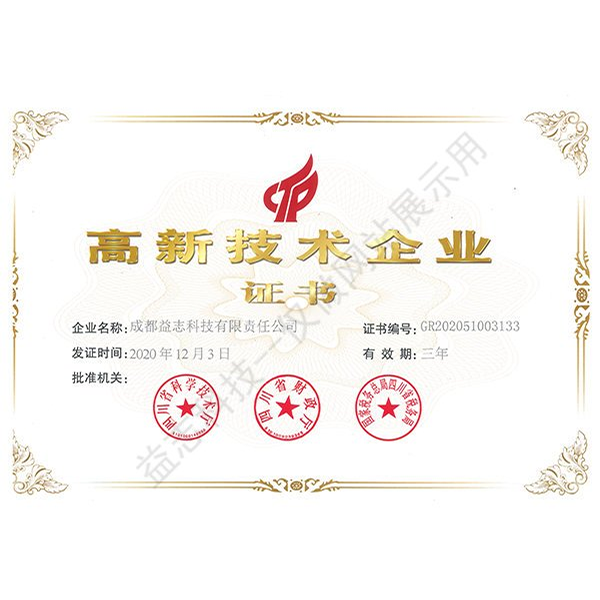
I remember one case involving heat exchange equipment for auxiliary systems. We installed a unit, which in the laboratory in Harbin showed excellent results at -45. And on site it turned out that the problem was not the peak temperature, but the duration of maintaining operability under constant winds and high humidity. The metal was getting tired? otherwise, microcracks appeared. This was an important lesson: you need to test not in a chamber, but in conditions as close as possible to real ones, preferably at a test site with a similar climate. After this, some companies, includingChengdu Yizhi Technology Co., began to actively develop precisely this direction - not just sales, but full engineering with validation in conditions close to the target ones.
Their approach, if you study materials onhttps://www.yzkjhx.ru, interesting. They are positioned not as an iron manufacturer, but as a design institute. This is the key difference. The registered capital of 120 million yuan is not about the scale of the plant, but about investment in research and comprehensive solutions. Their portfolio shows a shift in emphasis towards chemical technologies and special materials, which are often more important for a cascade than bare mechanics.
Materials and coatings: where real progress lies
If you look for areas where Chinese developments can really give an advantage, then it is perhaps materials. We are not talking about steel, but about polymers, composites, special coatings and anti-icing compounds. Russian industry is traditionally strong in metallurgy, but in the segment of high-tech polymers for extreme conditions there is room for imports or joint development.
For example, insulating materials for pipelines and cables. What is important is not just the coefficient of thermal conductivity, but durability under UV radiation (which can be very intense in the summer in the Arctic), resistance to mechanical damage during installation in permafrost conditions and, most importantly, maintainability. I saw samples from Chinese partners where multilayer composites with aramid fibers were used. In words - excellent. But upon closer examination, the question arose regarding compatibility with our fire safety standards and installation methods.
This is where the role of institutions such as Yizhi Technology comes into play. Their strength lies in the ability to lead a project from the chemical formula of a material to the engineering calculation of its use in a specific unit. The website shows that they grew out of the chemical technology company Huaxi Technology. This means that they most likely have deep expertise in polymer synthesis and composition creation, which is one of the primary tasks for protection against corrosion and icing on the cascade.
Energy and autonomy: invisible but key systems
Another layer is energy supply and automation systems. Arctic Cascade is often a low-staff facility. Maximum reliability and, if possible, autonomy are required. Chinese companies are actively promoting solutions based on renewable sources, hybrid energy systems, as well as remote monitoring and diagnostic systems.
But again, nuances. Solar panels must not only work in the cold (which even improves the efficiency of silicon elements), but also withstand snow loads, freezing rain, and most importantly, long periods of almost zero insolation. The same is with wind generators - their operation at low temperatures and icing of the blades is a separate headache. Chinese engineers offer interesting solutions with heated blades or the use of special hydrophobic coatings. But their effectiveness and, more importantly, economic feasibility in the conditions of a particular facility require careful calculation.
This is where we sometimes encounter a gap in expectations. The Chinese side can demonstrate excellent laboratory tests and even successful experience in the cold provinces of China. But the density of infrastructure and availability of services there are not comparable with our Arctic. Therefore, the key question becomes not “does the technology work?”, but “can it be maintained and repaired by local operational services with an available set of spare parts?” This often becomes a stumbling block.
Chemical technologies and water treatment: cascade specifics
Technologies related to chemical treatment of water and reagents stand apart. At cascade hydropower facilities, this is critical for the operation of hydraulic power equipment, cooling systems and environmental standards. Chinese companies, especially those with a background likeHuaxi Technology, have serious experience here.
You can recall the project for the supply of reagents to combat biological fouling in technical water supply systems. The problem is typical, but in cold water microorganisms behave differently and the speed of chemical reactions is different. Standard formulations worked ineffectively. Specialists from Chengdu Yizhi offered not a ready-made reagent, but the development of a “custom-made” formula, taking into account the chemical analysis of local water and the temperature chart. It took time, but in the end it gave results.
This kind of work is not about a quick sale, but about a long cycle. This is a sign of the maturity of a technology partnership. A company that is ready not just to ship a tank of chemicals, but to conduct research, monitor the results and adjust the formula - this is another level. Judging by the description of their activities, they are focused on this. But the implementation of such solutions in our country always runs into complex certification procedures and operators’ fears of something new, not “tested for decades.”
Logistics and “last mile” implementation
The biggest gap between beautiful technology and its operation on site is logistics, installation and commissioning. You can create an ideal composite module for switchgear, but if it cannot be delivered safely and without loss of properties by winter road or helicopter, and on-site installation requires special conditions (a warm cabin, special tools), then the whole idea loses its meaning.
Chinese colleagues do not always fully appreciate these difficulties. Their supply chains are built to suit different realities. Therefore, the most successful cases that I have observed are associated not with the supply of finished large-sized products, but with the supply of materials, components or compact modular solutions that can be assembled on site according to a proven design. For example, cathodic protection systems or insulation voltage monitoring sensors with remote data transmission.
And here we return to design work again. An institute that is able to design not just a device, but the entire cycle of its delivery, installation and commissioning, taking into account local restrictions, becomes an invaluable partner. Yizhi Technology's website emphasizes their design nature. If this declaration is supported by real experience of working with Russian contractors on complex sites, then this is exactly the bridge that can connect technological potential with the harsh Arctic reality.
Bottom line: breakthrough or evolution?
So is this a breakthrough? Probably not. This is a systematic, sometimes slow evolution and professionalization. Previously, there was just a product labeled “Arctic”. Now there are entities offering deep expertise and comprehensive engineering, as is the case withChengdu Yizhi Technology Co.. Their model of a design institute that grew out of a technology company looks adequate for the tasks of the waterfall.
Success will be determined not by flashy presentations, but by the ability to carry out painstaking work for years: adapt solutions to our SNiPs and PUEs, organize logistics, prepare documentation in Russian, train local staff and be ready for operational support. Technology is only part of the equation. The second, no less important part is building trust and technically competent relationships between engineering teams on both sides.
Therefore, when observing specific projects, I look not at the volume of statements, but at the details: did their engineers come for reconnaissance, did they ask dozens of clarifying questions about operating conditions, are they ready for a long cycle of approvals. If yes, then there is a chance that their technologies will occupy their niche in modernizationArctic Cascade, increases significantly. A breakthrough is when a solution becomes an integral, reliable and cost-effective part of everyday use. And before that there is still a lot of routine engineering work.