China: LNG at home, exporters?
2026-02-22
This is a question that constantly pops up on the sidelines of industry conferences and in correspondence with colleagues. Many, especially in the West, still perceive China solely as an insatiable LNG importer that gobbles up contracts around the world. But the reality, as often happens, is much more complex and interesting. If you look only at the net balance sheet, yes, we are the largest buyer. However, a quiet but large-scale revolution has been going on within the country for several years: the construction of its own liquefaction capacities. And here a lot of nuances arise that do not fit into the simple “import vs export” scheme. Let me give you a few thoughts based on personal observations and work on specific projects.
Own liquefaction: not for export, but for balance
When talking about new liquefaction terminals in China, the first reaction is “are they getting ready for export?” This is perhaps the biggest misconception. The main driver is internal logistics and energy security. Take for example the situation in western regions such as Xinjiang or parts of Inner Mongolia. There are fields and gas pipelines there, but connecting to the national grid does not always solve the problem of peak loads or supplying remote industrial clusters. The construction of a small liquefaction plant (say, with a capacity of 1-2 million tons per year) makes it possible to create a local hub and ship LNG by tanker truck to regions where the pipeline is not economically feasible. This is not an export story, but a story about internal network optimization.
When working on technological support projects for such facilities, you are faced with completely different priorities than for export terminals. The key here is flexibility, the ability to work with gas batches of different compositions, and adaptation to the specifics of local raw materials. The economics of the project are calculated not from the price of Henry Hub, but from the cost of alternative fuel (coal, diesel fuel) for a specific consumer plant within a radius of 500 km. This is a different world.
I had experience consulting on one such project in Shanxi. Investors initially dreamed of entering the international market, but quickly hit a wall: the cost of liquefaction, taking into account logistics from the well to the port, made the project completely uncompetitive against the background of the same Qatari or Australian LNG. The project was reformatted to supply a local network of gas stations for freight transport. It worked. But it was a painful process of rethinking.
Technologies and equipment: where are we now?
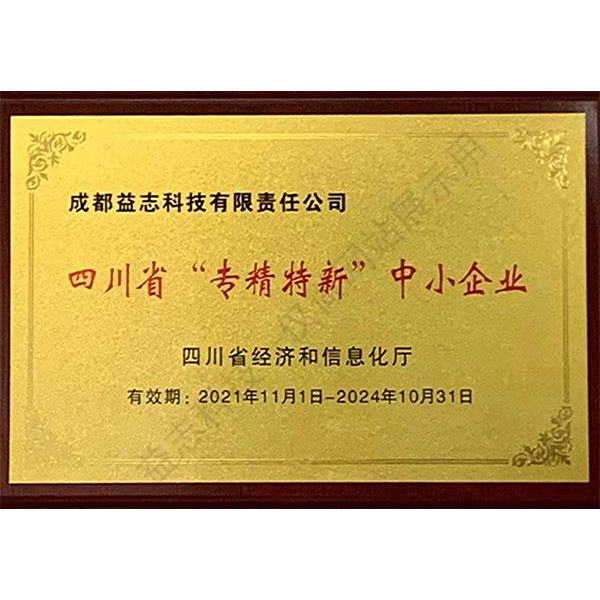
Another stereotype is that China only buys foreign technologies for liquefaction. This hasn't been the case for five years now. Of course, large base lines on the coast are often licensed by Air Products and Shell. But for medium and small-scale LNG (mid-scale, small-scale) local players such asChengdu Yizhi Technology Co., offer already quite mature, competitive solutions. Check out their websiteyzkjhx.ru— it is clear that this is not just a trading house, but a serious design institute with a registered capital of 1.2 billion yuan, created on the basis of Huaxi Technology.
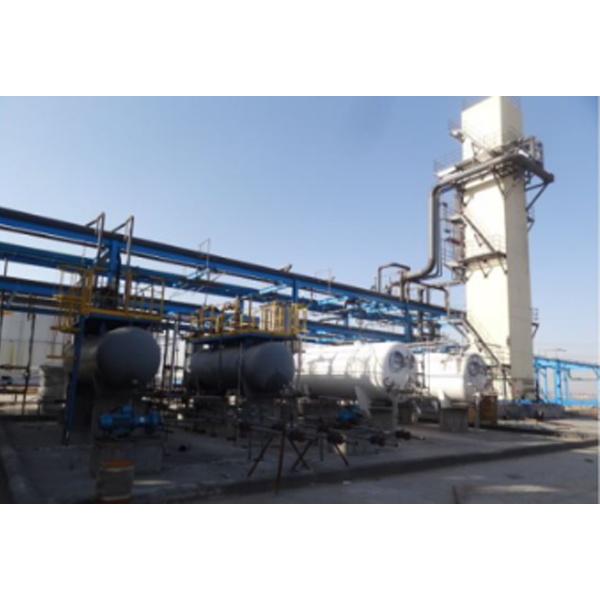
Their niche is exactly that “inner kitchen”: modular installations, purification and liquefaction technologies, adapted to the complex composition of Chinese associated gas (with a high content of CO2, nitrogen). What is their strength? The speed of deployment and the fact that they are “sharpened?” to the standards and working conditions within the country. Worked with their engineers on the issue of cryogenic heat exchangers - a very practical approach, without excessive theorizing, but with a deep knowledge of the "pain"s. exploiters.
The problem, however, is that these technologies are still poorly packaged. for the global market. Documentation, service support abroad, compliance with all international standards - there is still something to work on. But the potential is huge, especially for emerging markets that need low-cost, easy-to-maintain solutions.
Export potential: not LNG, but complexes
So will we become a net LNG exporter like the US or Australia? In the foreseeable future - unlikely. Geography, demand structure and logistics costs are not in favor of massive exports of liquefied gas from mainland China. But the export potential is seen in something else - in the export of entire technological complexes on a “turnkey” basis.
This is where the experience gained from building dozens of indoor projects becomes a key asset. We have learned to build efficiently in difficult conditions, integrate equipment from different suppliers, and meet tight budgets. This is exactly the practical know-how that is in demand in Africa, Central Asia, and some Latin American countries.Chengdu Yizhi Technology Co., Ltd.as a design institute is a typical example of a structure that can “package” this experience into the exported product.
A real case that I observed: the delivery of a modular plant for purification and small-scale liquefaction to one of the CIS countries. The key argument in favor of the Chinese contractor was not only the price, but also the willingness to adapt the project to the existing, rather outdated, infrastructure of the customer. European vendors often offered an “ideal”, but expensive and overly complex solution. The Chinese side offered “good enough?” and repairable on site. This is that same market niche.
Politics and Logistics: Hidden Constraints
Any conversation about LNG exports comes up against two unspoken but strict restrictions. The first is the policy of “energy self-sufficiency”. The state is not interested in large, strategic deposits being used exclusively for the export of raw materials. The priority is to provide for the domestic market. Therefore, obtaining permission to export LNG from a new field is a task of the highest level of complexity.
The second is logistics. Large-capacity LNG tankers cannot just dock at any port. The main liquefaction facilities are not located in deep-water harbors, as in Qatar, but closer to the sources of raw materials within the country. To ship LNG for export, you need expensive transshipment hubs on the coast, which kills the economics of most projects. So far, the only real candidates for export are pilot batches from terminals that were originally built for regasification (such as in Shenzhen or Shanghai), to balance contractual obligations. But this is a drop in the bucket.
In practice, this results in the fact that even if the plant is technologically ready to produce LNG for export, it will wait for years for quotas and logistics decisions. Investors understand this very well, which is why they base their calculations exclusively on domestic demand.
The future: hybrid model and new players
Where is everything going? I see the formation of a hybrid model. China will remain the largest importer of LNG by volume, but will simultaneously increase domestic liquefaction capacity to balance the network and supply remote regions. And it will enter the foreign market not with commercial LNG, but with services: engineering, construction, supply of equipment and, possibly, operational management for LNG projects in third countries.
The role of companies such asChengdu Yizhi Technology Co., it can grow here. They are a bridge between a huge internal testing ground for technology and external demand for practical solutions. Their websiteyzkjhx.ru- this is already an application for presence in the Russian-language segment, which in itself is significant.
And another trend is the emergence of new, non-state players in the small-scale LNG segment. These are private companies that build mini-factories to supply their own transport fleets or isolated industrial zones. They are less constrained in decisions, more flexible and often become the first testers of new technological solutions. They are worth watching - this is where real innovation and understanding of the real economics of gas in the country is born.
So, to answer the question in the title: yes, we build LNG houses. But mostly for myself. And we become exporters in another, no less important, form - exporters of competencies, technologies and entire infrastructure solutions. This is less noticeable, but perhaps more significant in the long run.