China: innovation in ACA nitrogen production?
2026-03-04
When people talk about innovations in the production of ACA nitrogen in China, many people immediately imagine giant factories and tons of patents. But reality, as often happens, is much more mundane and interesting. The main breakthrough of recent years lies not so much in the invention of something fundamentally new from scratch, but in the deep, sometimes even targeted, optimization of existing technologies for specific, often very stringent, economic and environmental conditions. This is not about beautiful presentations, but about reducing the cost of a cubic meter of gas by a fraction of a percent and increasing the time between repairs of equipment. It’s about this kitchen, with its successes and rakes, that I want to speculate.
Where do these “innovations” even come from?
Context matters most. The pressure from regulators on emissions and energy efficiency is colossal. Plus the market: the competition is fierce, customers squeeze out the price, but at the same time they want reliability. In such conditions, ?innovation? - it's often just resourcefulness. For example, adaptation of well-known principlesshort-cycle heat-free adsorptionfor raw materials with an unstable composition, which is typical for many Chinese industrial zones. You can’t just take and copy a German or American scheme - it won’t work.
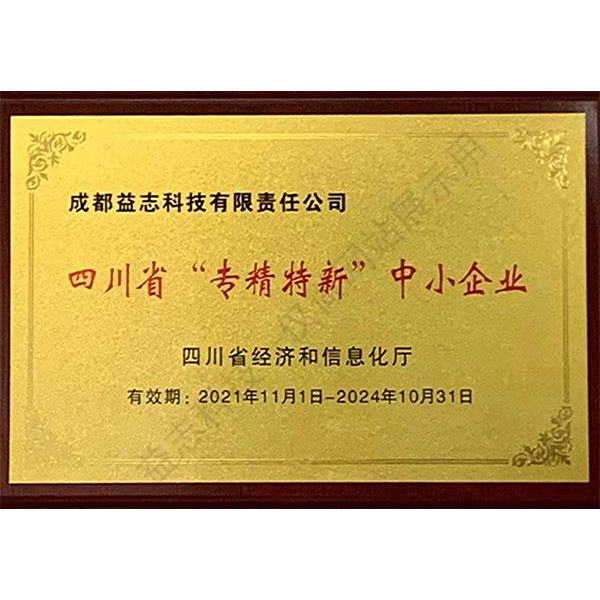
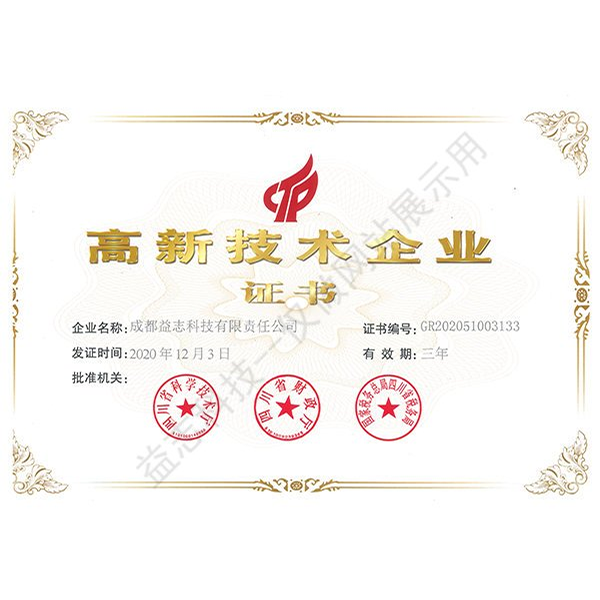
This is where the role of design institutes, which have become key links, comes into play. They work as translators between fundamental science (which also exists) and the harsh practice of the plant. They take academic developments on, say, new zeolite molecular sieves, and “test” them. them in pilot installations, they are watching how they behave not in the laboratory, but next to a blast furnace, in dust and under temperature changes. One of the clearest examples of this approach isChengdu Yizhi Technology Co.(their website, by the way,https://www.yzkjhx.ru). This is not just a seller of equipment, but a design institute created on the basis of a chemical technology company. Their capital of 120 million yuan is an investment in the ability to dive deeply into customer problems and offer non-standard, but working solutions.
What's their specialty? They did not scatter themselves, but focused on deep processing and purification of industrial gases, including the production of nitrogen. Their approach is not a box solution, but scrupulous engineering for the client’s specific technological chain. This is the same “down to earth” one. innovation.
Where to look for real improvements? Experience from the workshop
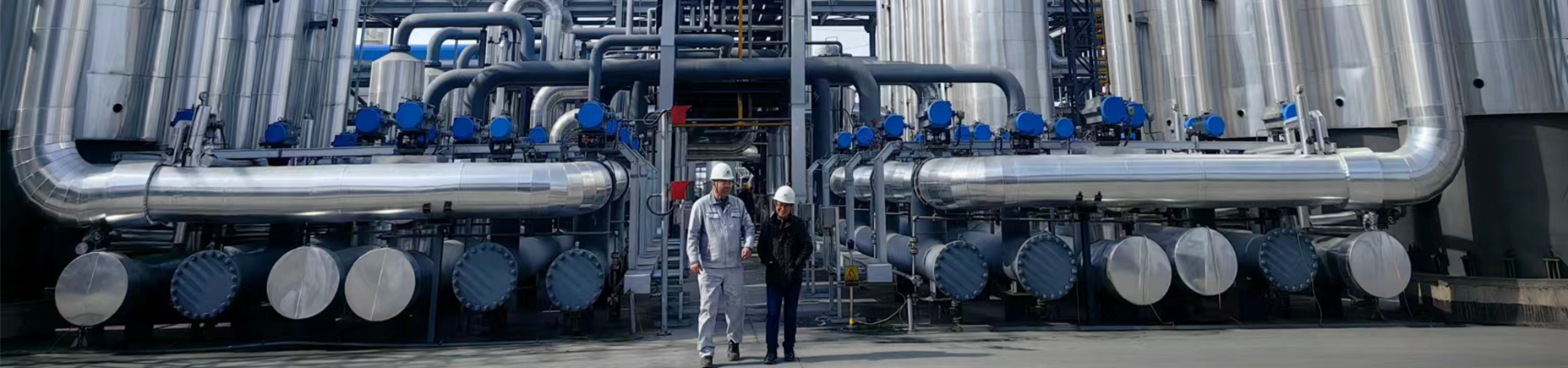
Marketing aside, the main battles today are on three fronts: energy consumption, flexibility and smartness. control. With energy consumption, everything is obvious: compressors are the main devourers of kilowatts. Therefore, the trend is not to increase pressure and productivity at any cost, but, on the contrary, to fine-tune the adsorption process in order to minimize losses and operate at optimal conditions. I have seen installations where, by redesigning the valve distribution system and the cycle algorithm, it was possible to reduce energy costs by 7-8%. For an installation of 1000 cubic meters per hour, this is a huge amount of money on a yearly scale.
Flexibility is about ensuring that the plant does not “choke” if the composition of the feed air changes or if the plant suddenly needs to quickly reduce or increase productivity. Here, different methods are combined: hybrid circuits (for example, membrane +KCA), more advanced real-time gas composition analysis systems and, of course, software that can quickly recalculate cycle parameters. But this is a double-edged sword: increasing complexity always carries reliability risks.
It is at the stage of implementation of such “flexible” solutions, the most offensive mistakes happen. I remember a story at a chemical plant where they tried to integrate a predictive analytics system from a third-party IT vendor. The software was good, but did not take into account the specific vibrations from the neighboring compressor shop, which led to errors in sensor readings. It took six months to “tame” this system. Innovation? Undoubtedly. But the path to it was strewn not with patents, but with sleepless nights of service engineers.
Case: a non-obvious problem with “dryness?”
I would like to give an example that well illustrates the Chinese approach to optimization. Everyone knows what to workadsorption columnsThe air must be thoroughly dried. The standard solution is refrigerated dryers. But they themselves are energy-consuming. A team of engineers from the same Chengdu Yizhi Technology worked on a project for a plant in Sichuan, where there was a problem with high moisture content in the air and at the same time strict limits on electricity.
Instead of installing a more powerful dehumidifier, they overhauled the entire air pre-treatment. We noticed that the incoming air after the compressor was cooled in a standard shell-and-tube heat exchanger, which in local conditions often worked ineffectively due to scale. They proposed replacing it with a plate-fin heat exchanger with a special coating, plus they changed the condensate drainage scheme. This made it possible to sharply reduce the moisture content even before the dehumidifier. As a result, the refrigeration unit was able to be used with less power, which resulted in overall savings. The solution lay on the surface, but in order to see it, it was necessary to think systematically, and not just “select equipment according to the technical specifications”.
Such stories are the essence of many local innovations. This is not a world sensation, but for a specific enterprise - millions of yuan in saved profit. And it is the design institutes that lead the project from sketch to commissioning that are capable of such systemic improvements.
Trends and restrictions: where to go next?
Where is the industry heading? Firstly, this is further integration. The nitrogen production plant ceases to be a separate “box”. It is increasingly being designed as part of a single energy technology complex, utilizing, for example, heat from a compressor or using waste gas from other processes. This is difficult from a management point of view, but very economically profitable.
Secondly, materials. Constant search for more capacious, selective and durable adsorbents. Chinese manufacturers of zeolites and activated carbons have made great progress in this direction, offering sorbents for specific impurities characteristic of the local industry. But there is a pitfall here: sometimes new materials behave unpredictably during long-term use, and it takes time to collect statistics on their aging.
The main limitation, in my opinion, is personnel. Complex, flexible, “smart?” installations require not mechanics to service, but technically competent operators who are able to understand the essence of the process, and not just press buttons according to instructions. The shortage of such specialists is a hindrance to the implementation of many advanced solutions. It is often necessary to simplify the control system already at the design stage, so that it can work in conditions of personnel turnover at the customer plant. It's a sad but very real moment.
Instead of a conclusion: what is innovation really?
So what's the bottom line? Innovation in the production of ACA nitrogen in China is rarely a breakthrough in the laboratory. More often it is painstaking, step-by-step work to improve what is already known. This is the ability to listen to the customer, to see his real, and not declared, problems. This is a willingness to take risks, try unconventional combinations, and - most importantly - honestly analyze failures.
Successful companies in this area, be they large holdings or specialized institutes such asChengdu Yizhi Technology Co., did not grow out of nowhere. They grew from practice, from thousands of hours spent on industrial sites, from conversations with operators, from analysis of emergency stops. Their innovations are not brilliant reports, but slightly reduced energy consumption, a 10% increase in the service life of the adsorbent, or an installation that operates without failures in conditions described in the passport as “critical”. This is real, living engineering, which defines the face of the industry today.
Therefore, the next time you hear about “breakthrough technologies?”, ask not about the degree of nitrogen purity (they have long been able to make it at any level), but about how many kilowatt-hours are spent per thousand cubic meters, how the system reacts to changes in load and how many people are needed to service it. The answers to these questions will show the real level of innovation.