China: how does a PSA exporter work?
2026-03-03
When people talk about Chinese PSA exports, many immediately imagine giant factories and standard containers. In fact, the key link is often not the giant, but the design institute that packages this technology for the foreign market. It is about this intermediate link, about how everything actually turns, that I would like to speculate based on what I saw myself.
Not the equipment, but the project: what’s the point?
The main misconception is that China sells bare units. No. Basically for saleworkable technological scheme, adapted to the specific raw material base and customer requirements. The adsorber itself is a piece of hardware. Its value lies in the calculations: what kind of zeolite, what cycle, what pressure, how to integrate with existing production. Without this, any supply is scrap metal.
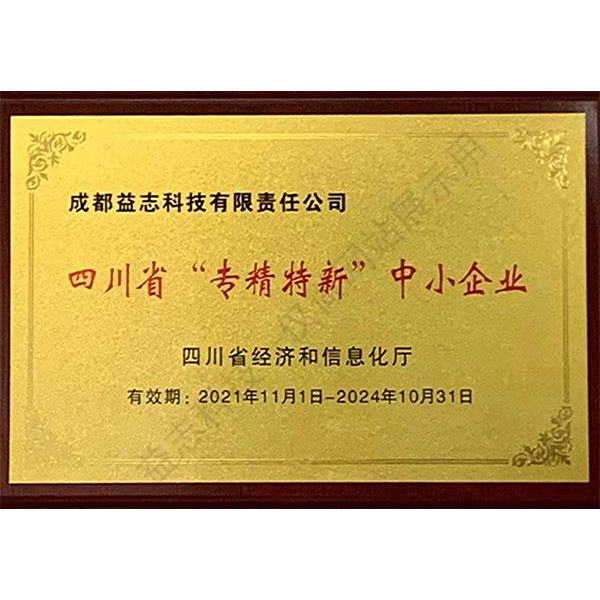
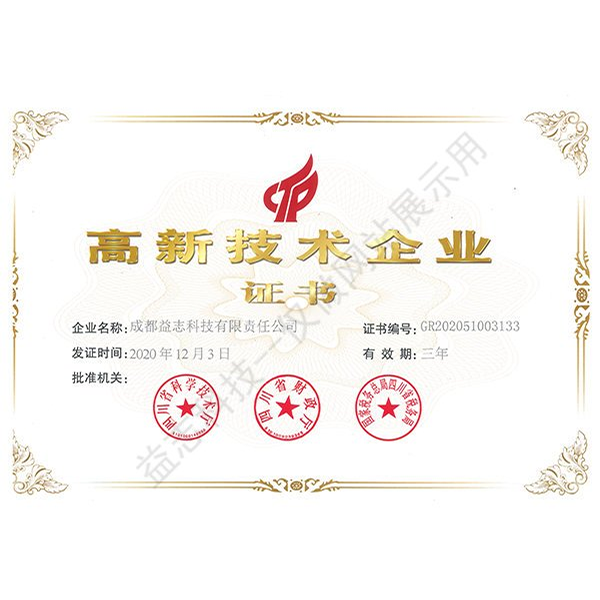
For example, Chengdu Yizhi Technology Co. is a typical example of such a design institute. They don’t just make PSA, they grew out of the parent chemical company, which means their engineers think in terms of real production: what will happen if raw materials float, how to quickly replace a valve, how to simplify the logistics of spare parts. These are not theorists. Their website (yzkjhx.ru) is, in fact, a showcase of their competencies, and not a catalog of hardware.
That is why the registered capital of 120 million yuan is not about assets, but about a credit of trust. A client, especially a foreign one, buys first of all this ability to solve his problem, and then the equipment that is the material carrier of this solution. The mistake of many new exporters is precisely to start the conversation with the technical characteristics of the device, and not with the question of what gas mixture you want to separate and why?
From request to contract: pitfalls
The ideal process looks like this: request, technical specifications, proposal, contract. In reality, 80% of potential deals are lost at the technical specification stage. Requests from the CIS, for example, often come with the formulation that a plant for producing nitrogen is needed. What kind of cleanliness? 99% or 99.999%? What is the productivity in Nm3/h? What is the inlet pressure? Often the client himself does not know. And this is where the expert’s work begins—not to sell something ready-made, but to help formulate a need.
There was a story with one plant in Kazakhstan. They sent us a technical specification copied from its European counterpart. We started counting and saw a discrepancy: the required gas purity was excessive for their final technological process. They would simply overpay for energy consumption. They suggested revising the parameters. At first we were unhappy - we know what we want. But after a joint visit of their technologist to an operating facility in China, where we showed a similar case, the opinion changed. The contract was concluded for a less cool, but more economical and suitable version. Trust here is more important than a quick sale.
Another stone is localization. Often the contract contains a clause on the use of local components, for example, instrumentation. On paper everything is smooth, but in practice the device nominations may not match, and the delivery time of local valves will disrupt the overall installation schedule. We have to factor these risks into the schedule and cost in advance, and give strict alternatives in the specifications: either a valve of brand X or Y, others - only after additional tests and do not pass at our expense.
Engineering as a key asset
The power of an exporting company is measured not by the area of the workshop, but by the depth of the engineering department. It's about the ability to dodetailed calculationsnot in ideal conditions, but with dirty raw materials. Let's say biogas. In theory - methane and CO2. In practice, there is water vapor, traces of hydrogen sulfide, and siloxanes. Standard zeolite can become poisonous within six months. It is necessary to calculate the stages of pre-treatment, possibly a hybrid scheme (PSA + membrane), to guarantee the resource.
Yizhi Technology, as I understand it, has this trump card - their origin from Huaxi Chemical. They think like technologists, not assemblers. I saw their working P&ID drawings - little things were thought out there: points for sampling, bypass lines (bypasses) in case of repair, location of flanges for installation in cramped conditions. These are drawings made by people who will then tinker with this installation on site, and not just perform standard control.
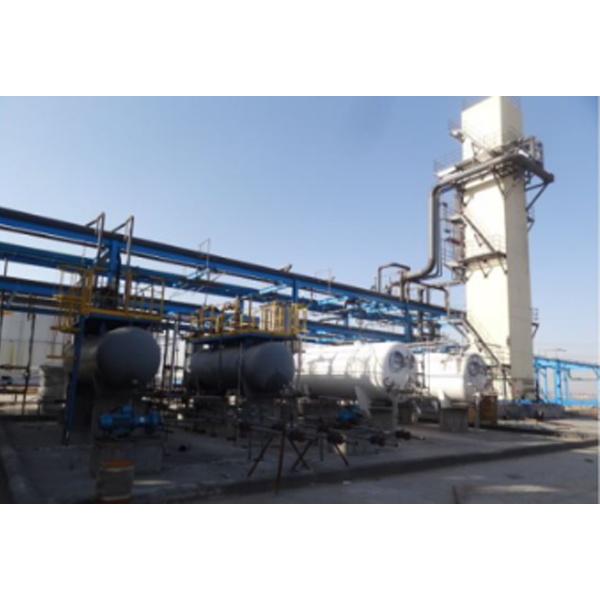
It is this engineering that allows them to sell not to countries with low prices, but to countries where reliability and Total Cost of Ownership are valued. One of their projects to separate hydrogen from coke oven gas for a metallurgical plant is a terrible headache. The gas is caustic and contains dust. But they introduced a multi-stage filtration system and a special mode of adsorbent regeneration. The installation is working. This is real export - the export of solutions, not goods.
Logistics, installation and last mile
Shipping equipment from the port of Tianjin is half the battle. The fun begins on the spot. The classic problem: all the devices have arrived, but the foundation for the reactors is not ready. Or there are no access roads. Or a local contractor hired by a client for general construction work reads the drawings differently. We have to send our supervisor a month earlier so that he can settle in and coordinate everything.
Editing is a different matter. Chinese installers, often sent as part of the installation supervision team, work quickly but sometimes lack flexibility. We came across a situation where, at a site in Russia, domestic piping was installed according to the project, but in fact they brought pipes with a different thread. Wait a month for a new batch? Not an option. Our foreman found a local turner who cut the adapters in two days. This is not by design, it is by situation. And such moments cannot be reflected in the report, but they decide the success of the entire project.
Commissioning is the culmination. Here all calculations are verified by practice. Pressure, temperature, adsorption cycle. It is important not just to reach the parameters, but to train local personnel. We often hand over not just a passport, but a whole video library: how to replace a seal, how to start it up after an emergency stop. This is the very last mile, after which the client becomes a partner from a buyer. If you fail it, then even the most perfectPSA installationwill make bad money, and your reputation will be ruined.
After the sale: where is the real loyalty?
Many people think that the main thing is to sell. In fact, business revolves around repeat orders and references. And they arise from the service. Response to requests for spare parts. Willingness to help remotely diagnose the problem (now this is often done through the same messengers, with real-time video).
Transparency with the adsorbent is critical. This is a consumable item. And the client must clearly understand when and why it needs to be changed. There have been precedents when unscrupulous suppliers blamed poor raw materials for a decrease in productivity, although the problem was the exhaustion of the zeolite resource. A long-term player doesn't do that. On the contrary, we often, based on remote monitoring data (if available), warn the client: Look, the regeneration efficiency is falling, get ready to order an adsorbent in 2-3 months. This creates enormous trust.
It is the service that turns a one-time supply into a long-term presence in the market. The client begins to recommend you to colleagues. Orders are appearing to modernize old installations and increase capacity. That’s when you understand that the Chinese PSA exporter works not as a factory, but as a technology partner. His product is not adsorbers in a warehouse, but operating and profitable gas separation facilities at his customer's locations around the world. This, if you think about it, is the whole point.