China: methanol to hydrogen - technology and ecology?
2026-03-03
When you hear about “methanol to hydrogen,” many people immediately think about laboratory installations or distant pilot projects. In fact, in China this is no longer just a technology, but an entire industry that rests on two pillars: the real economics of the process and its environmental acceptability. And between these poles there are a lot of nuances that are often missed in reports. I myself have been evaluating such systems for a long time, and I will say: the main misconception is to believe that since the methanol conversion reaction has been known for decades, then implementation is simple. It all comes down to details: from the purity of the raw materials to how exactly you utilize the by-product CO2.
From theory to practice: where projects stumble
Let's take the classic steam reforming of methanol. The formulas in textbooks look elegant, but in practice the key parameter is consistency of delivery. If methanol is transported in tanks at a facility and there are interruptions, the catalyst may get tired. from heating-cooling cycles. I saw a case at one of the sites in Shandong: installationmethanol conversionThe design capacity of 500 Nm3/h of hydrogen produced excellent figures in the first months, but after six months of operation the activity dropped by almost 15%. The reason turned out to be a small thing - traces of chlorides were periodically found in the raw materials due to logistics, which the supplier kept silent about.
Or another aspect - heat balance. An endothermic reaction requires a precise supply of heat. In theory, you use the heat of flue gases or electric heaters. But in the northern provinces in winter, when the temperature at the site drops to -20°C, maintaining a stable temperature at the reactor inlet becomes a separate task. It is necessary to reconsider the insulation and preheating system - this increases capital costs, which are not always taken into account in the preliminary feasibility study.
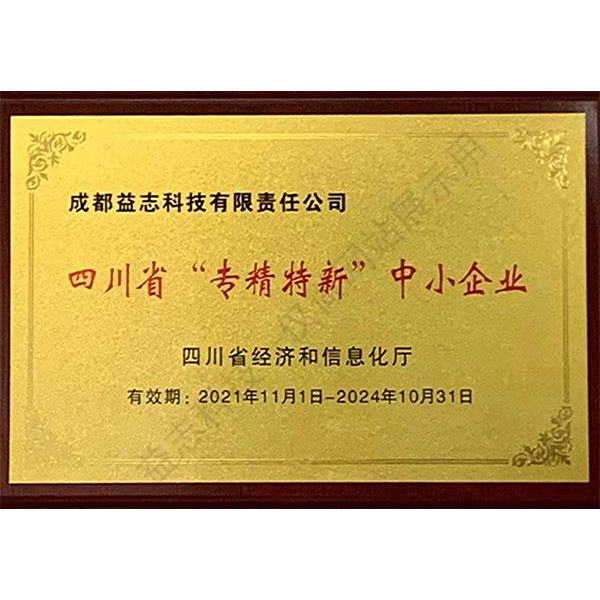
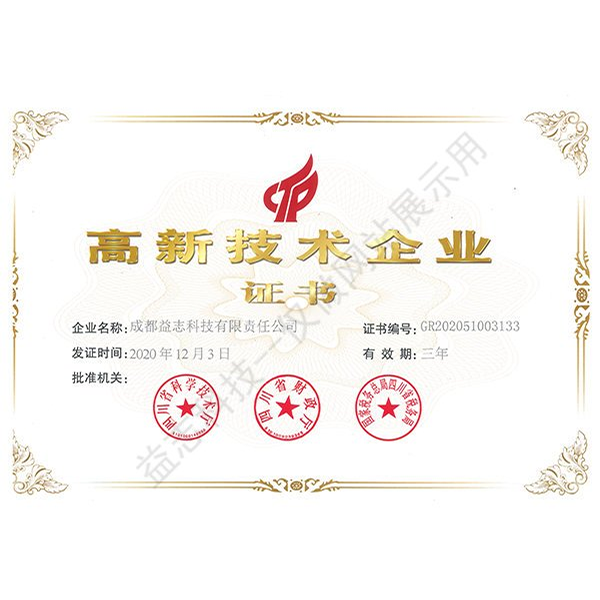
Here it is worth mentioning the experience of colleagues from Chengdu Yizhi Technology Co. (their website ishttps://www.yzkjhx.ru). This is a design institute with a serious authorized capital, created by Huaxi Technology. They focus on comprehensive engineering solutions, and not just on selling installations. An important detail in their approach is visible: they often offer clients trial runs on real raw materials from a specific plant. This allows you to ?catch? those same impurities and adjust the technological scheme at an early stage, avoiding late expensive modifications.
Ecology: not only about CO2
When people talk about the environment, everyone immediately thinks of carbon dioxide emissions. Yes, CO2 is formed during methanol conversion. But compared to traditional steam reforming of natural gas, the carbon footprint may be different - depending on how green it is. source of the methanol itself. If methanol is synthesized from biomass or captured CO2, the chain becomes much cleaner. China is now actively developing precisely such “green methanol” projects. in regions with abundant biomass, such as Guangxi.
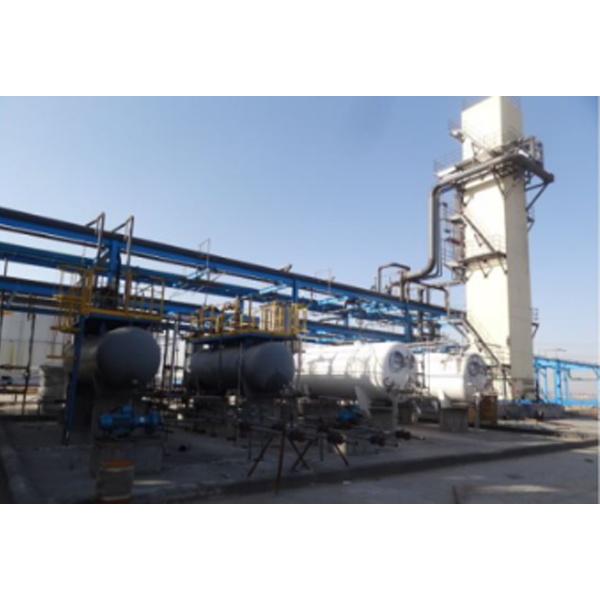
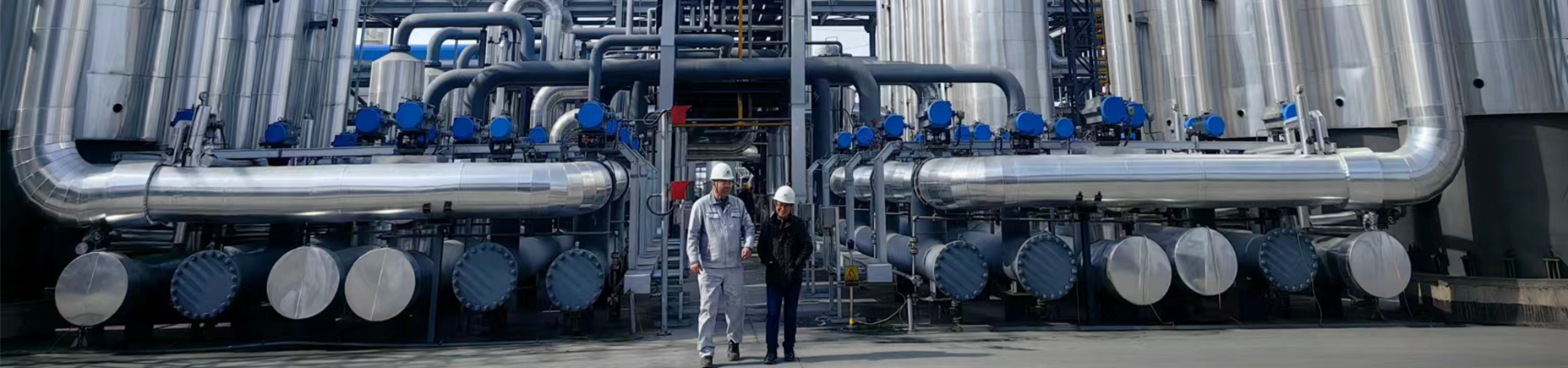
However, there is also a less obvious environmental aspect - local emissions. Installationhydrogen productionmade from methanol is compact, it can be placed close to the consumer (say, at a hydrogen filling station or in a glass factory). This reduces the logistics and risks associated with transporting compressed or liquefied hydrogen. But at the same time, it is necessary to very strictly control possible micro-leaks of methanol and reaction products. Methanol, although less volatile than some hydrocarbons, is still toxic.
At one of the optical glass production plants near Shanghai, we were faced with the need to equip the installation with an additional vapor absorption system at the stage of draining and storing raw materials. This was not specified in the original project, but the requirements of local environmental supervision have become more stringent. We had to quickly integrate the module with active carbon. Such nuances are rarely discussed at conferences, but they determine whether a project will be truly sustainable and environmentally friendly.
Technological variations: not only reforming
Steam reforming is the main route, but not the only one. Autothermal reforming, where a portion of the methanol is oxidized by air, is gaining momentum, providing heat for the endothermic reforming reaction itself. This gives faster ramp-up and is better suited for variable load applications. But there is a headache - precise dosing of air and temperature control in the oxidation zone, so that by-products like carbon monoxide do not go beyond the norm.
Another direction is membrane reactors, where hydrogen is released directly during the reaction, shifting the equilibrium. The technology shows promise in terms of efficiency, but the membranes (often palladium) are susceptible to sulfur and chlorine poisoning. In China, several scientific groups and companies, including Chengdu Yizhi Technology Co., are working on more resistant composite membranes. Their profile is precisely the design and implementation of chemical technologies, so their research often quickly finds its way into pilot industrial samples.
Have we tried this? Yes, there was a pilot project with a membrane module for a small installation at 50 Nm3/h. The main difficulty turned out to be not in the membrane itself, but in the system for pre-purifying methanol to the level of “ultra-high purity”. The cost of this pre-preparation ate up all the economic benefits from increasing conversion. The project was frozen, concluding that for the current state of the market and prices for methanol in the region, the proven steam reforming with multi-stage adsorption purification of hydrogen at the outlet is more cost-effective.
Economics: when the numbers start talking
Any conversation about technology comes down to money. Costhydrogen from methanolin China is strongly tied to the region. In those provinces where there is large-scale methanol production (Ningxia, Inner Mongolia), the price of raw materials can be 30-40% lower than in the south, where it needs to be transported. Therefore, there are no standard economic calculations - each project requires reference to local conditions.
An important point is related products. Pure CO2, which is released in the process, can not be thrown away, but can be sold to the same food industry enterprises or for welding. But this requires additional investment in the cleaning, compression and dispensing system. For a small installation this is often unprofitable, but for large facilities with a capacity of several thousand Nm3/h per day it can already provide significant additional income.
Payback also depends heavily on the alternative. If there is no natural gas pipeline nearby, and the electrolyzer requires an expensive “green” one. electricity and large areas, then the methanol plant looks very competitive. Particularly for industries such as pharmaceutical intermediates or metal heat treatment, where relatively high purity hydrogen is needed, but not necessarily five-nines.
Looking ahead: which way the wind blows
The trend is obvious - integration. Installationmethanol-hydrogenceases to be an isolated apparatus. It is increasingly seen as part of a larger energy or chemical system. For example, at steel mills where there is an excess of coke oven gas, it can be used to synthesize methanol, and hydrogen can be obtained from methanol to reduce iron. This results in a closed cycle with added value.
Another vector is a connection with renewable energy sources. During periods of excess wind or solar generation, electricity can be used to produce “green” electricity. methanol (through the production of “green” H2 and subsequent synthesis with captured CO2). And then use this methanol as a convenient energy carrier and source of hydrogen when there is no sun or wind. This solves the problem of RES intermittency. In China, such demonstration projects have already been launched, for example, in Gansu province.
What's next? I think what awaits us is not revolution, but evolution. Improving catalysts (greater resistance to impurities, lower operating temperatures), reducing the cost of fine cleaning systems, standardizing modular solutions for different capacities. And, of course, regulatory pressure to reduce the overall carbon footprint of the entire chain. The technology is moving from the category of promising to the category of practical, but its success will continue to be determined not by beautiful presentations, but by the ability of engineers to count every yuan and anticipate problems on the site a year before its launch. This is exactly what, by the way, they do at Chengdu Yizhi Technology Co., which you can read more about on their website. Their approach - designing with an eye to the entire lifetime cost of ownership, and not just the price tag of the equipment - is perhaps the main lesson of recent years for the entire industry.