China: coalbed methane - technologies and products?
2026-03-03
When they talk aboutcoal bed methanein China, many immediately imagine just another type of gas, like shale gas, only in coal mines. In fact, this is a separate, very capricious story, where standard approaches often do not work. The main confusion is to assume that since there is a reservoir, gas will flow out of it on its own. In reality, everything comes down to permeability and geomechanics, and Chinese basins like Ordos or Jinzhong-Nanxiang are a clear example of this. It’s not so much mining here as “squeezing out”? and “persuade” plast.
From theory to well: where difficulties begin
In textbooks, the process looks linear: exploration, drilling, fracking, production. In practice, in China, the very first stage - resource assessment - rests on the heterogeneity of the formations. Many deposits have a complex structure, with alternating layers of coal and clay. Often reserves data obtained by extrapolation turn out to be too optimistic. I remember one of the early projects in Shanxi: according to calculations, the potential was excellent, but the first wells produced only 30% of the expected flow rate. The reason is that they did not take into account regional stress and natural fracturing, which turned out to be oriented in an “inconvenient” direction. direction.
Actually, drilling horizontal shafts is also not a panacea. Yes, this increases contact with the seam, but in soft, unstable coal seams, typical of parts of the Chinese basins, there are problems with shaft collapse. The use of polymer drilling fluids that stabilize the walls sometimes leads to the opposite effect - clogging of pores, which then kills productivity. We have to find a balance, often experimentally.
And here the key role is played not so much by equipment, but by understanding a specific field. You can purchase the most modern installations formulti-stage hydraulic fracturing, but if the geomechanical model is incorrect, the cracks will go in the wrong direction, merge into one, or not create the desired mesh at all. This is an area where Chinese engineering companies have developed specialized, often expensive, expertise.
Hydraulic fracturing: not just water
Talking abouttechnologiesstimulation, many are fixated on water. Standard hydraulic fracturing with large volumes of water is a risk for the coal seam. Swelling of clay material, decreased permeability, problems with backflow disposal - the list is long. In recent years, alternatives have been actively tried. For example, liquefied CO2 or nitrogen foamed rupture. The effectiveness is controversial: CO2 interacts better with coal (sorption), but logistics and preparation are more complicated and more expensive.
At one site in Anhui province, they tried a technology using compressed air and proppant. The idea was to minimize the liquid. Result? The flow rate increased, but not for long. Later analysis showed that due to the low viscosity of the medium, the proppant was not effectively carried into the distant fractures; they quickly closed. We got a quick but short-lived result. This is a typical story: a technology that works in one basin may fail in the neighboring one due to differences in mineralogy and stress state of the rocks.
Now the trend is combined methods. At first ?soft? acid or pulse fracturing to initiate natural fracturing, then basic fracturing with guar gum-based gel, but with reduced water content. And, of course, real-time microseismic monitoring. Without it you are simply blind.
Equipment and know-how: local solutions
Imported pumping units and wellhead fittings are good, but expensive and not always adapted to local conditions (for example, high content of mechanical impurities in gas). Chinese manufacturers, such as companies in Yantai or Chengdu, have long copied and modified basic types of equipment. Their products are often easier to service by local crews and cheaper. The quality, of course, floats, but is often enough for standard operations.
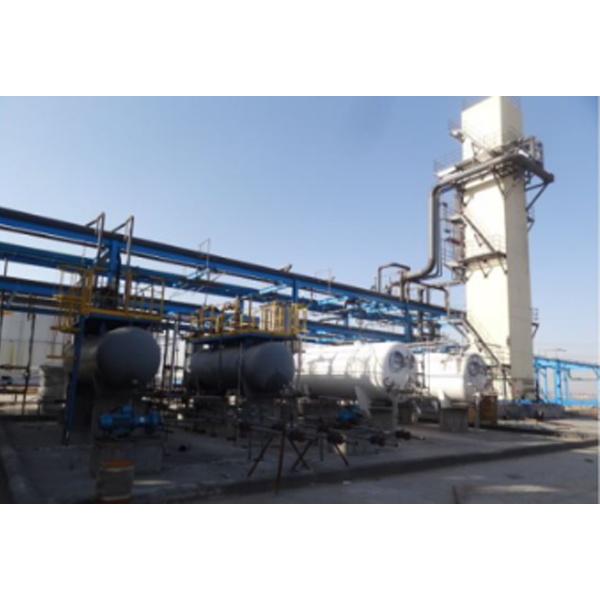
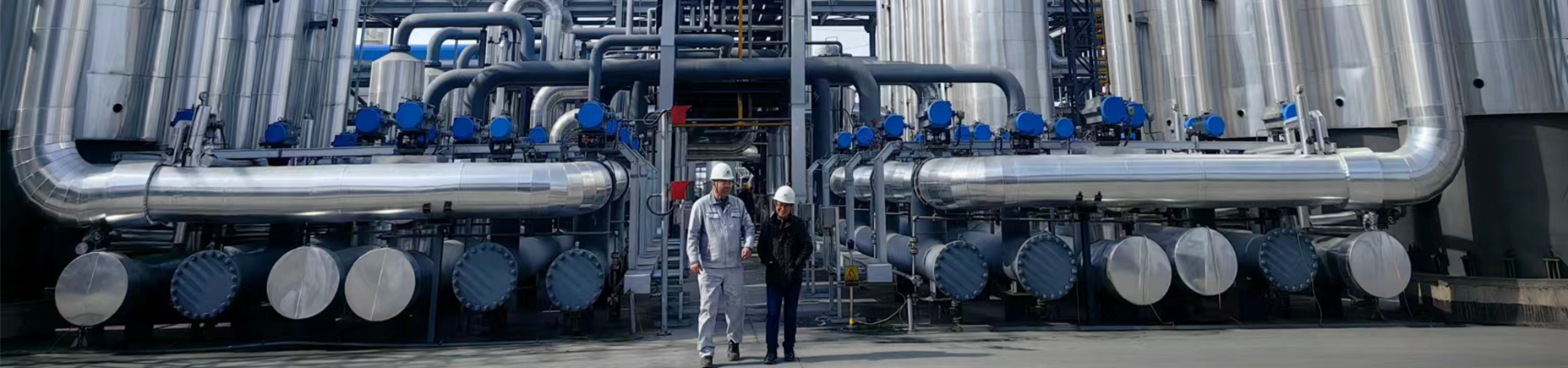
An interesting case is gas separation and drying systems right on site. Sincecoal bed methaneoften comes with a large amount of coal dust and drip moisture; standard separators quickly clog. Some design institutes offer modular solutions with cyclone and filter units that can be cleaned without completely stopping the flow. This is critically important for the economics of the project, where downtime is a direct loss.
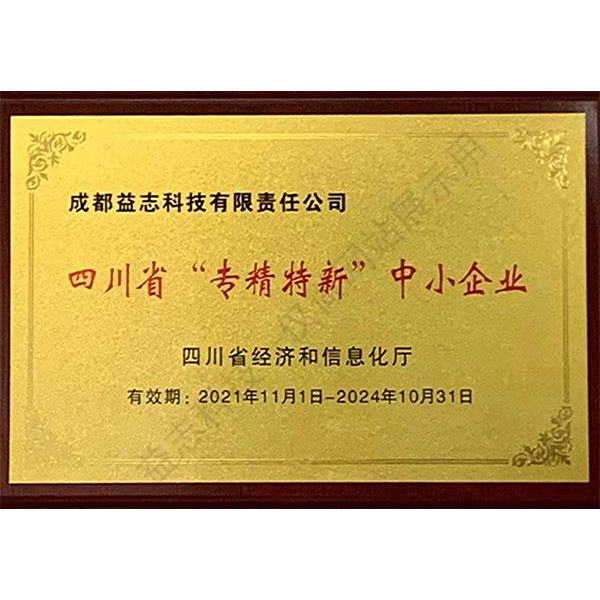
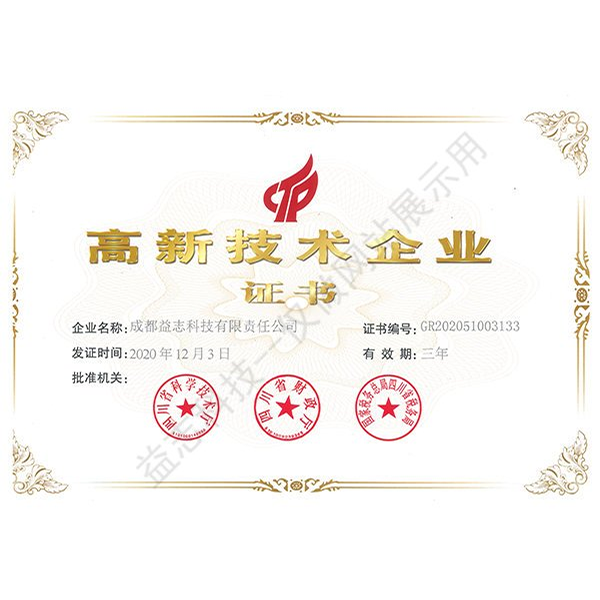
Here you can mentionChengdu Yizhi Technology Co.(their website ishttps://www.yzkjhx.ru). This is just an example of a design institute that grew out of a chemical technology company. Their profile is not just the sale of equipment, but comprehensive technological solutions for gas production and treatment, includingcoal bed methane. They, like many similar structures in China, often act as integrators, selecting and adapting equipment for a specific geology, which is sometimes more important than the “hardware” itself.
Economics and ?hidden? problems
The biggest illusion is that once gas is supplied, the project is automatically profitable. Cost of productioncoal bed methanein China remains high. And not just because of technology. The lion's share of costs is infrastructure: construction of gas collection networks in often mountainous or inaccessible areas, connection to main pipelines, obtaining all approvals.
There are also less obvious things. For example, there is a problem with the disposal of produced water. It is not as large-scale as with shale mining, but its composition is often complex - high mineralization, sometimes traces of heavy metals from the formation. You can’t reset it, cleaning is expensive. At some fields it is pumped back into absorbent horizons, but this requires separate geological exploration and a license, which extends the time frame and increases capital costs.
Another point is the drop in flow rate. The decline curve here is often even steeper than that of traditional gas. In 2-3 years, production may fall by 60-70% from peak. Therefore, economic calculations are based not on peak performance, but on integral production over the entire life of the well, which requires accurate modeling and conservative estimates. Many early projects failed precisely because of this - they built a business plan according to the optimistic scenario of the first months.
Looking ahead: what will happen to products and technologies?
Now the focus is shifting from purely production technologies to intelligent field management systems. We are talking about digital twins of the formation, which are constantly fed with data from pressure and flow sensors at the wellhead, as well as the results of periodic gas-dynamic analysis. This makes it possible to predict a decline and plan measures to maintain production—spot repeated fracturing, injection of water or gas to maintain pressure.
As for products, the gas itself is, of course, the main thing. But there is interest in its use not only in energy. Increasingly, projects for the production of low-power LNG directly at the field are being considered to supply remote consumers or as motor fuel for quarry equipment. This adds flexibility to the project and can improve economics.
Overall, the industry is moving from a rough-and-ready phase to a fine-tuning phase. Success now depends not on one breakthrough technology, but on the ability to combine geological knowledge, engineering solutions and economic calculations. And here the experience accumulated by such players as the mentioned instituteChengdu Yizhi Technology Co.(a subsidiary of Huaxi Technology with a registered capital of RMB 120 million), which has been working on full-cycle projects since 2013, has become a key asset. This is no longer just production, but the management of a complex, living object from the well to the final product.