China's key exporters for PSA nitrogen?
2026-03-03
When you hear this question, the first thing that comes to mind is the huge factories in Shanghai or Jiangsu. But the reality, as often happens, is more complicated. Many people immediately think of the largest equipment manufacturers, but the key exporters are not always them. Often these are those who have been honing exactlyPSA nitrogenfor specific, niche applications abroad, where reliability and adaptability are valued above a big name. I’ll try to sort it out based on what I’ve seen on the market over the last ten years.
Who's really in the spotlight?
If you open any catalogue, giants like Hangzhou or Peking Ceatech will be on the first pages. Their volumes are impressive and for standard projects they are a safe choice. But here’s the paradox: their exports often go through large distributors or engineering companies. That is, the end buyer in Russia or Kazakhstan can receive their installation, but not directly from China. It is important to understand: a key exporter is not necessarily a key manufacturer. Sometimes it is an engineering firm that takes on all the headaches of onboarding, logistics and after-sales.
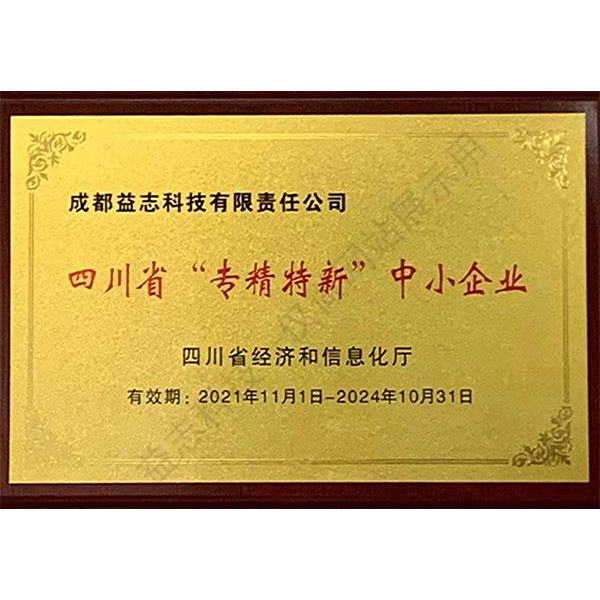
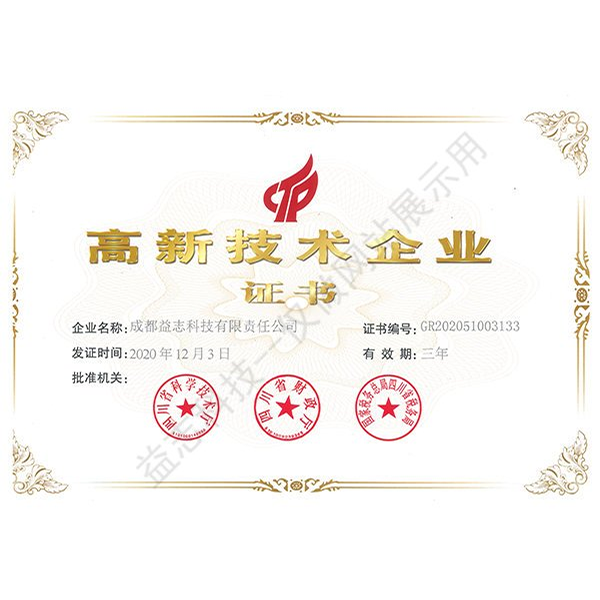
I once came across a project in Uzbekistan: the customer wanted a food packaging plant, but with very specific dew point requirements. A large factory offered a standard module, and a small company from Chengdu - Chengdu Yizhi Technology Co. – sent an engineer to the site, revised the dehumidifier circuit and ultimately won the contract. Their website ishttps://www.yzkjhx.ru- not the most glamorous, but it is clear that they are a design institute, and not just an assembly shop. This is their export advantage: not to sell a box, but to solve a problem.
Therefore, my first point: look not only by production volume. Search by depth of project experience, especially in your region. A company that has already delivered a dozen installations to CIS countries with similar climates and standards is often more reliable than a giant for which your order is a small line in the reporting.
Niche players and their strength
This is where the fun begins. Marketnitrogen generatorsPSA is segmented to the point of impossibility. There are installations for laser cutting - they have their own requirements for cleanliness and pressure stability. There is one for chemical synthesis - where resistance to certain impurities is important. Large players often do not want to deal with small, custom orders. And niche ones live by it.
Let's take, for example, the same Chengdu Yizhi Technology Co., Ltd. is a design institute established by Chengdu Huaxi Chemical Technology Co., Ltd. in 2013. A registered capital of 120 million yuan is serious, but not astronomical. Their strength, as I understand it, lies in the heritage of Huaxi Technology - deep knowledge in chemical technology. They can probably not just assemble a plant from purchased components, but design an adsorption column or control system for a specific chemical process. There are several such companies in China, and they are quietly, without fanfare, taking over complex projects in Eastern Europe and Central Asia.
The problem is that they are difficult to find through normal channels. They are not always actively promoted on Alibaba. Most often, people learn about them through word of mouth or when you come across their equipment at some petrochemical plant near Omsk. Their websites tend to contain a lot of technical details and case studies, not just pretty pictures. This is a good search filter.
Mistakes when choosing a supplier
I stepped on this rake myself. I used to think that the main thing was the price per cubic meter of nitrogen. It turned out that this is one of the most dangerous criteria. Chinese (or any) manufacturers can reduce the price by simplifying the control system, supplying cheaper valves, or saving on the inlet compressed air dryer. As a result, the installation seems to work, but after six months problems begin with pressure changes, humidity, and repairs cost a pretty penny.
One of our bad experiences: we bought a unit from a very well-known exporter. The price was great and the documentation was beautiful. But when they opened the control cabinet on site, inside there was a jumble of relays from different manufacturers, and the wiring was not of the best quality. The installers on site simply shrugged their shoulders. We actually had to redo the automation system. Since then, we always ask for photos of the inside of the cabinet and specify specific brands of key components - valves, sensors, controllers.
Another common pitfall is warranty and service. A large exporter can give a guarantee, but its service engineer will wait two weeks for a visa and tickets. And a small design company for which your region is a priority often has a partner or someone closer to them. This should be clarified before the contract. Ask directly: “If a valve breaks on a Friday night, what should I do?” The answer will clarify a lot.
The role of regional characteristics
Exporting to Russia or Kazakhstan is not the same as exporting to Germany. The climate, the quality of electrical networks, the availability of spare parts – everything is different. A key exporter who understands this already at the design stage provides winter versions for control cabinets, installs stronger voltage stabilizers, and recommends purchasing a set of the most wearable spare parts at once.
The mentioned Chengdu Yizhi, judging by their presence in the .ru domain zone, is clearly aimed at our market. This is an important signal. They have probably already gone through the process of adapting their documentation, have understood the customs nuances of the EAEU, and know what certificates are really needed. For the buyer, this saves a huge amount of time and nerves.
I have seen installations that came from China with an interface only in Chinese and English, and it is difficult for local staff over 50 years old to understand. And then you see the installation, where the touch panel already has a Russian menu, and the instructions are not just machine translation. This suggests that the exporter is investing in long-term relations with the region, and is not just “selling” it. equipment.
The future: trends and what to watch
Nowadays there is more and more talk about energy efficiency and “smart” systems. A trend is not just about sellingnitrogen generator, but integrate it into the overall plant energy management system. The key exporters of the future are those who offer not just hardware, but digital solutions: remote monitoring, predictive analytics for adsorbent replacement, optimization of work depending on consumption.
Major players are actively involved in this. But here, too, there is a chance for more flexible companies. They can offer a customized data collection system for the SCADA already existing at the plant, without trying to impose their expensive and closed software. This is a matter of competence. If a company positions itself as a design institute (like Chengdu Yizhi), then, in theory, it should have such competencies in the field of automated process control systems.
My advice: when choosing a supplier, ask now not only about the efficiency of the installation, but also about communication protocols (Modbus, Profibus, etc.), integration possibilities, data formats. Even if you don't need it today, you might need it in a couple of years. A supplier who is willing to discuss these topics in detail, rather than brush them off with a brochure, is likely to remain in the market for a long time and thus be a reliable key exporter.
Ultimately, the answer to the question?? constantly changing. Today it may be one set of names, tomorrow – another. But the rule remains unchanged: the most important exporter is the one whose equipment operates stably at your specific facility five years after purchase. Everything else is just noise. Therefore, look not at the volume of the name, but at the depth of experience in solving real, not paper, problems.