China zeolite adsorbent: application?
2026-01-06
When you hear Chinese zeolite, the first thing that comes to mind for many is cheap cat litter or, at best, some kind of basic desiccant. This is where the main catch and huge misconception lies. In fact, the range of applications - from petrochemicals to fine gas purification - is so wide that completely different products are hidden under a common name, and their choice is not about price, but about understanding the process. I will say more: often failures in application are due precisely to the fact that they bought zeolite without delving into its type, shape, pore size and origin of the raw material. Let's understand without gloss, with those nuances that are rarely written about in catalogs.
Not just powder: types and pitfalls
So, zeolites. The main division, which is of practical importance, is into natural and synthetic. China is rich in natural deposits, such as clinoptilolite. They are often used in agriculture as ameliorants, in aquarium farming, and for the sorption of heavy metals in wastewater. The price is attractive, but it is important to understand the limitations: heterogeneity of composition from batch to batch, lower adsorption capacity compared to synthetic analogues, and most importantly, pore size. In natural ones it is often irregular.
For serious industrial processes, especially in oil refining (isomerization, cracking) or in the production of oxygen by the method of short-cycle heatless adsorption (PSA), synthetic zeolites are needed, mainly types A, X, Y, ZSM-5. This is where Chinese manufacturers have made a huge leap over the past 10-15 years. Previously, UOP, CECA (now Arkema) dominated, but now Chinese analogues, say 13X zeolites for air drying or 5A for hydrocarbon separation, are providing stiff competition. But analogues do not mean the same thing.
The key point we learned the hard way: a certificate of analysis is sacred, but it is not enough. We once purchased a batch of zeolite 4A for refrigerant drying. According to the passport, everything is perfect: water capacity, abrasion resistance. But in his work he began to gather dust and after six months his efficiency dropped sharply. It turned out that the problem was in the binder - the very substance that holds the crystals together into granules. Some Chinese suppliers, especially less famous ones, skimp on it or use suboptimal compositions. This leads to the destruction of granules under cyclic loads. Therefore, now we always request not only data on the zeolite itself, but also information about the binder, and, if possible, we test a pilot batch under real conditions, simulating adsorption-desorption cycles.
Where it really works: case studies
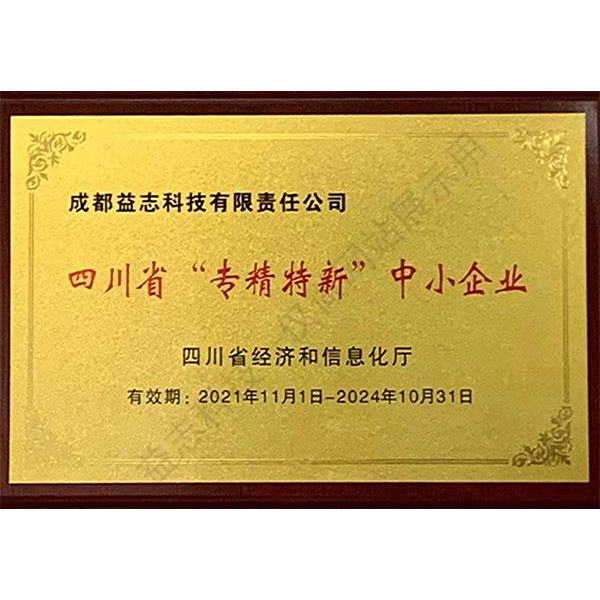
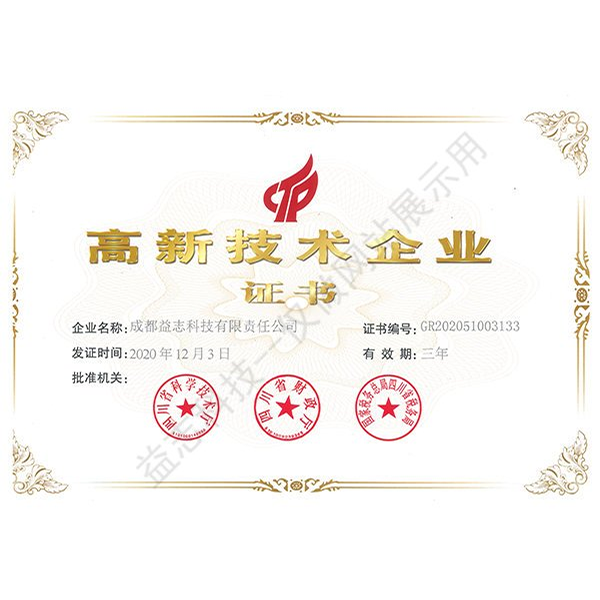
One of the most widespread and understandable examples is air drying before pneumatic tools or in food packaging. Zeolite 13X reigns here. Chinese suppliers are strong here. But there is a nuance: for the food industry, the purity of raw materials and the absence of migration of any impurities are critically important. Not all factories have the appropriate certificates, for example, the FDA or its European equivalents. We worked withChengdu Yizhi Technology Co.(their website isyzkjhx.ru) exactly according to this order. They are positioned as a design institute with serious authorized capital, and what is important is that their materials on zeolites were accompanied not just by general phrases, but by specific test reports for chemical inertness in contact with products. This immediately cuts off handicrafts.
Another case is the purification of gas streams, for example, from CO2 or sulfur compounds. Here we already need zeolites with a modified surface, often with ions of silver or other metals. Chinese companies are actively developing this area. I remember the biogas purification project. Standard 13X was not suitable due to the presence of hydrogen sulfide. A supplier from China (I won’t name it, it was not the most successful experience) offered a special zeolite with promoters. On paper - great. In practice, its regeneration (restoration) required higher temperatures than were included in our equipment, which led to an increase in the cost of the cycle. Conclusion: when working with modified zeolites, it is necessary to coordinate in detail not only the adsorption parameters, but also a clear, proven regeneration mode.
The third example is catalysis. ZSM-5 zeolites are the heart of many processes. China is now one of the largest producers. But not only structure is important for catalysis, but also acidity and thermal stability. Here we are faced with the fact that different manufacturers calibrate these parameters differently. Data from the reactor manufacturer, calculated for, say, zeolite from UOP, are not always directly transferable to the Chinese product. Fine adjustment of the technological regime is required. This is not a flaw, it's just a feature that needs to be considered as an engineering challenge and not as a search for a cheaper replacement.
What people don’t ask about, but should: logistics and reactivation
It is not enough to choose the right zeolite. How will it be delivered? This is a hygroscopic material. If it is transported in ordinary containers without proper moisture protection (and this happens when trying to save money on packaging), it may arrive already partially saturated with water. You pour it into the adsorber, but it doesn’t work. The first rule is to open the package immediately before loading and check visually for caking or excess dust.
The second practical point is reactivation (primary activation) before launch. Many instructions write: calcinate at 300°C in a flow of inert gas. But in fact, if the zeolite gets wet during transportation, sudden heating can destroy the granules due to the rapid evaporation of water. A gradual rise in temperature is needed. We have developed our own protocol: first, vacuuming at moderate heat (about 100-120°C) to remove most of the moisture, and only then - full calcination. This nuance is rarely described in manuals; it comes with experience and, sometimes, with the loss of a batch of sorbent.
And the third is the disposal of spent zeolite. If it has been used to dry neutral gases, it can often be regenerated many times. But if it adsorbed, say, organic solvents or heavy metals, then this is already waste. Some Chinese suppliers, by the way, offer services for the acceptance and regeneration of such saturated zeolites, which can be cost-effective. It is worth clarifying this question in advance.
Supplier: how to distinguish an engineering company from a reseller
The market is saturated. There are giants like the sameChengdu Yizhi Technology Co., which, judging by the description, is precisely a design and technology institute with a capital of 120 million yuan. This is important because such companies usually have their own laboratories to develop and test sorbents, and do not simply package a product from an unknown factory. Their websiteyzkjhx.ru- this is, in fact, a technical portal with data, which already indicates an orientation towards professionals.
And there are many trading companies. You can work with them too, but the questions need to be asked more strictly: What factory is the product from? Is it possible to get a contact for the plant technologist? Is there an application specific test report (not a general certificate)? If excuses begin, this is a wake-up call. We once bought a molecular sieve for drying argon through such an intermediary. It came in bags with crooked printing, without a batch number. It didn't work well. After much investigation, it turned out that it was a screening, a by-product from the main production, which did not pass the strength control.
The ideal option is when the supplier is ready not just to sell the bags, but to discuss the technological scheme, offer a calculation of the amount of sorbent, service life, and regeneration method. This is an indicator of seriousness. Those companies that grew out of chemical technology institutes (and this is a common story in China) tend to speak this language.
Looking Ahead: Niche Applications and Trends
Now there is a clear trend towards specialization. There is no longer enough zeolite 13X. Need 13X with low binder content for fast cycle PSA or zeolite 5A with increased selectivity to normal waxes. Chinese manufacturers are actively working in this field. Products are emerging for the adsorption of volatile organic compounds (VOCs) with improved desorption, for thermal storage, even for medical applications as drug carriers.
Another interesting point is the form factor. In addition to standard granules (balls, cylinders), there is a growing demand for extruded shapes (triangles, four-pointed stars) to reduce pressure drop in high-speed adsorbers. Or vice versa - into powders for creating composite membranes. Here, Chinese technology is on par, and prices are often more flexible than those of Western competitors.
What's next? I think competition will intensify in the segment of highly efficient catalytic zeolites for petrochemicals and green chemistry. Also, given the environmental focus, zeolites will be in demand to capture CO2 from flue gases or even directly from the atmosphere. And here the composition, stability and price of Chinese sorbents will play a key role. The main thing is to approach the choice not as a purchase of a bulk product, but as a choice of a technological component on which the operation of the entire system depends. Then the use of Chinese zeolite adsorbent will be effective and, importantly, predictable.